Key Takeaways
- It’s a somewhat typical, but very well done gyuto of an EDC knife maker who is expertly concerned with the intended function of things.
- The edge feels like it’s on the toothier side, so cuts start without much effort.
- It’s good for softer foods, and great for vegetables. Probably my favorite for cutting carrots.
- Not a bad price for what it is.
This is a surprisingly refined Japanese kitchen knife from one of the best EDC knife designers alive.
This knife makes me feel capable because it works in all the ways that every pleasant influencer-chef-made YouTube video about how to dice an onion suggests a knife should work.
Cuts always start easy, and the follow through almost always feels silky smooth.
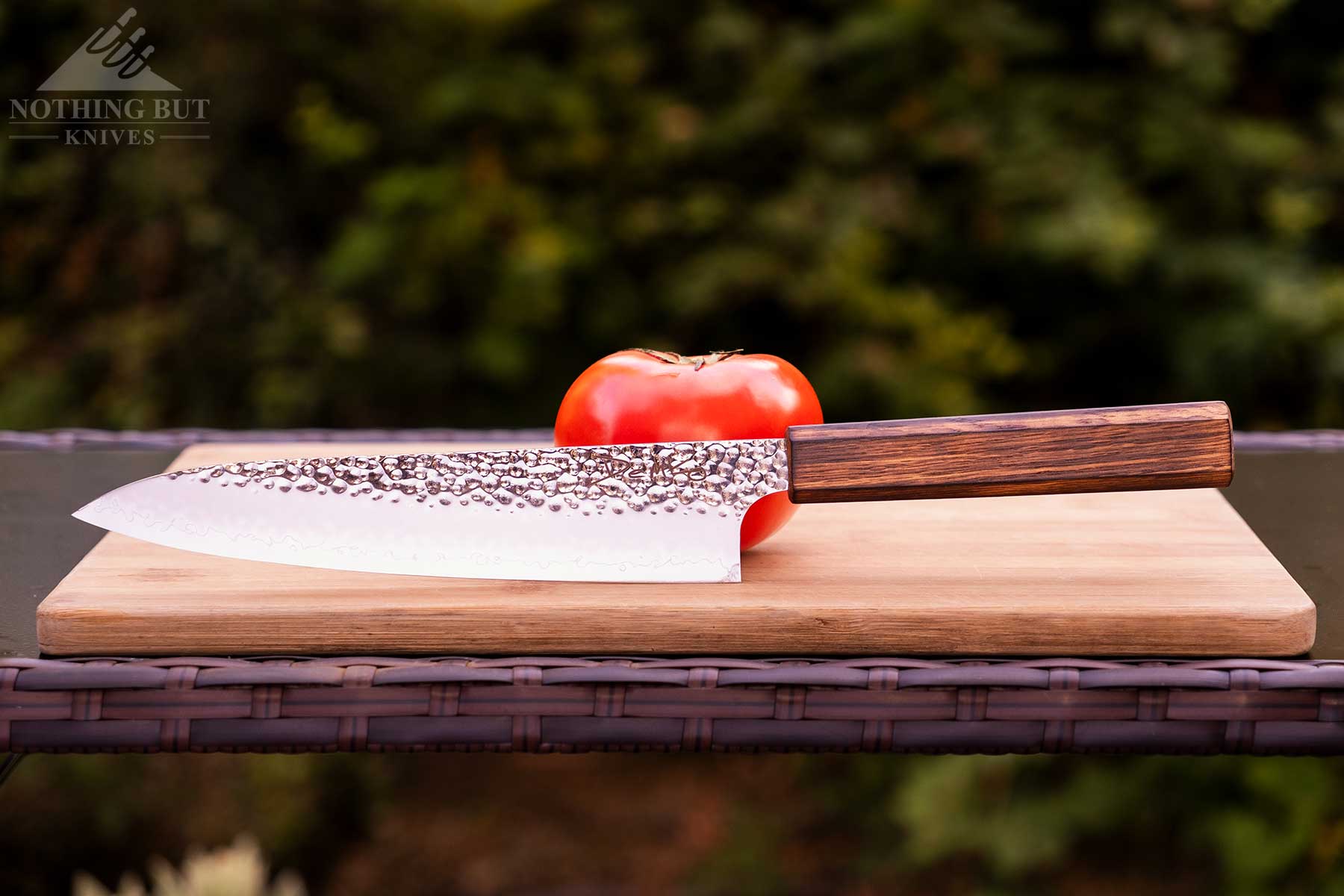
I’m not surprised I liked this knife, because Andrew Demko rarely makes something that I don’t like for some reason or another. I am surprised at how much I like it just purely as a kitchen knife, though.
Specifications
| Overall Length: | 14” |
| Blade Length: | 8” (203 mm) |
| Blade Steel: | VG-10 San Mai |
| Blade Thickness: | 2 mm |
| Blade Shape: | |
| Blade Grind: | Full flat w/ hammer finish |
| Handle Length: | 5.25” |
| Handle Material: | Japanese Red Oak |
| Handle Type: | Octagonal |
| Weight: | 134 g (4.76 oz) |
| Designer: | Andrew Demko |
| Made in: | Japan |
| What I Liked | What I Didn’t Like |
|---|---|
| Great blade with a toothier edge and a very smooth cut | Sometimes have trouble finishing cuts on certain softer foods |
| Lightweight and a buffed spine make it pleasant to hold | Hammer finish isn’t my thing and isn’t doing much for the function of the knife |
| Works well with vegetables and onions |
Who is Demko and What Can We Expect From Him

I wouldn’t normally take the time for introductions, but I’m not sure if Demko’s household name status spreads into kitchen cutlery.
Andrew Demko is a knifemaker who used to work for Cold Steel where he designed knives and locks mechanisms. He did a lot of good for the EDC knife world by making the Tri-Ad lock, and he made one my absolute favorite budget folders of all time, the Finn Wolf. He left Cold Steel to start Demko Knives with his brother John and knife maker Mike Wallace a few years ago, and he seems to be using his new freedom to experiment and collaborate in different styles of knife like he did with the Ocaso Solstice (a pretty respectable gentleman’s carry), and show off his abilities outside the realm of knives you could use to pry open a car door.
I call this a Demko-designed knife, but it’s a fairly typical J-knife design made by a traditional Japanese blacksmith. I’m not actually sure to what extent Andrew or anyone else besides the blacksmith had any say in the final product.
That’s not to say I don’t think Andrew Demko couldn’t or didn’t have good input on the knife. Only that he’s the kind of person who is practical and smart enough to know when to defer to another expert, and there’s nothing about this knife that exactly screams “AD-15 maker”.
I say this both for people coming here as Demko fans, and the ones just looking for a good kitchen knife: this gyuto is functional in a very refined, slicey way.
The guy clearly understands the brief on kitchen knives, but the most Demko thing about this knife is that it works incredibly well for what it was designed for, which is slicing food.
The Blade Cuts and Operates like a Fast Workhorse
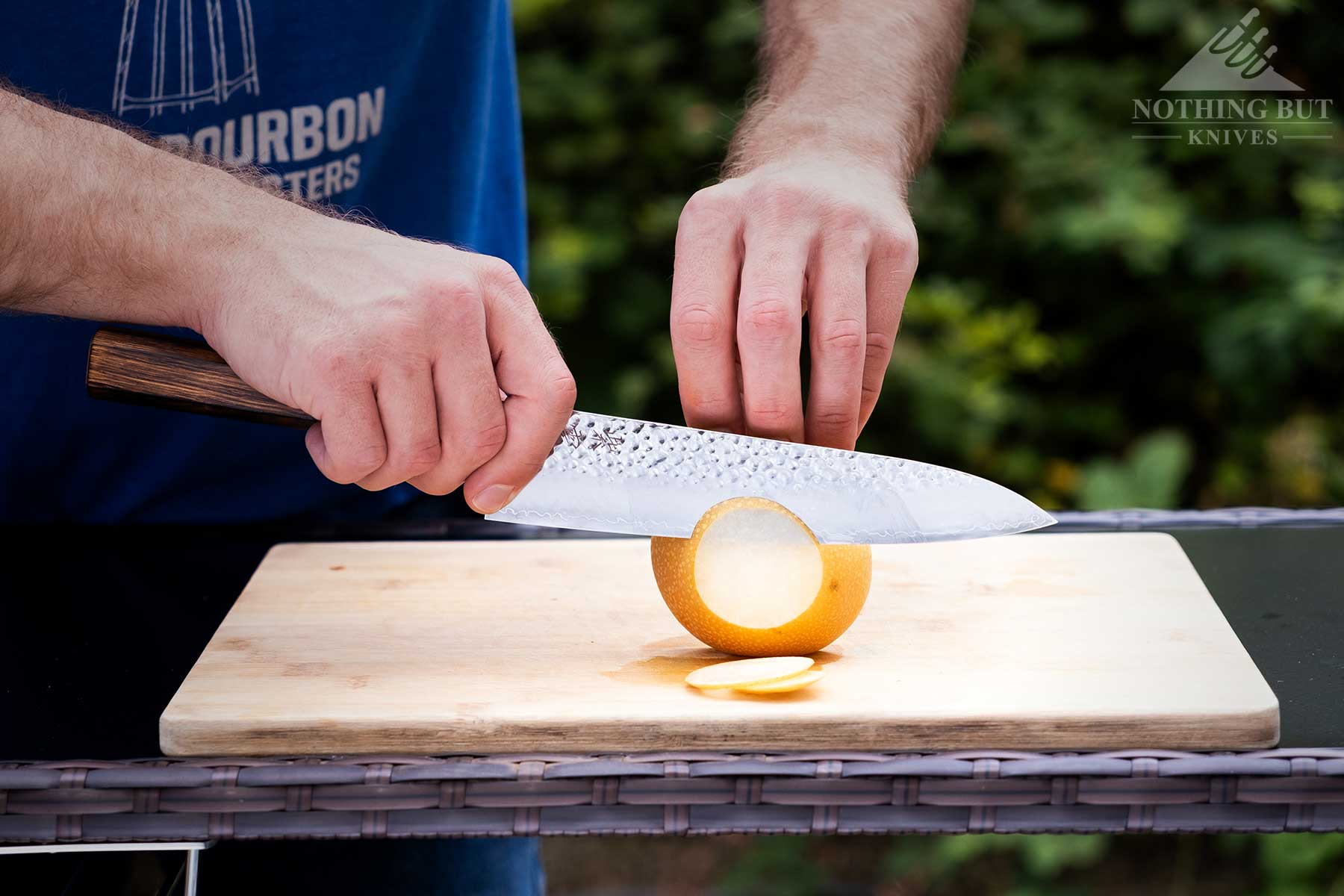
Quick Observations
- The edge is a little toothy;
- It cuts with a very satisfying smoothness
- The hammer finish does a little bit to help food sticking, but it seems more about aesthetic and tradition than anything.
- The edge formed a couple rolls after a day or two of regular use, but overall it’s holding up as expected.
This edge on this knife sings. I can hear an angel sing a high, perfect note coming from it every time I cut into a tomato.
The edge feels more toothy than anything, which is part of why cuts feel so easy with it. For my purposes, that’s perfect.
There are certain cuts I always struggle with, even with high quality knives. One of those is cutting horizontally through an onion when I want to dice it. Even with famously thin and sharp kitchen knives like Shun I always fight with the onion and the handle, trying to get a straight cut without jerking the whole thing around so much that I cut my hand open.
Using the Demko gyuto is one of the only times I’ve accomplished this cut in a single smooth motion.
The Edge is Holding Up
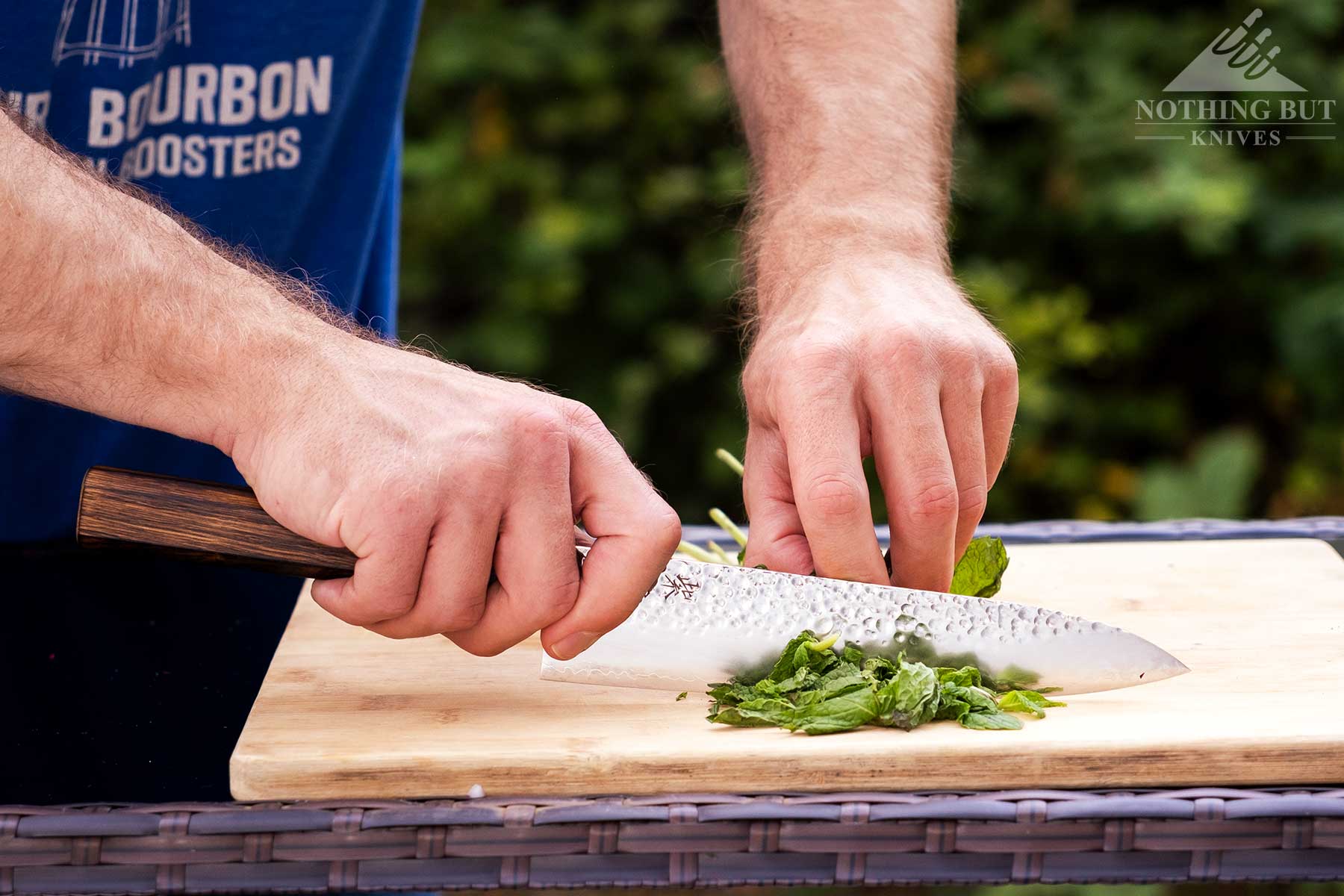
There was some slight edge deformation after a couple days of light use (It took me a while to get warmed up). They were just barely perceptible rolls in the edge that I only noticed because I was cutting into a tomato on a softer side and felt the edge slide just a little. I ran it over a ceramic rod and it was back into shape. Just based on the feel and look of the edge after the month or so I’ve tested it, this knife should hold up just fine with a once-a-year sharpening schedule.
A Couple More Observations
There isn’t much of a distal taper until the spine gets right up to the edge, and then it thins out pretty dramatically.
The hammered finish looks okay. It’s also the closest I’ve encountered to being effective against food stick. Food stick is still an issue, but nothing like what I’ve experienced on taller, plainer blades. The fact is, though, that the hammer finish just doesn’t cover enough of the blade to have any noticeable effect for me.
Perforfamnce and Ergos: It’s Slice and Comfy
Performance Breakdown
- It’s balanced toward the blade;
- It’s light and the spine is buffed so it doesn’t bite the finger easily in a pinch grip;
- Sometimes has trouble finishing cuts with thicker or looser-skinned foods.
- By far the easiest time I’ve had dicing onions or cutting carrots in any shape.
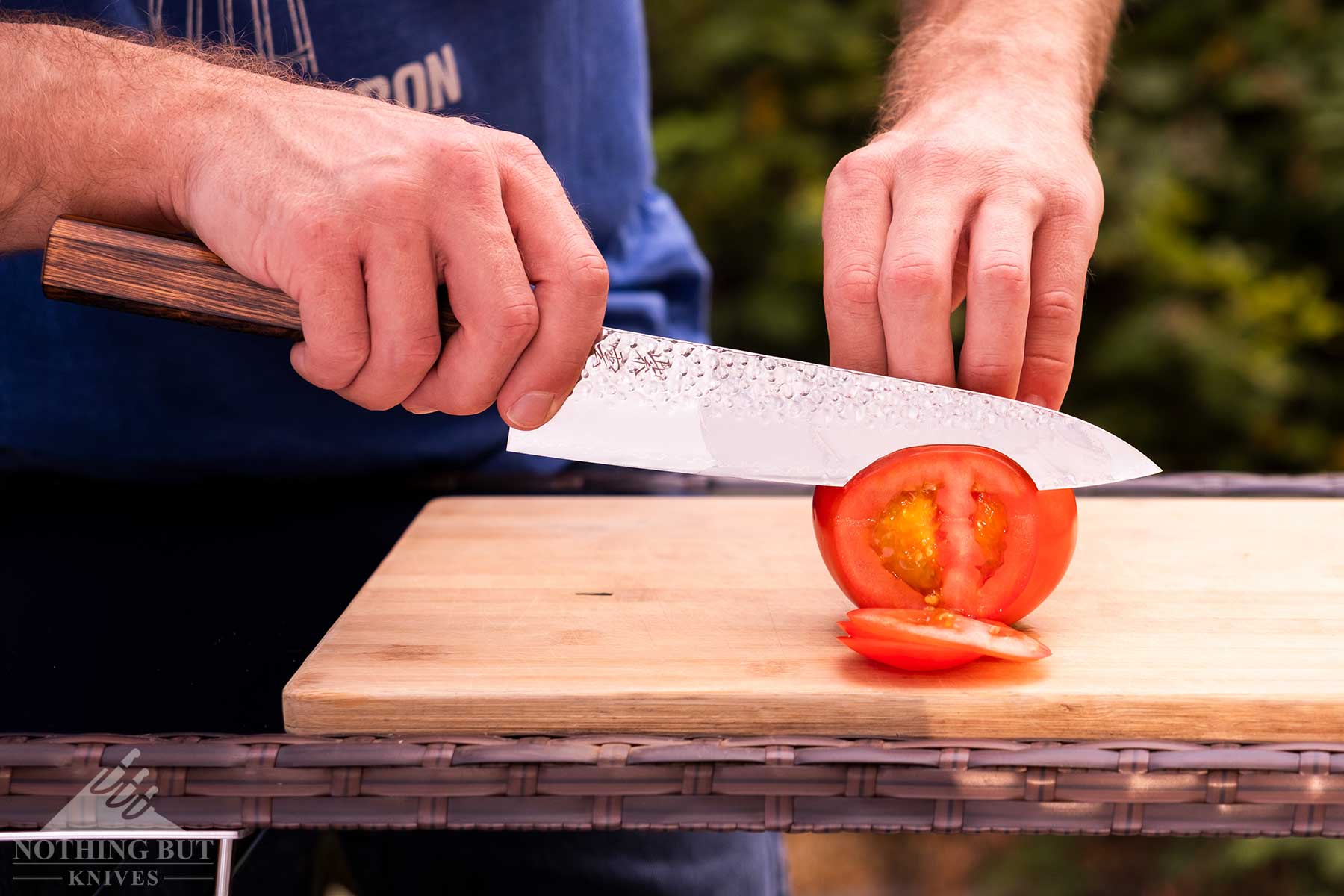
This is light but heavily balanced toward the blade. That will be a good, familiar feeling to some, but seeing as we aren’t exactly in the cool chef knife crowd around here I feel the need to make sure our readers know this has a very typical balance for a gyuto. Especially one with a stick tang and an octagonal handle.
The spine is buffed, so it doesn’t bite hard. Actually it doesn’t bite at all since most of the time I don’t have to put much force into a cut. I can’t reliably tell you it feels nicer than a lot of other traditional J-knives out there, but I can tell you I like the way this feels when I’m push cutting.
It seems a little difficult to finish cuts sometimes. I don’t know exactly what to attribute it to (besides my own sloppiness in the kitchen, which is always a factor). But something about the edge doesn’t love finishing off cuts with anything with a skin that’s a little thick or loose. Mind, I don’t mean it’s bad at cutting those things. Only that in the broad range of things this knife cuts incredibly well, that’s where I noticed it not quite cutting up to the par it had set for itself up to that point.
Food
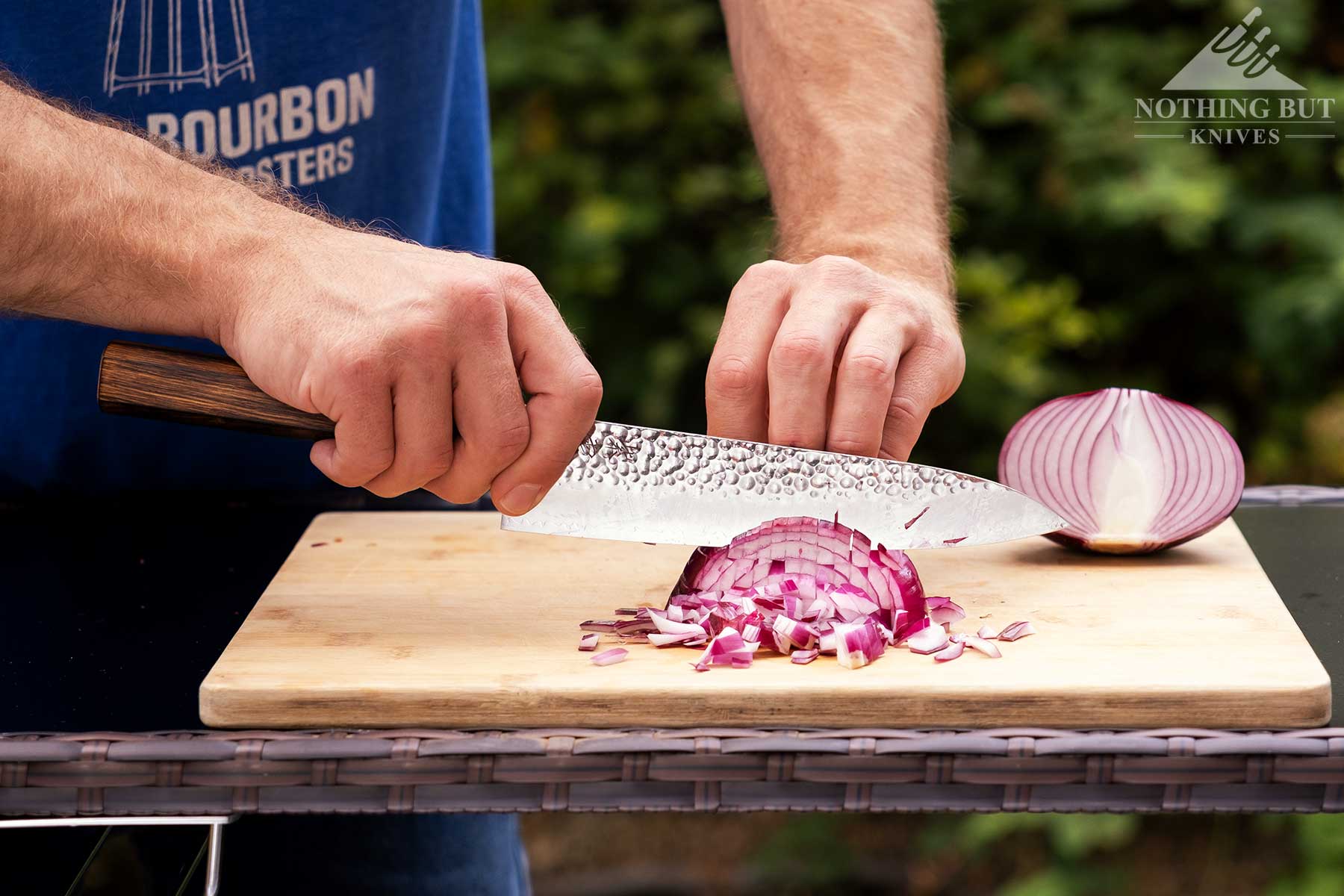
Onions – An absolute champ with onions. This is one of the few names that allows me to make horizontal cuts without the blade getting wedged halfway through.
Potatoes – It felt pretty nice to cut any shape of potato. The only issue I came across was that sometimes with potatoes I got something that almost felt like wedging. Like the knife kind of gummed up and I had to push a little harder. I think that might have been from the high density of the food squeezing the thin blade that otherwise required very little force from me rather than any issue with the blade geometry, though.
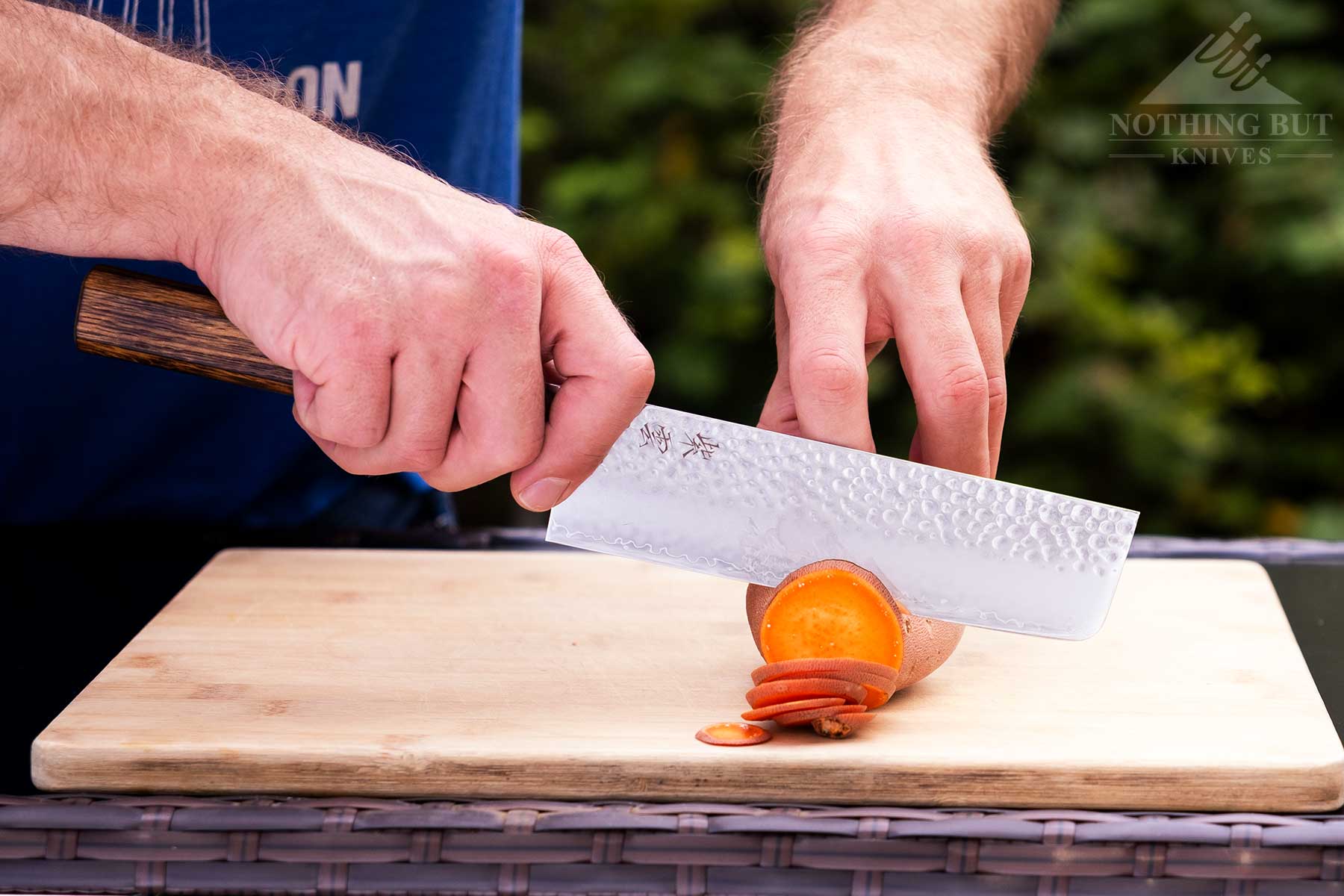
Carrots – Very few knives (that I’ve tested) feel so easy to make julienne cuts of a thick carrot as this knife does. It’s something of a phobia of mine that I’ll someday cut off a knuckle or the tip of my thumb from a carrot rolling when I try making the first cut. This knife sinks in with almost no resistance, and follows through with an easy push. I’ve never felt feather from that fear.
Garlic – The edge cuts into a garlic clove just fine, like it does everything else. The main thing I liked here though is that the edge curve near the tip doesn’t feel as dramatic as other gyutos I’ve used (like the Shun Sora), so I didn’t have to raise my hand as much to cut effectively with the tip.
Tomatoes – For the most part, it was excellent for slicing up tomatoes in any shape. It bit easily into the skin, and I barely felt the knife going through the meat. But the closest I came to having trouble with this knife was what I cut tomatoes from the inside. I was quartering them, so I could remove some of the center before adding them to a ceviche that was already incredibly wet. Maybe it was just the awkwardness of trying to hold a wet fourth of a tomato, but I had the hardest time cutting the skin in these conditions. I got there with a little bit of angle adjustment, but this was one of the few instances of needing to take more than one or two cuts to get total separation.
Bell Peppers – It was a similar thing with bell peppers. I pretty much always cut them by rolling them flat and cutting from the inside, and I hardly felt any resistance until I had to finish cuts through the skin.
Squash – It shouldn’t be a surprise that this can slice up squash and cucumbers with terrifying speed. No trouble here; this is where the knife feels like it can really kick into high gear and fly.
Comparison and Alternatives
I was prepared to call out the price as being the only drawback of this knife, but after looking around and reassessing the new price landscape of kitchen knives these days, I have to say Demko’s kitchen knives make a good argument for themselves. As of this writing, the gyuto is going for around $190 which is closer to the lower end of the price point for traditional 210 mm gyutos.
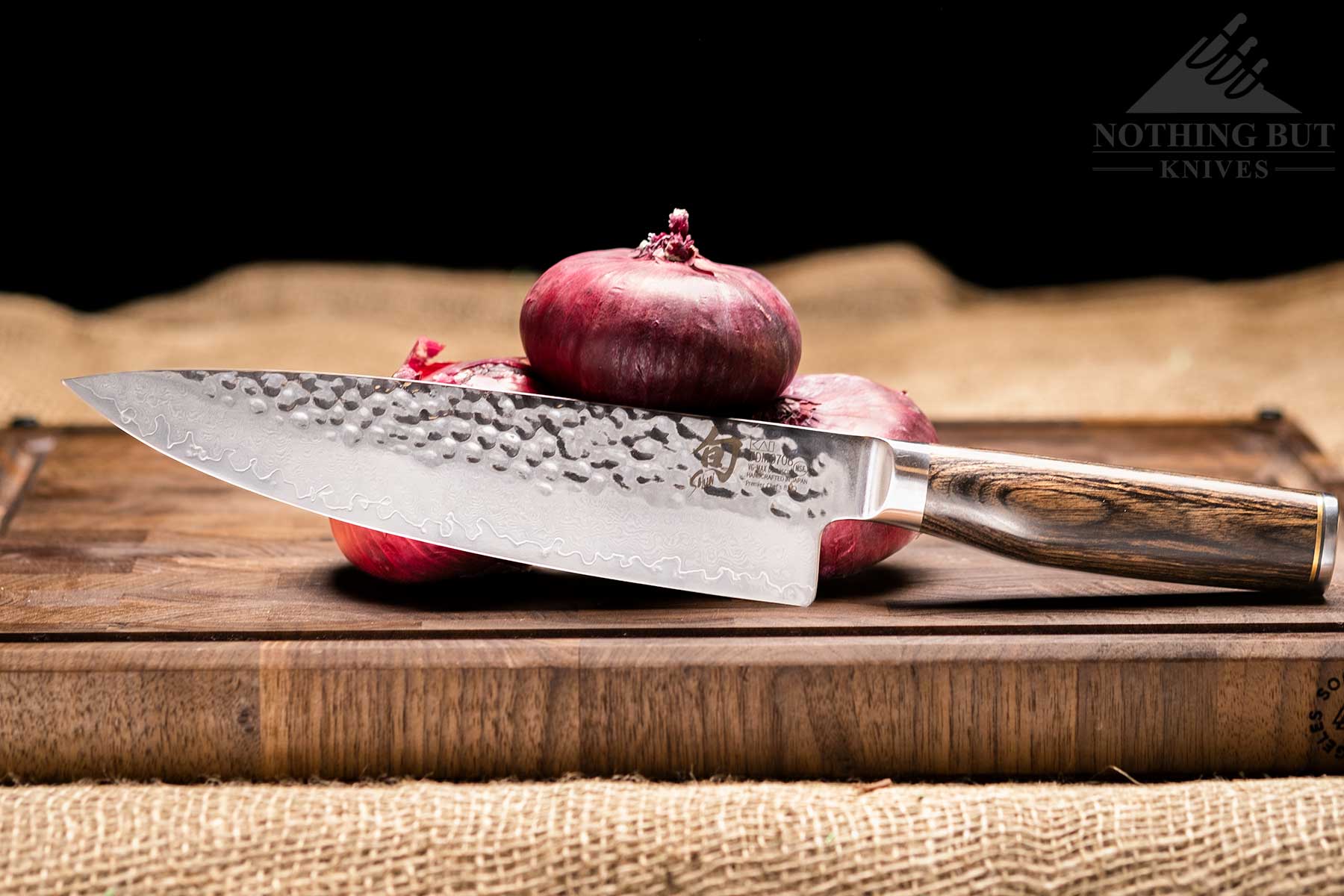
With that in mind, I would absolutely recommend this knife over any Shun. I think the closest I’ve gotten to performance there is the Shun Premiere. But while the blades might go toe to toe, the Premiere is heavier and weighted toward the handle, so the whole ergonomic experience is nearly opposite.
For a closer ergonomic experience it would be better to go with a Shun Classic. That runs a little cheaper, and feels pretty good if you can get used to the D-shaped handle, but I wouldn’t put it head to head with the Demko in a cutting contest.
Something a little more in the traditional range but still different is the Oishya Sakai Kyuba Gyuto. It’s hard to find J-knives with that kind of handle coloring, but it’s quite a bit more expensive, and I don’t think the performance was quite equal with Demko’s knife.
The more practical alternative (as usual) is the Tojiro DP. The western handle changes the feel a little by putting the balance more toward the handle, and the edge isn’t as refined, but you get the same steel and a reliable workhorse for quite a bit less.
Yeah, These Guys Are Absolutely Making Legit Japanese Kitchen Knives
I see people coming at the knife from three perspectives.
Someone from the EDC community who’s a fan of Demko already and is wondering if the guy who designed such heavy hitters as the thick-bladed AD20 can make an effective kitchen knife (anyone who picked up the Ocaso Solstice probably knew right away, though);
The kitchen knife snob who already has eight different gyutos on their magnetic strip at home and are also wondering of some meat-headed folding knife maker can really make an effective kitchen knife;
And the person who, professional or not, just really needs a good kitchen knife and someone keeps bugging them about the superiority of Japanese cutlery, and have gotten so tired of reading or hearing about all the options that look more or less the same, and are finally ready to look past their friend’s sweaty waifu pillow long enough to admit that maybe their right and just grab a Japanese knife only to come here thinking “wait, Demko isn’t a Japanese name. What’s the deal?”
So here’s my answer to all of them: Yeah, this knife is absolutely legit.
To the first person, you’re not fooling anyone. You’re gonna get the knife anyway, because it’s Demko.
To the second, I suspect there’s nothing that could make you totally happy with the knife because it isn’t super blue carbon steel, but even you’ll secretly admit to yourself that the price and performance of this knife are at least better than acceptable in the greater context of Japanese cutlery.
And finally, to the last, tired, confused bastard who just needs a decent knife, this is it. If you’re ready to drop $200, you’ll have a hard time finding a better way to spend than this thing.
It is completely about performance.