TL;DR
- The Vicon is a fantastic camping knife.
- It’s one of the few that can easily break down oak logs
- The blade is thick, and that does gum up some tasks
- It carries well on the belt, but it can be tricky to draw thanks to the thick handle and hand guard.
It’s a Strong Contestant in the Military Survival Category, Even if the Price Might Make Admission Tough
I’ve come to count on Reiff knives to do at least one thing exceedingly well: make me like a knife the more I use it.
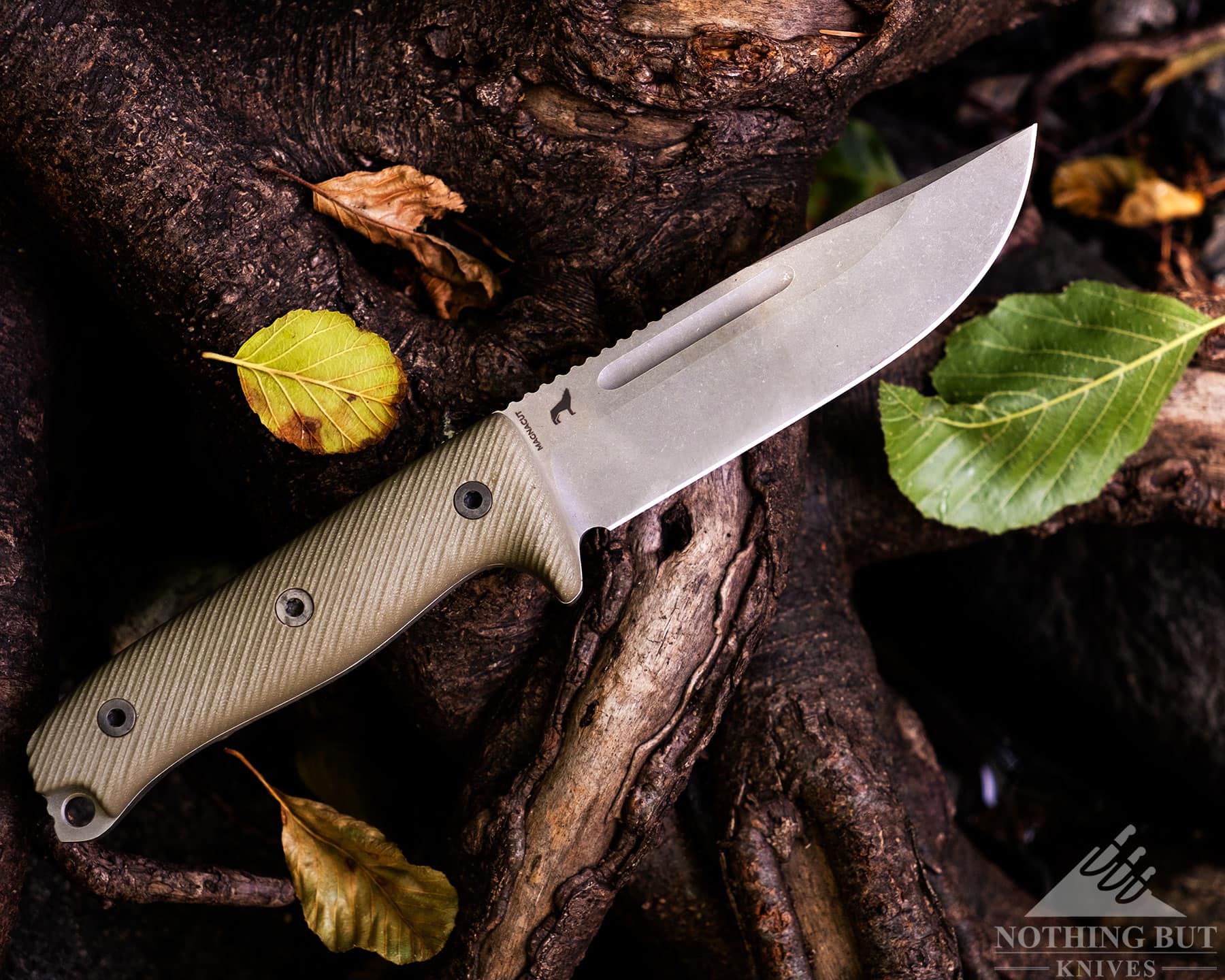
The Vicon is a step in a slightly different direction for them, but it still has that effect. I have loved every minute of carving, chopping, fire making, sheath adjusting, and pointless knife waving I’ve done with it. That enjoyment didn’t come without a couple of small complaints (it is far too heavy for my tastes, it’s pricey, and I can’t fully gel with the sheath retention in spite of the tension screw), but nothing gets too much in the way of the Vicon being a fantastic camping, survival, or (it’s actual designed use) military knife.
Specifications
| Overall Length: | 10.2” |
| Blade Length: | 5.19” |
| Blade Steel: | Magnacut |
| Hardness: | 60 – 62 HRC |
| Blade Thickness: | 3/16” (4.7 mm) |
| Blade Shape: | Clip point |
| Blade Grind: | Saber |
| Handle Length: | 5.02” |
| Handle Material: | G10 |
| Weight: | 283 g (9.9 oz) |
| Made in: | USA |
| What I Liked | What I Didn’t Like |
|---|---|
| Tough, all-around useful knife | Heavy in the hand and on the belt |
| Sheath is versatile and handles the weight well | Sheath tension screw takes a hex driver |
| Plenty of texture keeps the knife easy to grip in most conditions | Even with retention loosed, drawing is tricky |
| One of the better knives out there for breaking down pieces of oak |
Style and Design and What Actually is a Military Knife
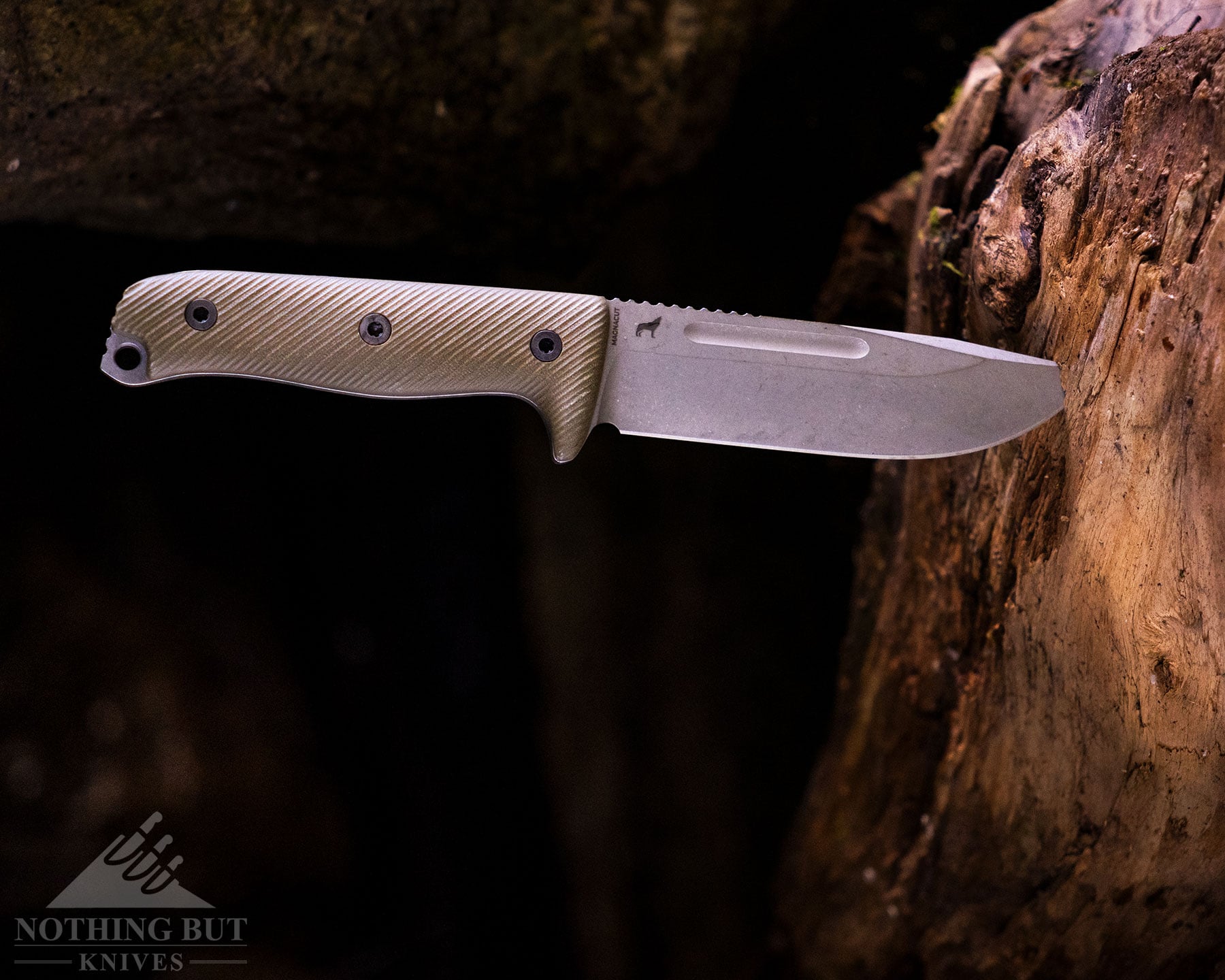
There are at least two obvious features knives tend to have that make us all agree on using the term “military knife”:
- A clip point blade that’s about 5 inches or longer,
- And some kind of cross guard or quillion (either as part of the handle shaping or a separate piece).
Those seem to be the unifying elements between the better known knives like the Ka-Bar USMC, the Chris Reeves Pacific, and the SOG Seal Pup.
The Vicon fits in neatly with that crowd except for possibly one small detail. It seems to be primed for camping. This feels like a bonus to me. While most people tend to equate “military knife” with “fighting knife”, the fact is that knives in warfare have historically been used far more as survival tools than direct combat. So many of the bowie-style combat knives of the WWII era were used for digging holes, opening cans, cutting food, and just generally making life a little more livable during long campaigns through strange territory.
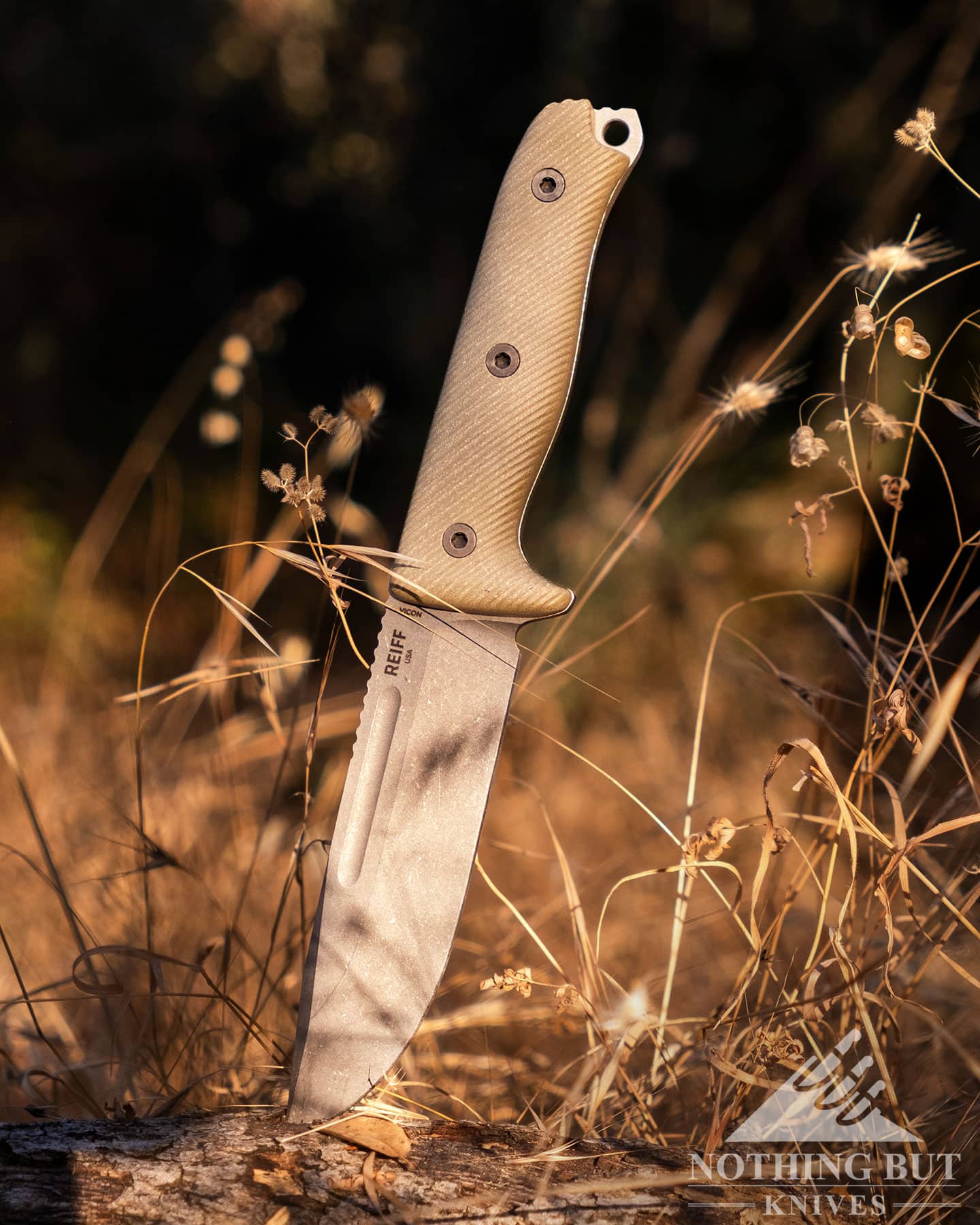
Some of that might have changed in modern warfare (I don’t think anyone deploys with canned rations anymore), but what hasn’t changed is the need for a couple of simple, robust tools to handle a wide variety of tasks in whatever environment a soldier might end up in. That seems to have been the design goal with the Vicon through their three year process of going back and forth with active-duty SEALs.
So I was pretty happy to find that the Vicon is not only good at doing things like processing wood and starting fires, but it can do a lot of tasks with a sort of brutal efficiency thanks to the combination of an incredibly thick blade and a comfortable handle.
All that to say is this might be a military use designed with feedback from people who were using prototypes through several deployments doing who knows what, but for me, a guy who tromps around in the woods of the Sierra Nevadas just trying build a shelter and start a campfire without burning the whole state down, this knife is a champ.
The Vicon’s Blade: Like and Axe, but Knife Shaped
- Key Takeaways:
- It’s a beast at wood processing, and oak doesn’t seem to slow it down.
- It’s thick and heavy, and cuts like a thick and heavy knife. It’s great for fast, rough work, but not so much for slicing.
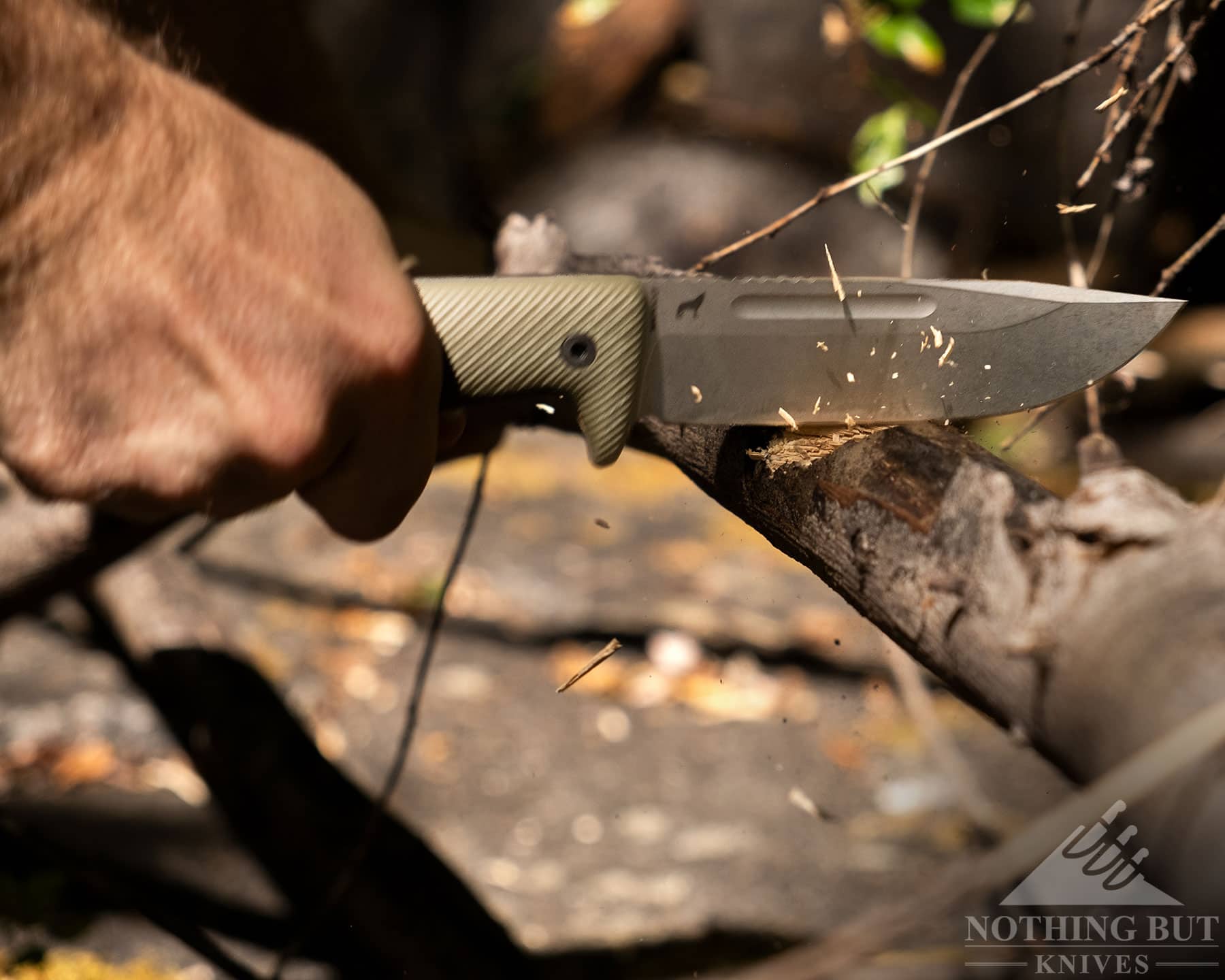
This is one of the few knives I can confidently take into a forest full of shrub oak and know I’ll be able to break down just about any wood I come across. I haven’t had that kind of confidence in a knife since I tested the Shwarz Knives LT5.
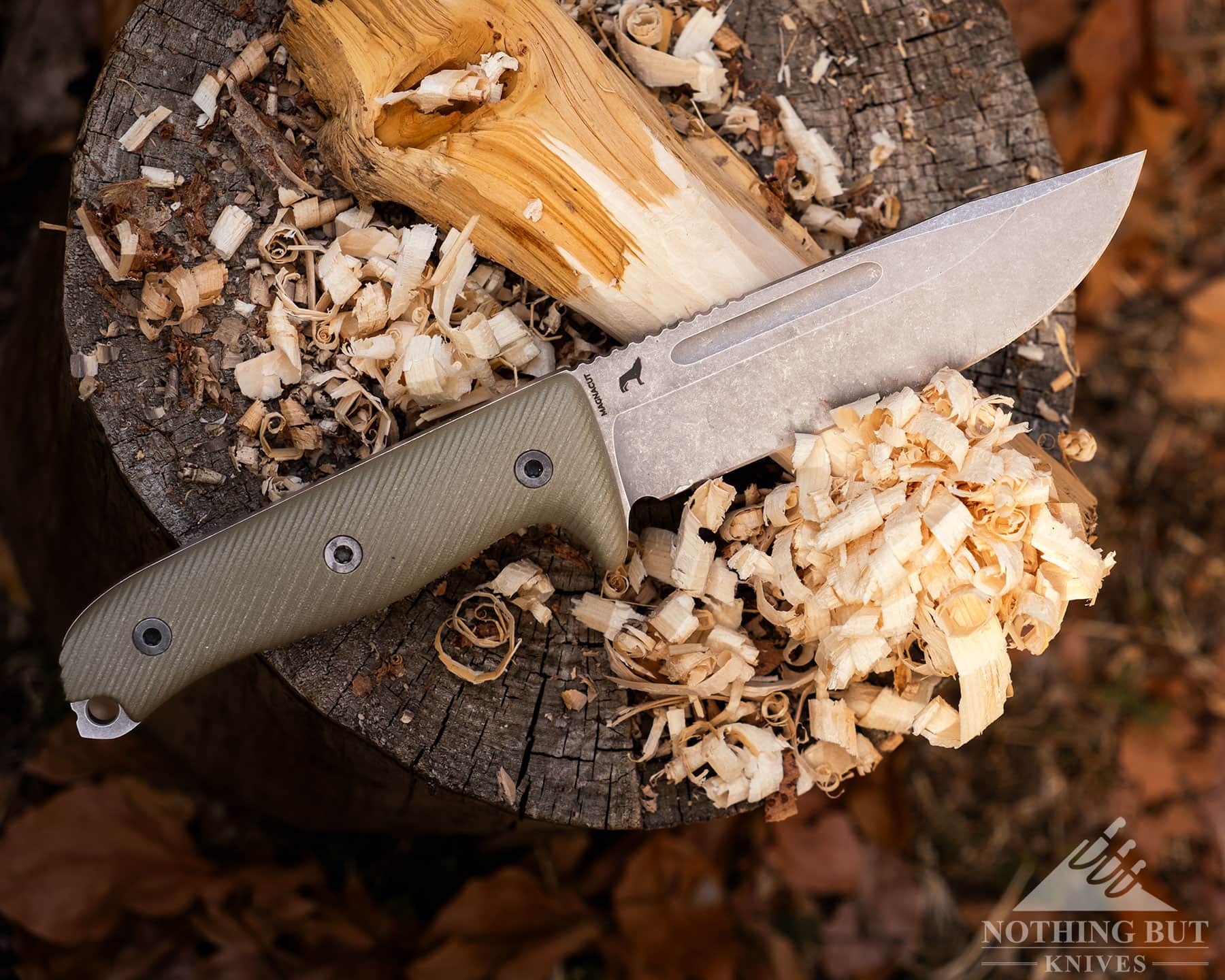
It’s pretty nice for making feather sticks, although that might be more because of the handle than the blade. The edge seems to be finished on the toothier side, so it kicks up a curl pretty easily even on hard woods without having to press too hard.
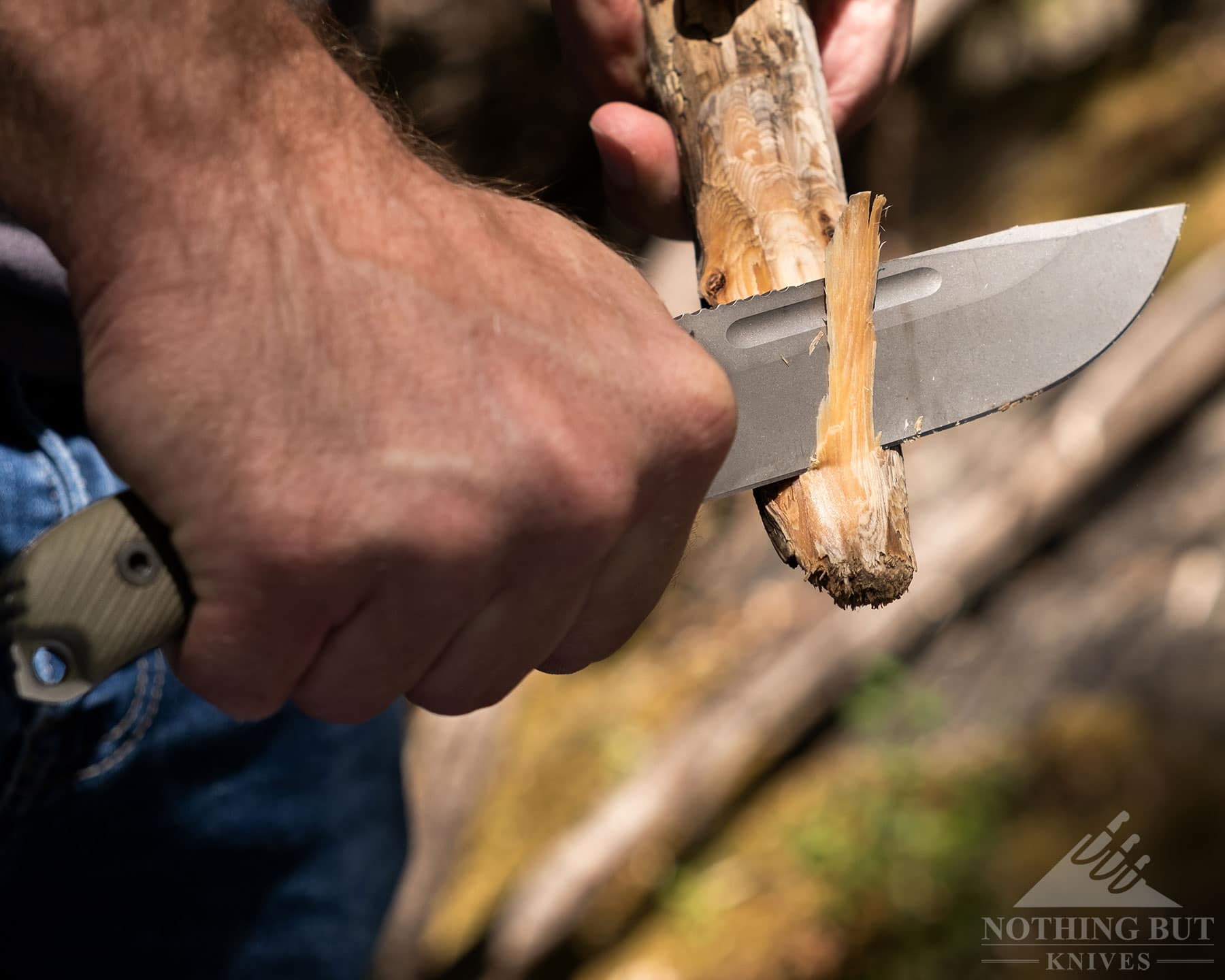
It has a bit of an axe quality to it because the blade is so thick and heavy. As a chopper it eats through branches without an issue, and as a baton-er it usually makes a crack with just a couple of good swings before the log is split enough to just pull apart. And so far it has come through all that abuse without any edge deformation, but frankly that didn’t surprise me considering how much steel is behind the edge on this Magnacut blade.
That thickness comes with the typical drawkbacks, though. It’s heavy, and while the knife is balanced well, I do fatigue setting in pretty quickly. The larger con is that the Vicon just isn’t that great a slicer. It’s a little sluggish for cutting rope, and it tends to tear more than cut cloth materials.
Reiff Knows How to Make a Handle
- Key Takeaways:
- All around a comfortable handle with good texturing.
- There’s no such thing as a bad hand position.
- Stays in the hand better when chopping that F-series Reiff knives.
- The jimping might be a little too aggressive, but it’s more helpful than uncomfortable.
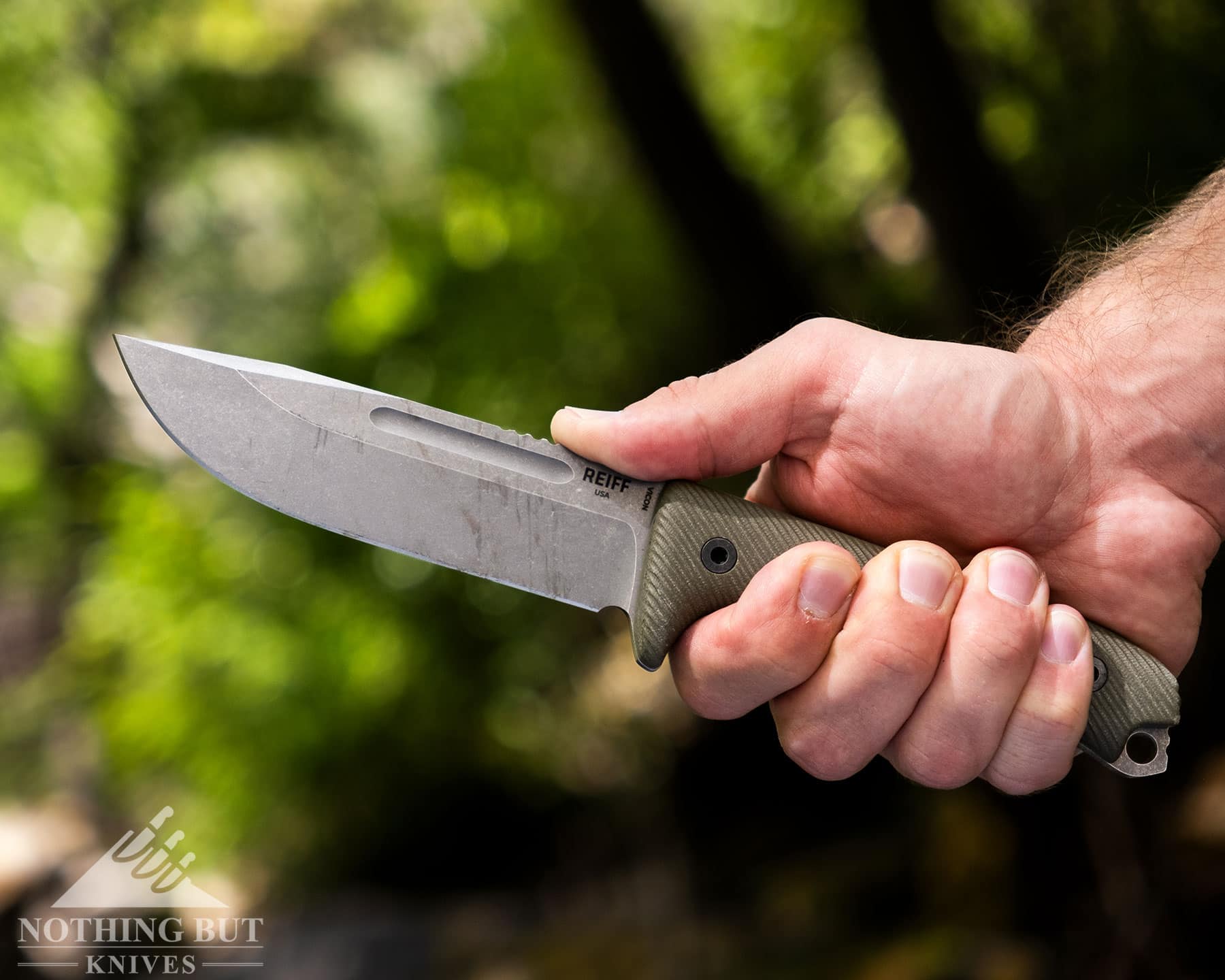
Anytime someone asks me what makes Reiff knives worth the price I highlight their handles. They shape their handles to emphasize control. Their F series have a very pronounced expansion in the top half of the handle that makes them feel incredible for bushcraft tasks, although it makes chopping feel awkward due to the way they taper toward the pommel.
The handle on the Vicon is a nice adjustment from their F series. It still has the Coke bottle shape, but the pommel tapers forward a little more so it stays in the hand better when I’m chopping.
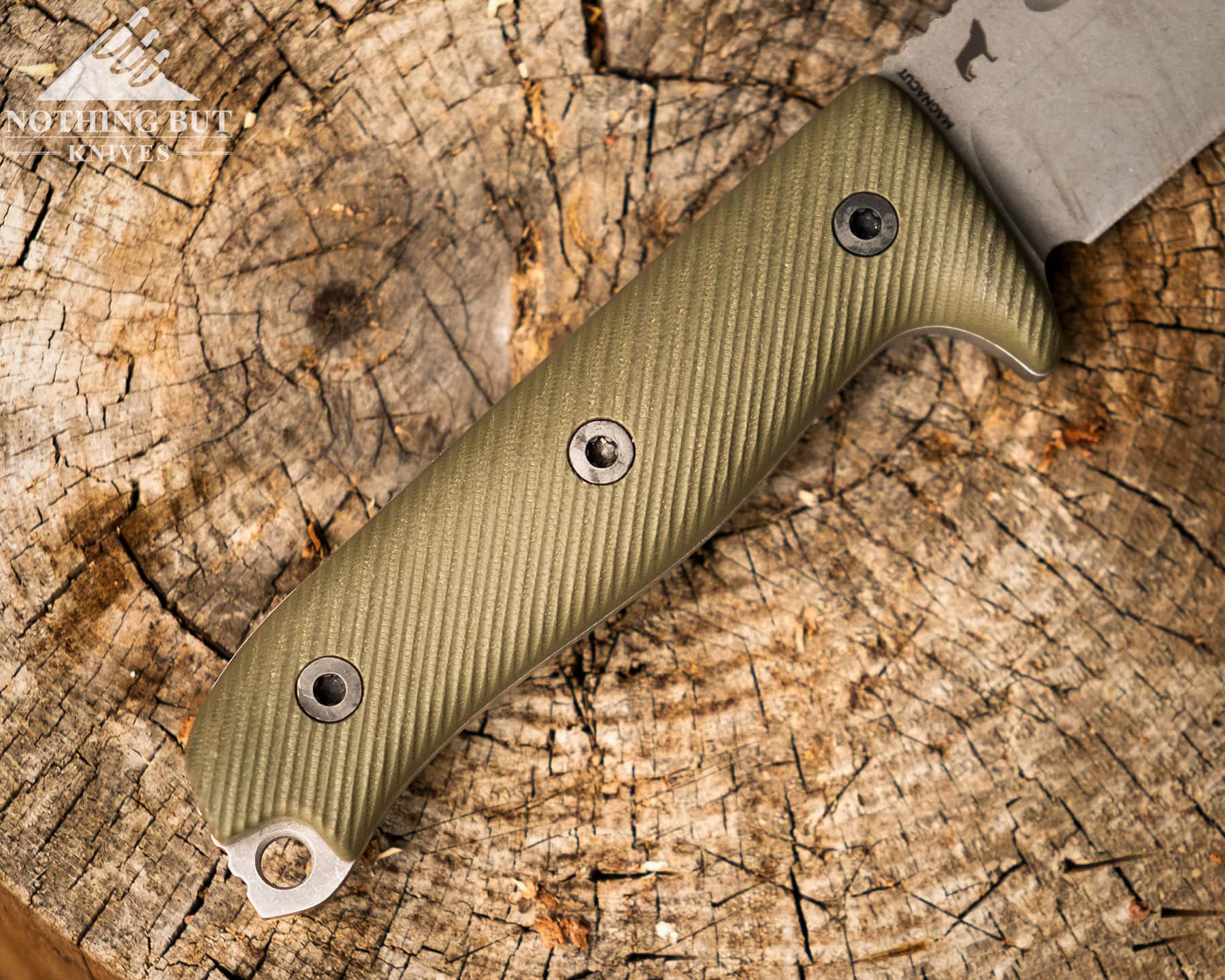
There is a lot of texture on this thing. Between the milled pattern in the scales and the aggressive jimping on the spine, this has the kind of grip you can count on to be there in almost any kind of condition.
My only possible complaint about the way it feels in hand is that the jimping crosses over to feeling a little too aggressive, but I prefer that on this kind of knife. Having hard corners like this on a camping-friendly survival knife comes in handy for throwing spark, scraping material, and finding some purchase in wet and muddy conditions. Seeing as the knife was not designed for gentle use or gentle conditions, I have a hard time holding this texture against it. (Still, though, it could maybe use a little buffing).
The Sheath is the Sticking Point
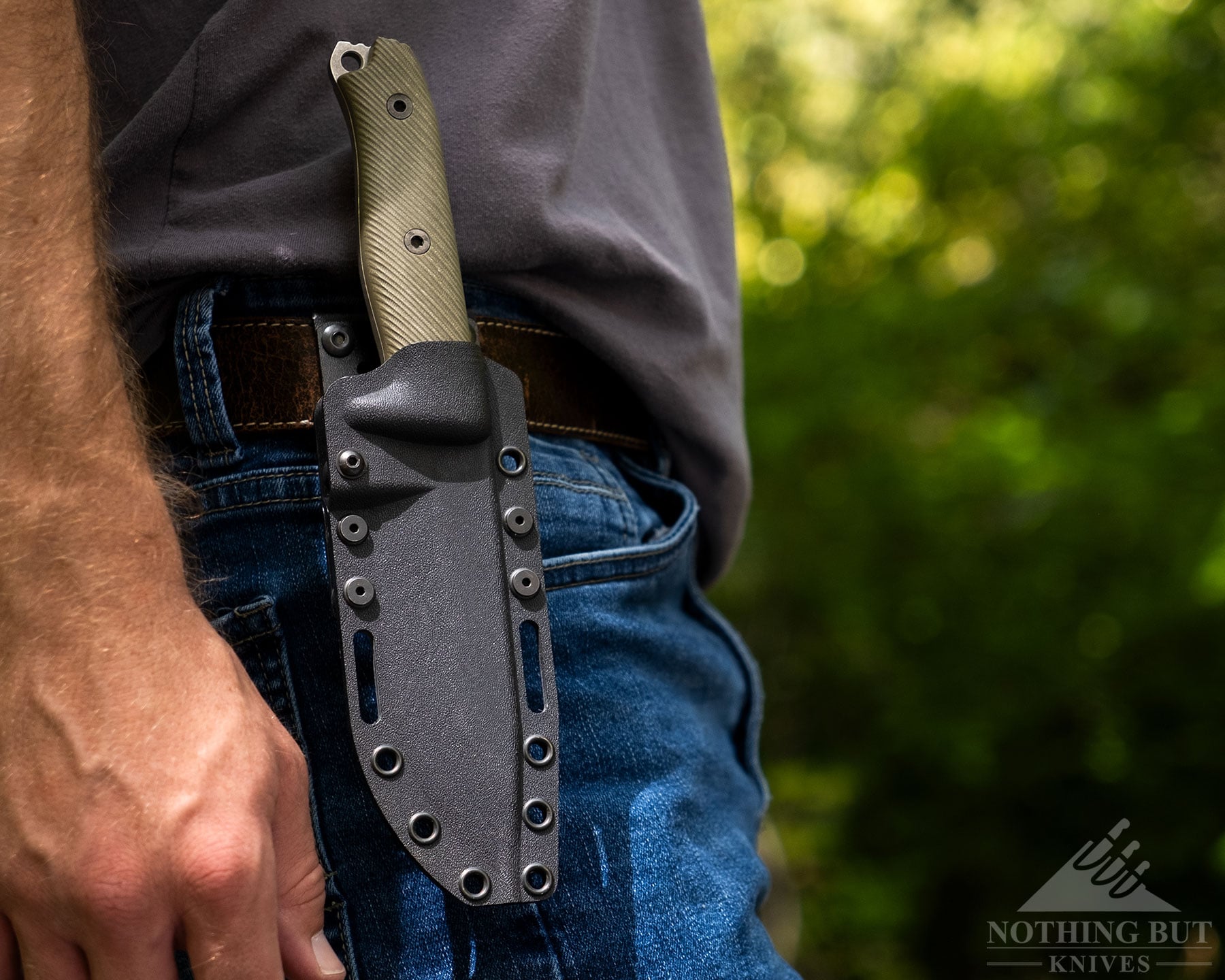
- Key Takeaways:
- The sheath handles the weight of the knife well.
- Hiking and climbing felt good with it on the belt.
- There’s a bit of an issue with dialing in the retention and the Kydex pinching the thumb when drawing.
This is a great sheath for keeping the knife in place. It rides securely, there’s no rattling, and the handle doesn’t come up too high in a standard vertical position.
It rides higher than I like but even I have to admit that the position was ideal for jumping and climbing around the boulder-filled creek when we did most of the photography for this knife. The blade portion mostly stayed off my leg while I was crouching, lunging, and generally attempting the equivalent of yoga positions while wedged precariously between two rocks over a pool while my brother asked the fish what level of F stop he should use. The handle surprisingly didn’t hit my side that much either. It was still awkward to draw at that height, but I can’t deny the mobility was nice, and maybe that was more important to the design intent.
The issue comes with the sheath retention and the pancake-style Kydex having to hold a large knife with a generous hand guard.
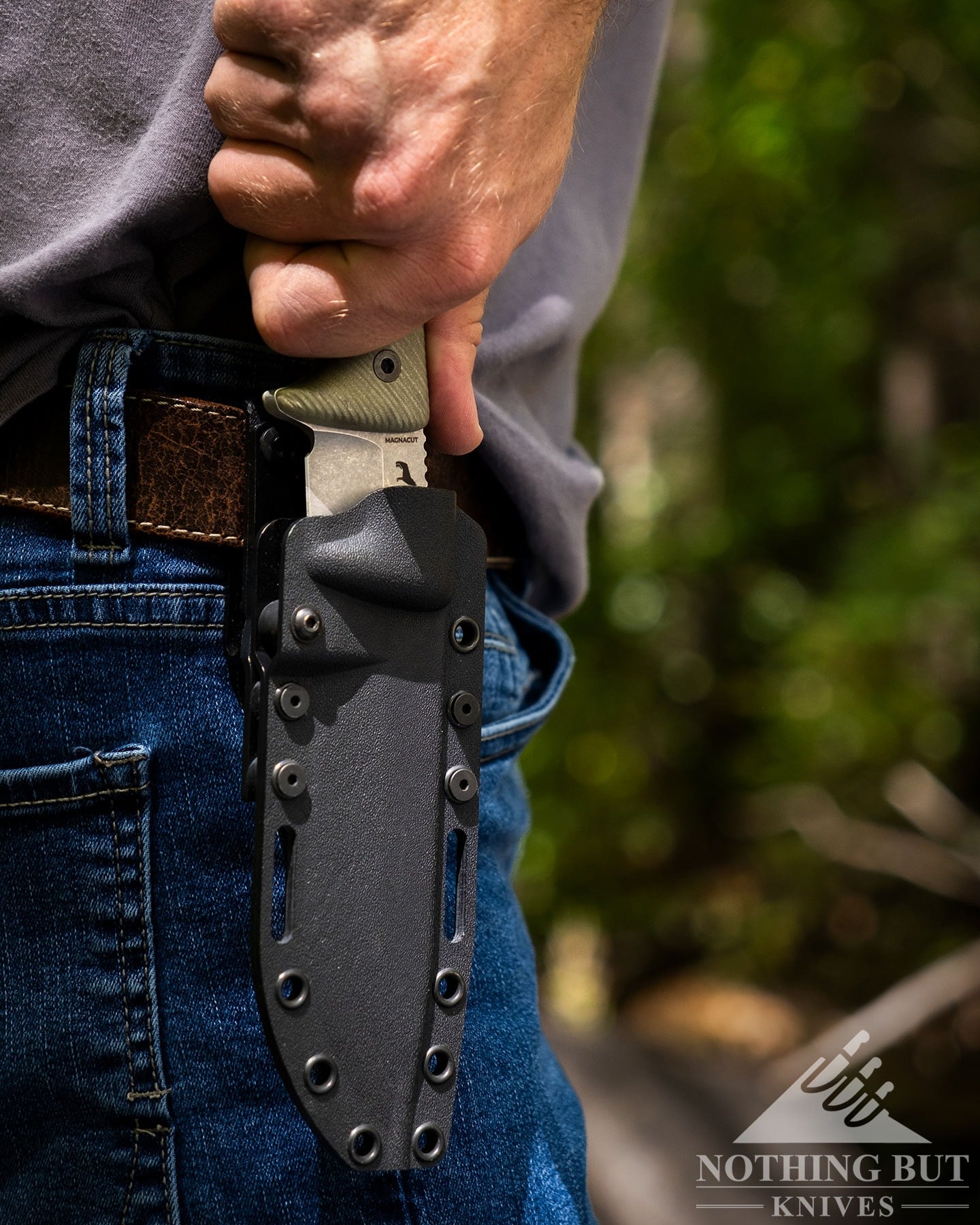
Out of the box, the Vicon was pretty tough to pull out of the sheath. Thankfully they made it with a tension screw. Great, except that when I loosen the retention enough to where I wanted it, the two sides of the Kydex pull apart just enough to pinch my thumb as it’s pushing off mid draw.
In fairness to Reiff, hand guards on knives have always caused complications with sheaths. It’s just not a shape that’s conducive to being put away, and the thickness of the handle doesn’t help that particularly aspect at all. But on the whole they’ve handled the complication well here.
I think the more typical solution would be to put it in a nylon pouch and add a retention strap that buttons over the handle. That’s been working fine for companies like Buck and Ka-Bar, but it does add a step to drawing, and knives in sheaths like that just never ride on the belt very well, and they tend to rattle in whatever synthetic sleeve is inside to keep the edge from cutting the nylon.
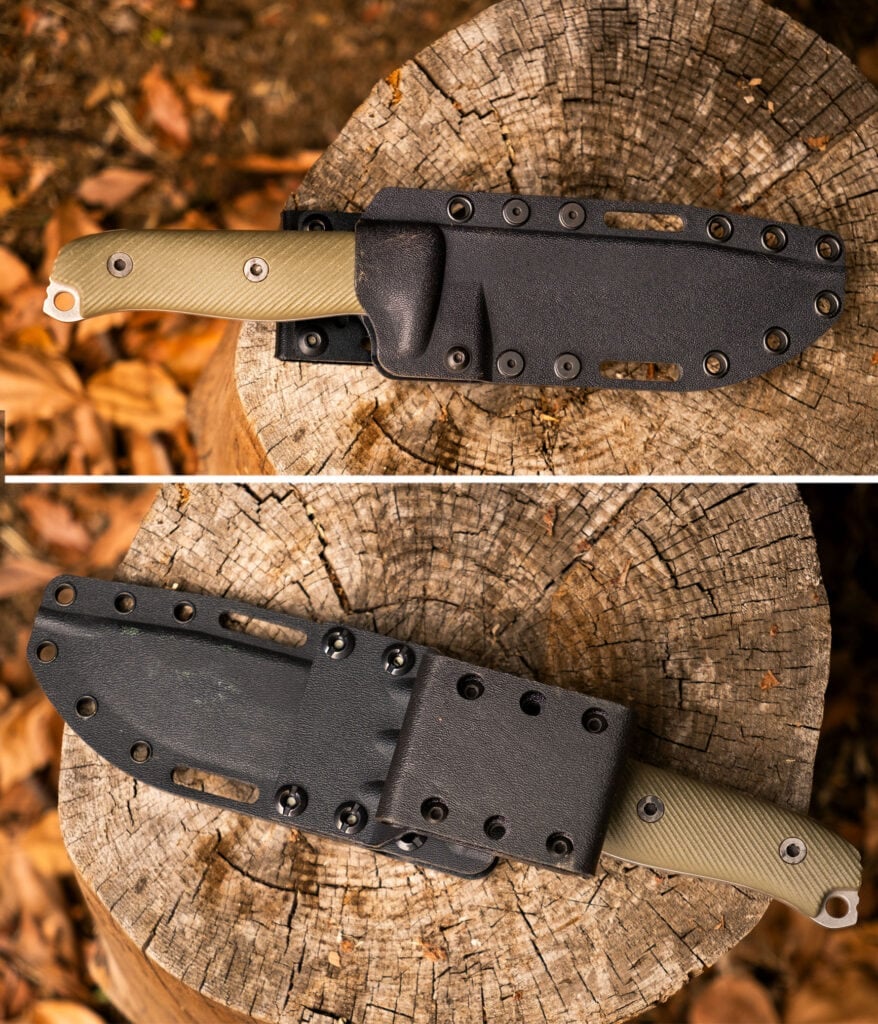
The all-Kydex solution here feels like a calculated compromise between keeping the knife secure and making it smooth on the draw. Although it might be less of a compromise for a SEAL. I’m willing to admit that my delicate writer’s hands just aren’t roughed up enough to draw the Vicon the way it should be drawn.
This is maybe a consequence of the thick handle, which I love. This knife feels great in hand, but between that width and the finger guard, there’s just a lot for the sheath to contend with.
So I get why it ended up the way it did.
Comparison and Alternatives
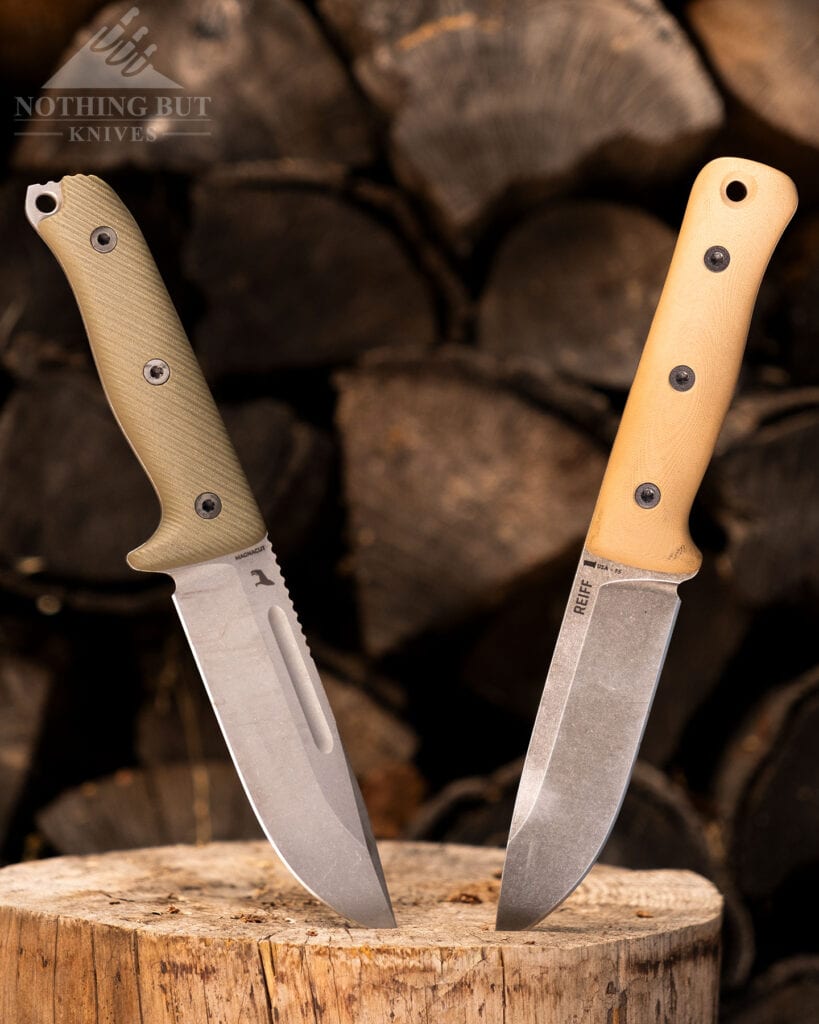
I already brought up the Shwarz LT 5. That feels like a good alterative both for cost and what seems like a better planned sheath.
The Molletta designed LionSteel T5 seems closest to me in style and fit and finish. I think I prefer the handle on the Vicon because the T5 always felt a little too fat, but there’s definitely an argument to be made here for the efficiency of Niolox steel, Italian-made leather, and a significantly lower price.
The Cold Steel SRK is a cruder direction to go, with softer, more corrosion-prone steel, and a polymer sheath I’ve never learned to love, but in terms of price-for-usability it is nearly impossible to beat the Cold Steel SRK.
The style of the knife tempts me into putting the Ka-Bat USMC up as an alternative, but I actually think the Becker Companion is a closer comparison. It’s also great at processing wood and starting fires, but the falls short on the sheath, and the handle, while comfortable, doesn’t quite feel as agile as the Vicon’s.
The hardest decision for several of us here at Nothing but knives will be choosing between the Vicon and the Reiff F5 Glider when trekking into the woods.
It’s Good but At What Point Does a Good Knife Get Outpaced by Its Price?
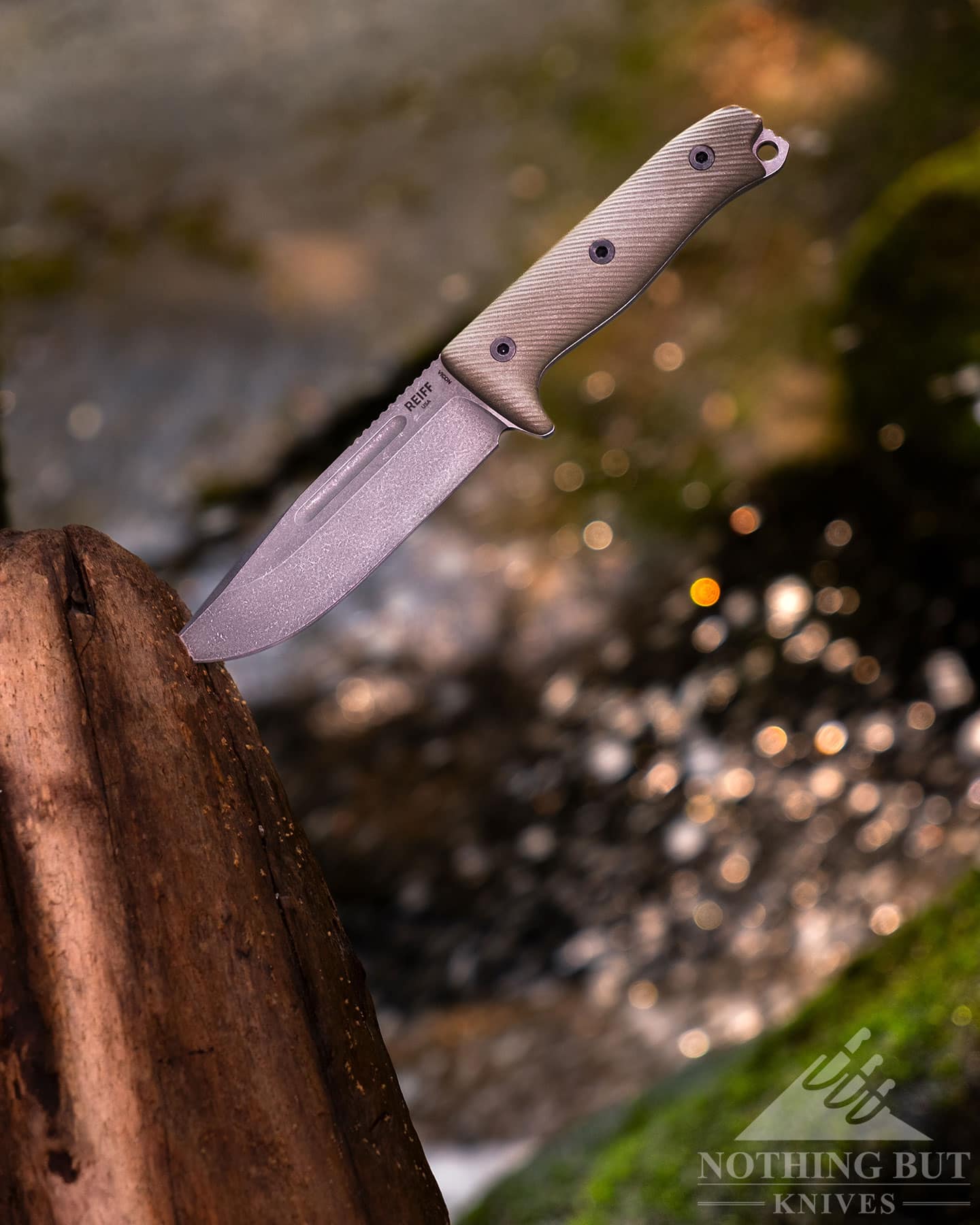
There is no question this is a good knife. I would be happy to take it on almost any camping trip or even just slip it in my car door for a road trip to literally anywhere and be reasonably certain the Vicon will hold up, if not excel, at anything I might get up to, so long as it doesn’t involve too much fine slicing.
It’s a workhouse for processing wood, it has plenty of grip in wet conditions, the handle is a masterpiece for helpful comfort, and even though I think it’s a little too heavy, the sheath manages the weight well enough that I don’t think about that too much on a hike. I certainly don’t think about it as much as the nuance of actually drawing the knife from the sheath.
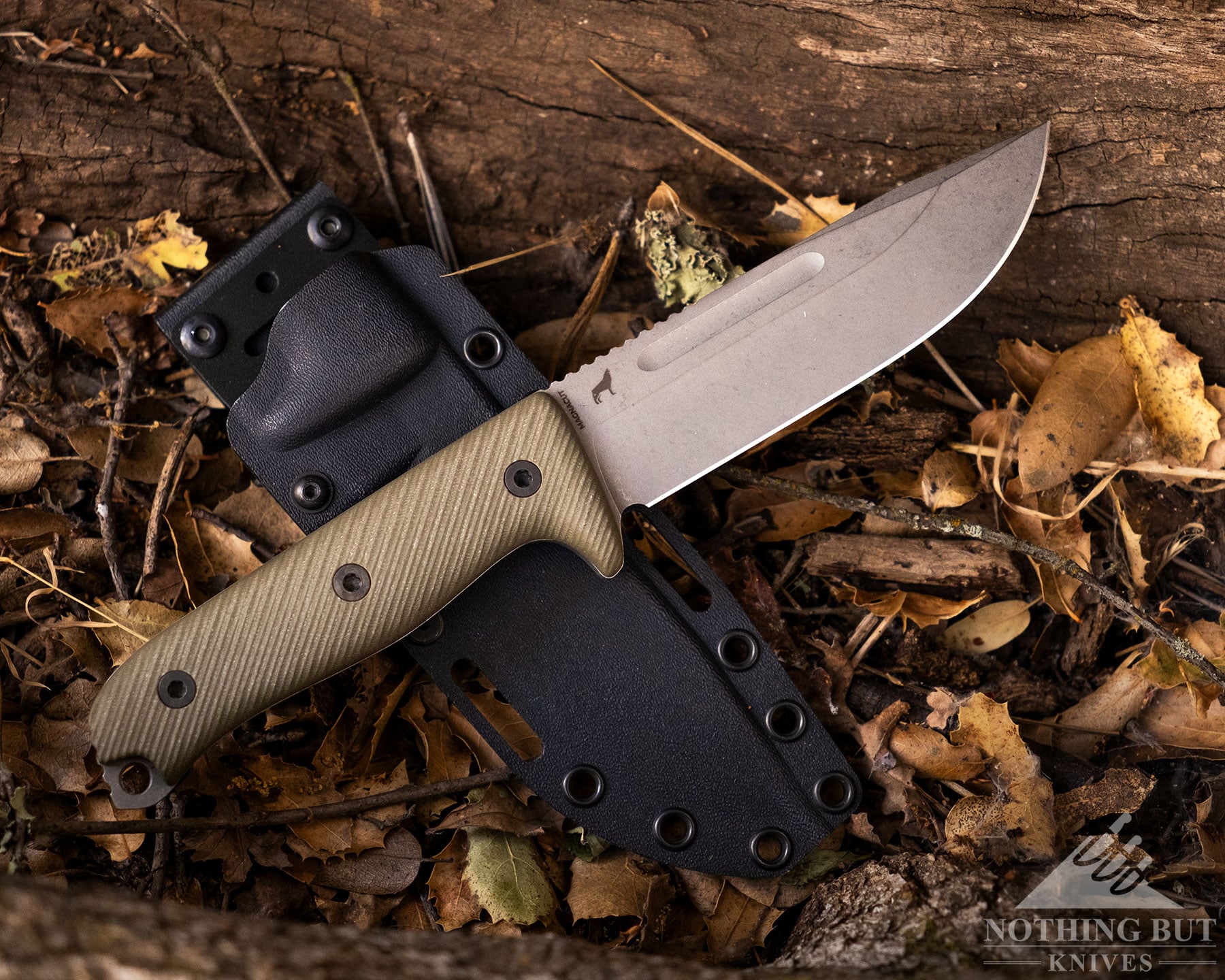
It’s tough to recommend a knife that costs over $400. I have to emphasize that this thing is not for everyone. Any number of Becker designs can do a lot of the same tasks (although some of those knives come surprisingly close in price these days). If it’s a matter of just getting a tool for a certain range of tasks, then, no, frankly. I don’t think the Vicon is worth the price.
What the Vicon brings is another level of fit, finish, and finesse, along with a strong lifetime warranty from the company. Reiff want their knives to last and be handed down. That’s the mission they started with: making “heirloom quality” knives. Even with that maybe the price is a little high. I’m personally more inclined to go back to one of their bushcraft-oriented knives, but I’m also not the kind of person the Vicon was made for.
Still, though, I had a blast using it, and it will definitely be included into some outdoor kit as an axe alternative.