TL;DR
- The blade on the 791 Range Elite is great for hard tasks like carving wood and cutting rope.
- The blade is less good for cutting paper and breaking down cardboard.
- The aluminum handle is harsh, but it does help the knife ride well in the pocket.
- Overall a good camping knife, but I’d personally recommend the cheaper Pro version.
- It should have been a back lock.
Buck’s latest swing at making a modern folder is kind of a confusing mix of details, but it’s a well-made mix.
Different parts of the Buck Range do some things really well, but it felt to me like those parts were good for conflicting things: the handle wants to be a large, upscale folder; the blade wants to be a hard-use bushcraft and camping knife.

In that same vein, while Buck hit that modern folder feeling pretty well, I’m conflicted in appreciating the smooth action, premium steel, and fidget factor but wishing for more classic elements that Buck is known for and excels at, ie. well-treated budget steels, back locks, and slicey hollow grinds.
Specifications
| Overall Length: | 7.88” |
| Blade Length: | 3.38” |
| Blade Steel: | Magnacut |
| Open System: | Thumb stud |
| Blade Thickness: | 0.09” (2.3 mm) |
| Blade Shape: | Drop point |
| Blade Grind: | Saber |
| Handle Length: | 4.5” |
| Handle Material: | Aluminum |
| Lock Type: | Crossbar |
| Weight: | 3.3 oz |
| Made in: | USA |
| What I Liked | What I Didn’t Like |
|---|---|
| Great for carving wood / cutting rope | Cuts rough on cardboard and paper |
| Rides well in the pocket | Aluminum handle is too smooth and harsh |
| Fully amidexterous | |
| Good dimension for gloved hands |
Buck Range Series Breakdown

The Range series knives are meant to be lightweight and for tough, general use. For ranging, I guess.
The series dropped with four different options, Pro (the budget side) and Elite (the fancy end)
| Range | Mini Range | |
| Blade / OVA Length | 3.39” / 7.88” | 2.63” / 6.26” |
| Pro Steel / Handle | 154CM / GFN | 154CM / GFN |
| Elite Steel / Handle | Magnacut / Aluminum | Magnacut / Aluminum |
A Quick Aside for the Mini Ranges

Buck sent us both versions of the Mini Range and the full-sized Range Elite. This review is for the 791 Range Elite, but the Mini Ranges deserve a quick mention.
These are tidy knives. They’re super lightweight and have a decent three-finger grip that feels solid.
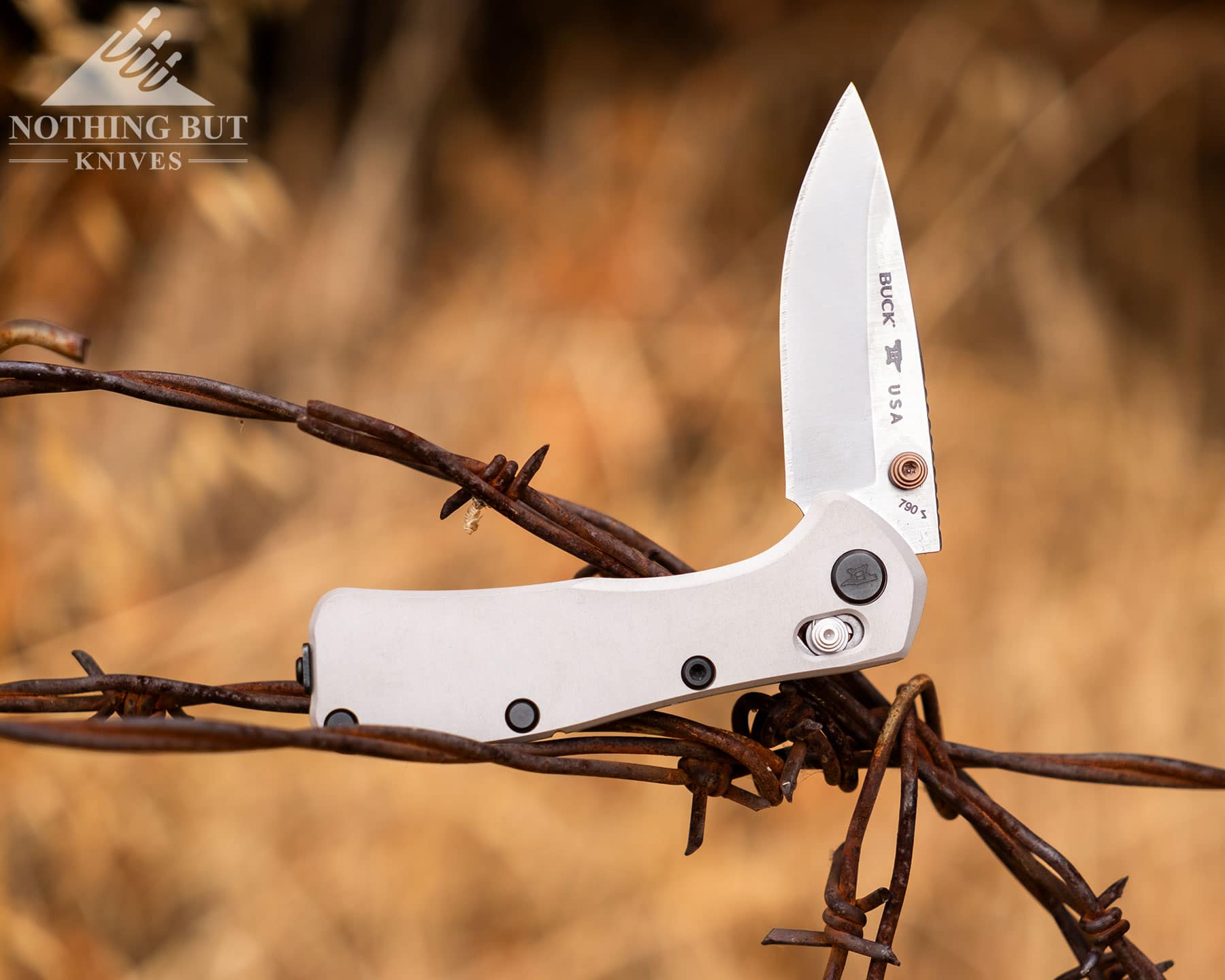
They enter a category of universal, ambidextrous, crossbar lock EDCs with the likes of the CJRB Maximal, the Civivi Banter, and the Civivi Yonder and hold their own pretty well (I am, at this point, basically married to my Maximal, though).
My main complains about these smaller versions is that their pocket clips are super tight. Without putting a coin under them for a while, they grip the pocket like an angry badger. The other issue is actually the same one I have with the regular sized Range, and that’s the awkward cutting edge. But we’ll get into that.
Nice Little Details on the Range
Back to the 791:
There are some nice touches on this knife that, to me, show Buck really took some time and care in designing and making this knife.
The spine is more interesting than it looks at first. It’s crowned around the limping where the thumb rests, but it transitions into a ninety-degree edge about halfway up the blade. You could probably throw spark with it. I didn’t test that aspect, but I did open a beer with it, and sometimes that’s my second most frequent task when I’m camping.

The pocket clip fastens into the pommel. Besides being a superior deep carry solution, this makes the ergonomics truly ambidextrous. Between the crossbar lock and the clip, the handle experience should be exactly the same for right and left handers.
The action is nifty. The size, weight, and ratios of the knife are conducive to fidgeting, but the action came out of the box with a drop-shut smoothness. I still tightened the pivot screw up, because drop-shut isn’t exactly my preference, and the action still had a silky feeling to it that was only interrupted by a slightly more pronounced hiccup from the tang interacting with the crossbar.
All in all, just a knife knife to fidget with and adjust.
The Blade: The Part that Wants to Bushcraft
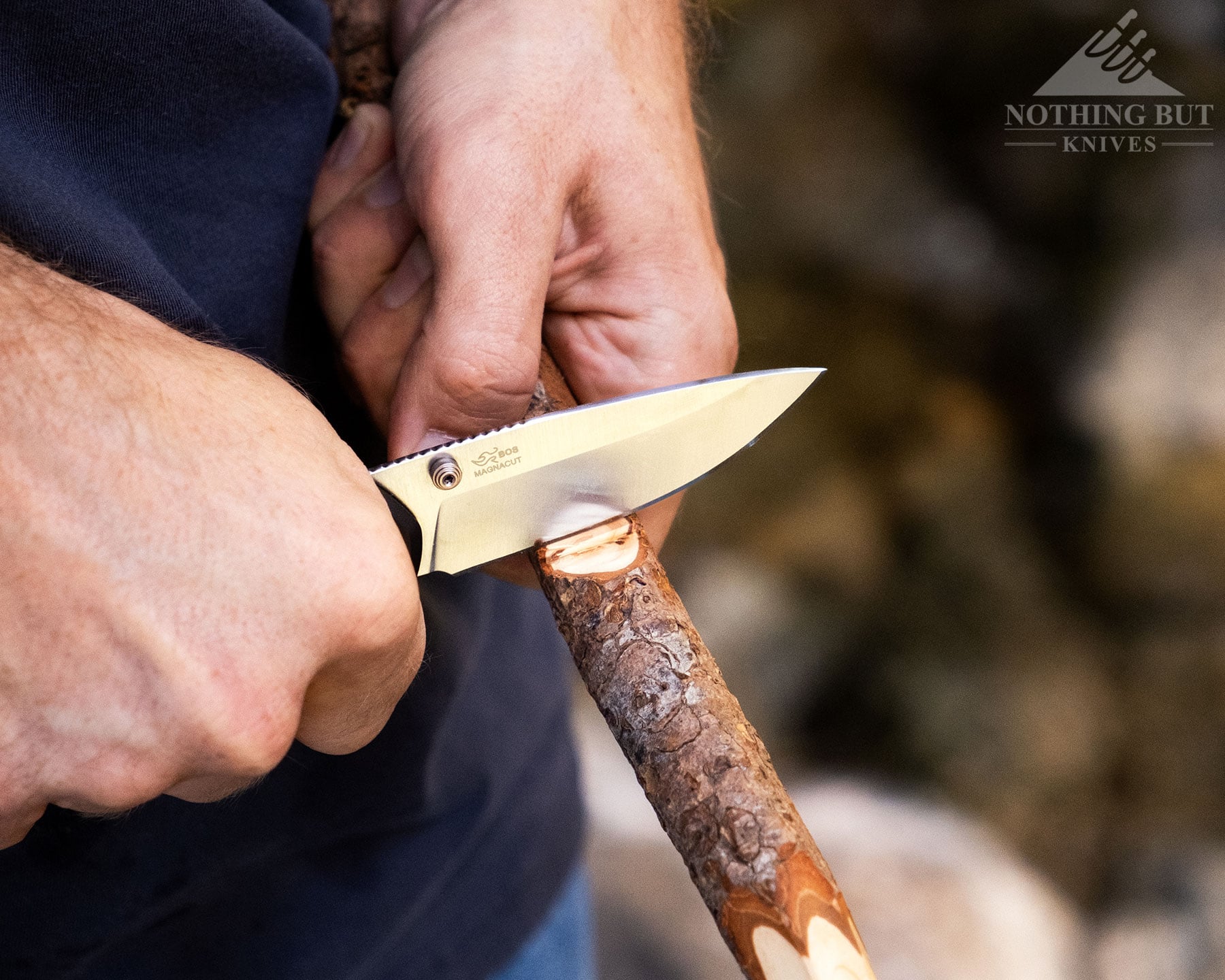
Okay, let’s untangle this thing: I loved the blade in the woods.
It carves wood like a champ and it’s quick on rope. It can make a fine little feather stick, and it did okay when I had to take off larger chunks in a chest lever.
It even handled carving oak pretty well. I wasn’t about to make an oak tent stake with it, but it can carve out some shavings reliably enough that I could get make some decent tinder. This is also where the aluminum handle starts holding the knife back, but that’s for the next section.
I gotta talk about his blade For home Use.
I absolutely do not like the way it cuts paper, breaks down cardboard, or cuts thick tape. It just feels like it’s fighting me.

It’ll start a cut into paper fine at first, but it starts tearing soon after that. The envelopes all my junk mail came in looked like a pile of fat lips when I was done.
I thought it would be better with packages, but when I opened up a larger box that was wrapped in thicker packing tape it felt a little like pushing into a pillow before the edge finally broke the plain. Breaking down boxes didn’t feel much better. The grind has the kind of thickness that likes to get stuck halfway through.
Geometry and Steel Choice
The cutting action surprised me for the couple of reasons:
- The edge feels toothy,
- And the blade stock isn’t that thick.

I think the toothy edge is why it works so well on wood and rope. But it doesn’t act toothy when I want to cut anything around the house.
I was thrown off by the edge feeling this rough at all since Magnacut steel can take such a high polish. That’s not to say every company should put every Magnacut blade to a two thousand grit finish, but this edge feels like it’s not taking advantage of what Magancut really has to offer outside of giving Buck the chance to say they have a crossbar-lock folder in Magnacut.
But I’m spiraling. The fact is, when I’m camping, edge retention and corrosion resistance are often the most useful in a folder, and I think I have that here.
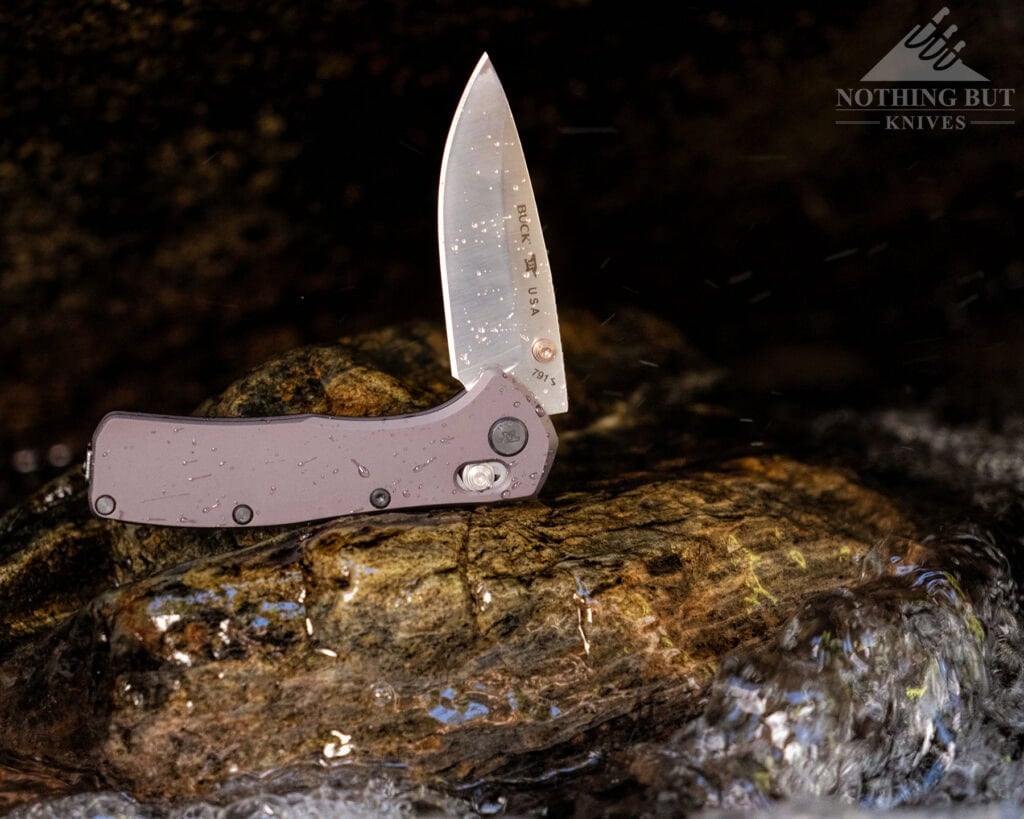
The corrosion resistance seems pretty good. I was basically standing under waterfalls and swimming in a creek when we shot this knife in the mountains, on top of the many layers of sweat this thing has been subjected to while riding in my pocket or being poked into dirt in my yard, and I have yet to even see spotting on the blade.
I have a hard time gauging its actual edge retention, since I didn’t like how it cut paper out of the box. I will say that it felt about the same kind of gross after a few days of carving random sticks and ruining a few feet of rope out in the woods. So I think the retention is good.
The Handle: The Part that Wants to EDC
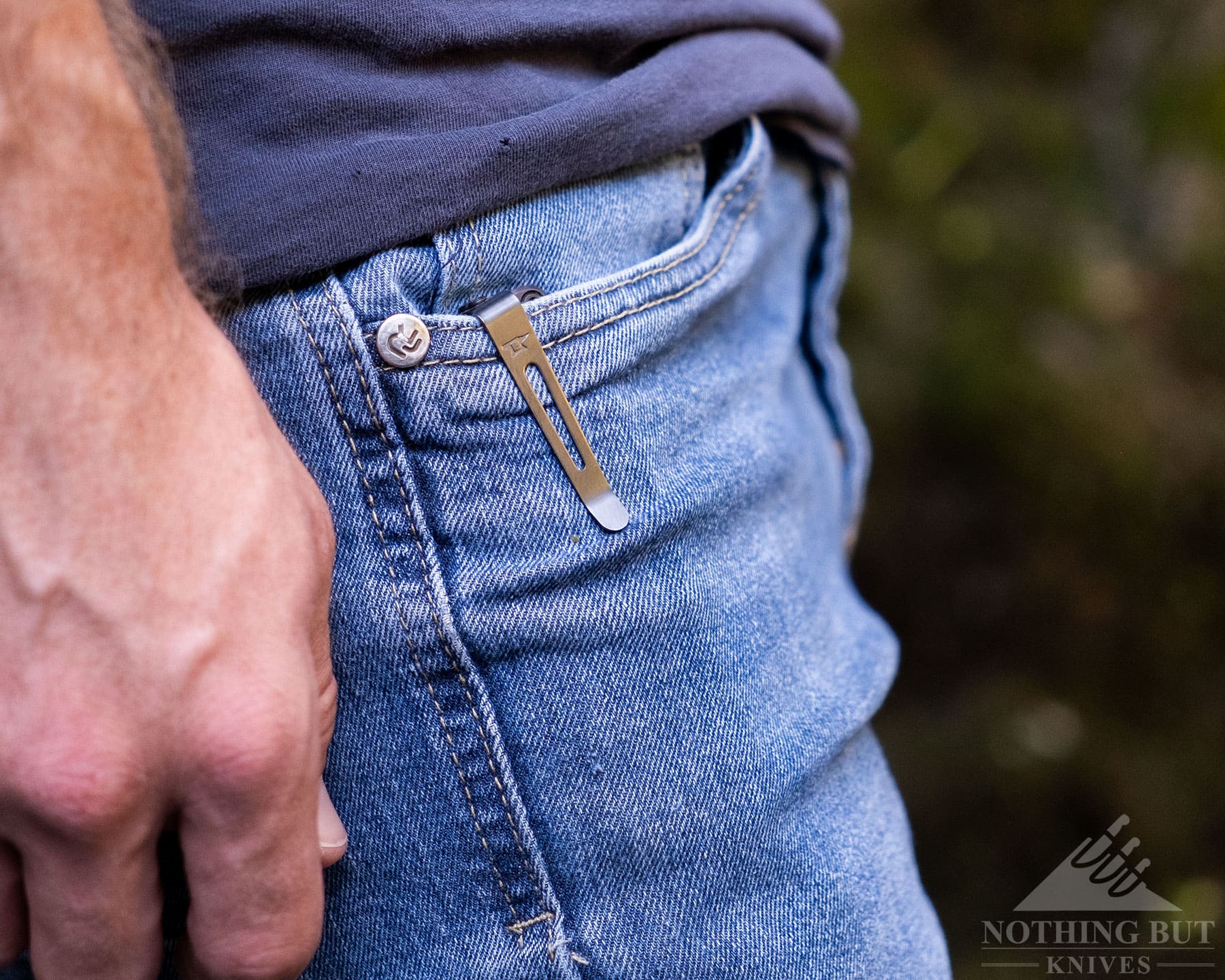
I am most impressed by how a knife this size carries in the pocket.
This is where the smooth aluminum handle scales shine. The 791 Range Elite glides in and out of the pocket, and it shares that space surprisingly well with phones and keys. I strolled, hiked, and climbed all over with this in my pocket, and it sat still and comfy the whole time.
That’s not just due to the scales, though. They nailed the pocket clip retention.
Where it gets tricky is that the aluminum handle gets really unpleasant when I have to tighten my grip up into a hard cut. It didn’t feel it too much so long as I was carving pine and drift wood, but harder materials really made the edges of the handle show up in my grip.
It’s the Right Size for Gloves, Though
The main hard-use benefit of the handle is that the dimensions of it work really well in gloved hands. The spacing of the thumb stud from the scales and the prominence of the crossbar lock both make it easy to deploy and close the Range with a single gloved hand.
I appreciated the hell out of that when I put on a pair of padded gloves to do a bit of work in the cursed bramble that is my back yard. Still, though, the harshness and lack of texture of the aluminum handles make the Range Elite feel generally unpleasant, even with the added padding of gloves.
The Lock and Memories of What It Could Have Been
I’ve never been a fan of crossbar locks. I will admit that this one seems good enough, though. It hits that fidget factor well, and the blade still seems to lock up well after my week or so of abuse.
I don’t like a crossbar lock on this size of a blade, and I certainly don’t like it when I’m fighting with knotty pieces of wood, but it’s holding up. It’s good. I’ll step away from my bias enough to say that.

Here’s what really gets at me: the Buck Range is almost exactly the knife I wanted Buck to make. This hit me when I realized the Buck Range reminds me of the Kizer Slicer.
When that knife came out both my brother and I, separately, said it looked like something Buck would make, and of course the inevitable question we asked each other later was “why hasn’t Buck made a knife like this yet”.
It was a thumb-stud back lock with a solid grip and a slicey blade and it just worked for everything like a dream. When I was testing it I kept thinking about how much more solid it would feel if Buck made it, because they know their way around a back lock.
When Kizer discontinued the Slicer I felt like that left a gap for Buck to step in, but at that time they were busy updating the 110 and 112. Those updates brought them a little closer to what that Slicer was, but not quite. That knife scratched a slightly different itch.
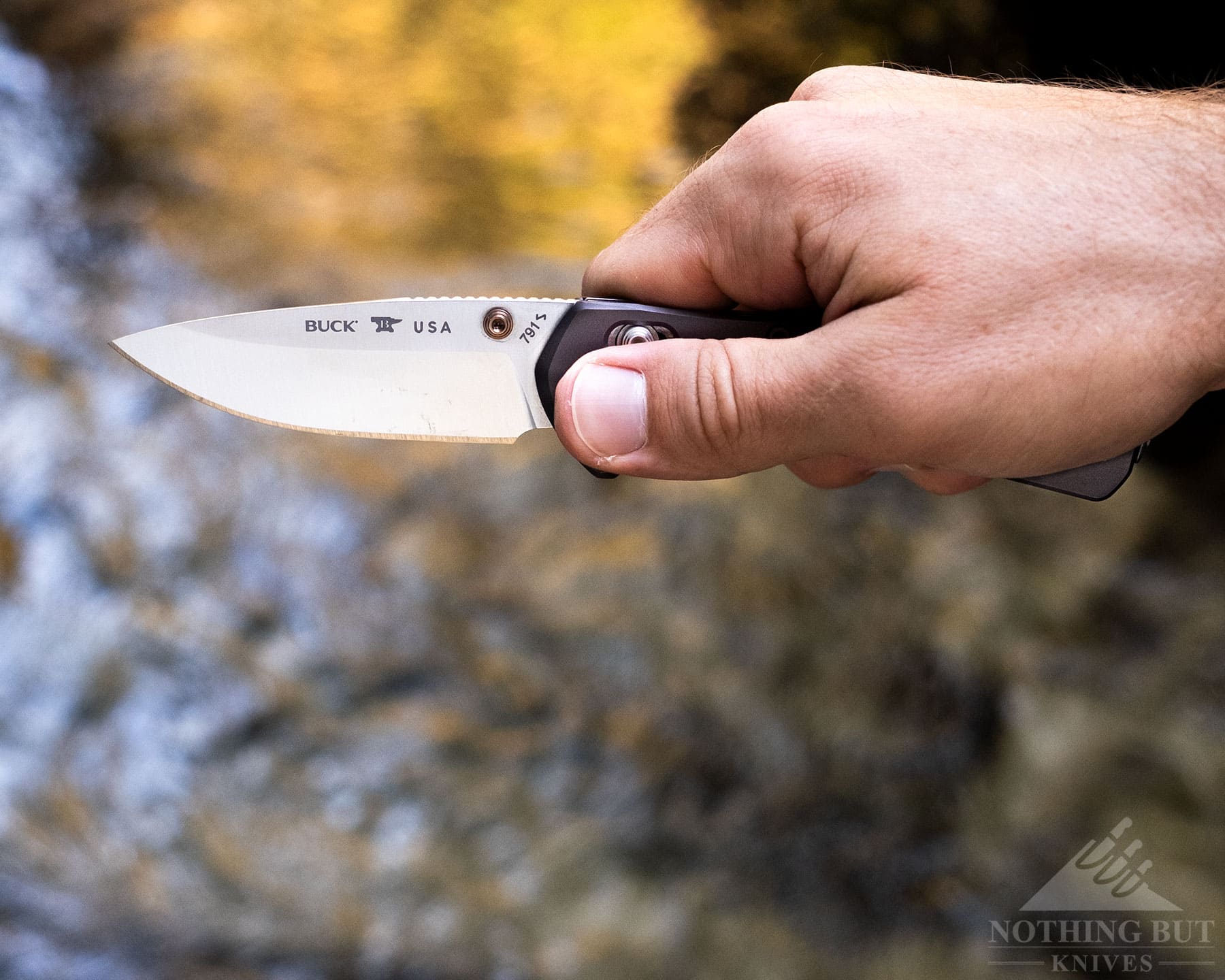
Maybe Buck wants to get away from the 110 legacy a little bit. I can support that, but I won’t stop wishing for the Range Elite to have a back lock and thinner behind-the-edge geometry.
Comparisons and Alternatives
I guess the obvious knife here is the Benchmade Bugout. I don’t own a Bugout, but the spirit of the Bugout as a lightweight, possibly hard-use EDC, seems in line with the intent behind the Buck Range. Plus I’ve heard complaints about Benchmade edges that make me think Bugout fans might feel at home with the Buck Range.
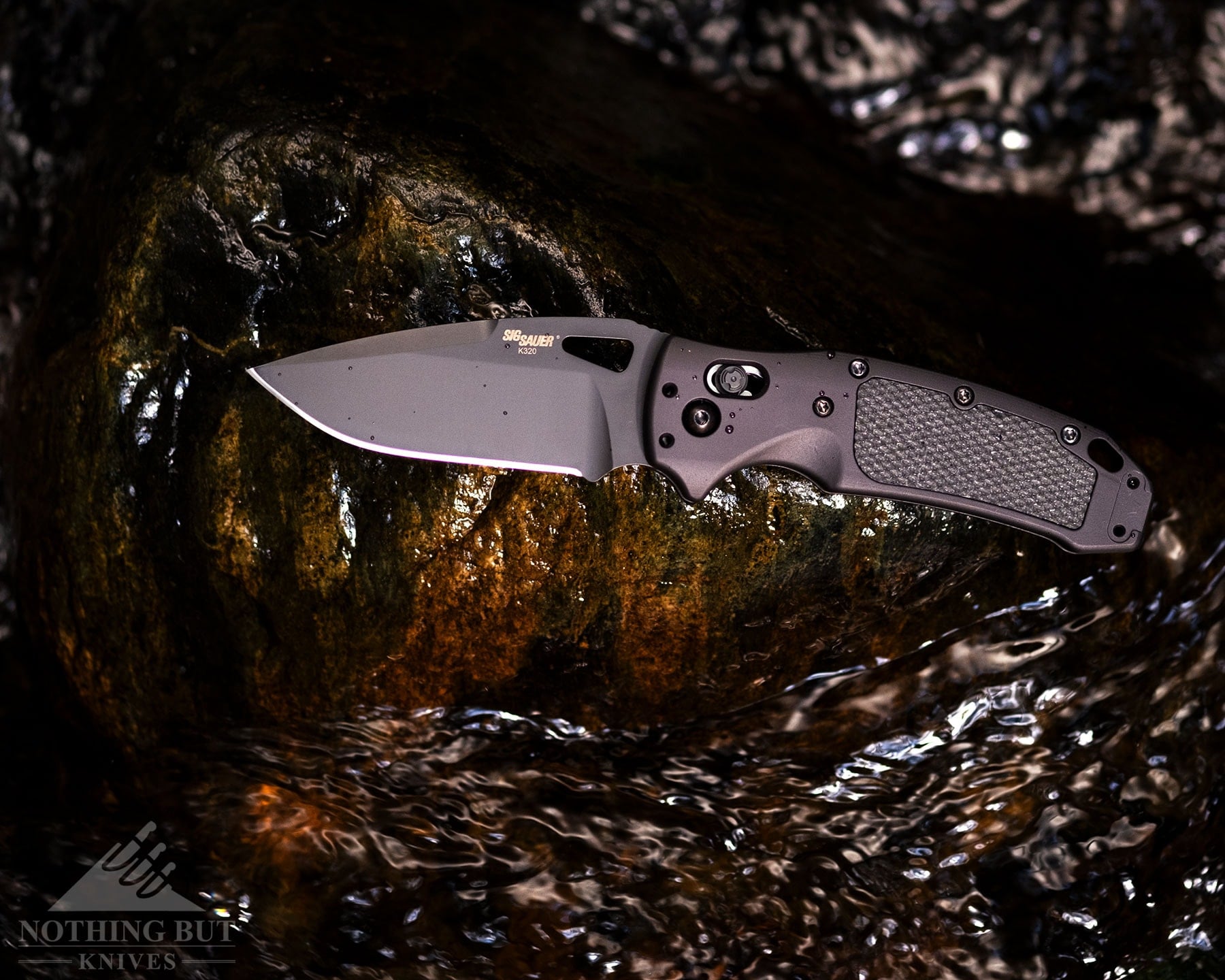
I’ll put the Hogue Sig K320 forward as another USA-made crossbar lock. It has similar materials, but the aluminum handle benefits from Hogue’s ergonomic ingenuity. It leans more tactical in style. I much prefer the look of the Buck Range, but Hogue’s Sig K320 is by far the more comfortable of the two.
The Real Steel Pathfinder is worth a look as an example of what I wish Buck had followed. That’s a more clear-cut camping/bushcrafting folder, especially if you can find the scandi grind version. That runs on a much softer steel, but the Micarta handle has the kind of mild curvature that suits my grip well and locks in when I’m carving.
If you don’t mind modern design lines, the Work Sharp RMX folder is a great hard use tool designed to last a lifetime or go with the Hogue Mysto pocket knife if you want to stick with a crossbar lock.
Final Thoughts – This Might Be a Good Time to Stay on the Budget Side
I really do like this design. What holds the Range Elite back is that the handle and the blade want to be in different places. The blade is handy with wood and rough cutting, while the handle punishes you for tightening your grip. Take it inside and the blade is sluggish with paper and cardboard, but the handle ghosts in the pocket and makes it a pleasant EDC 90% of the time.
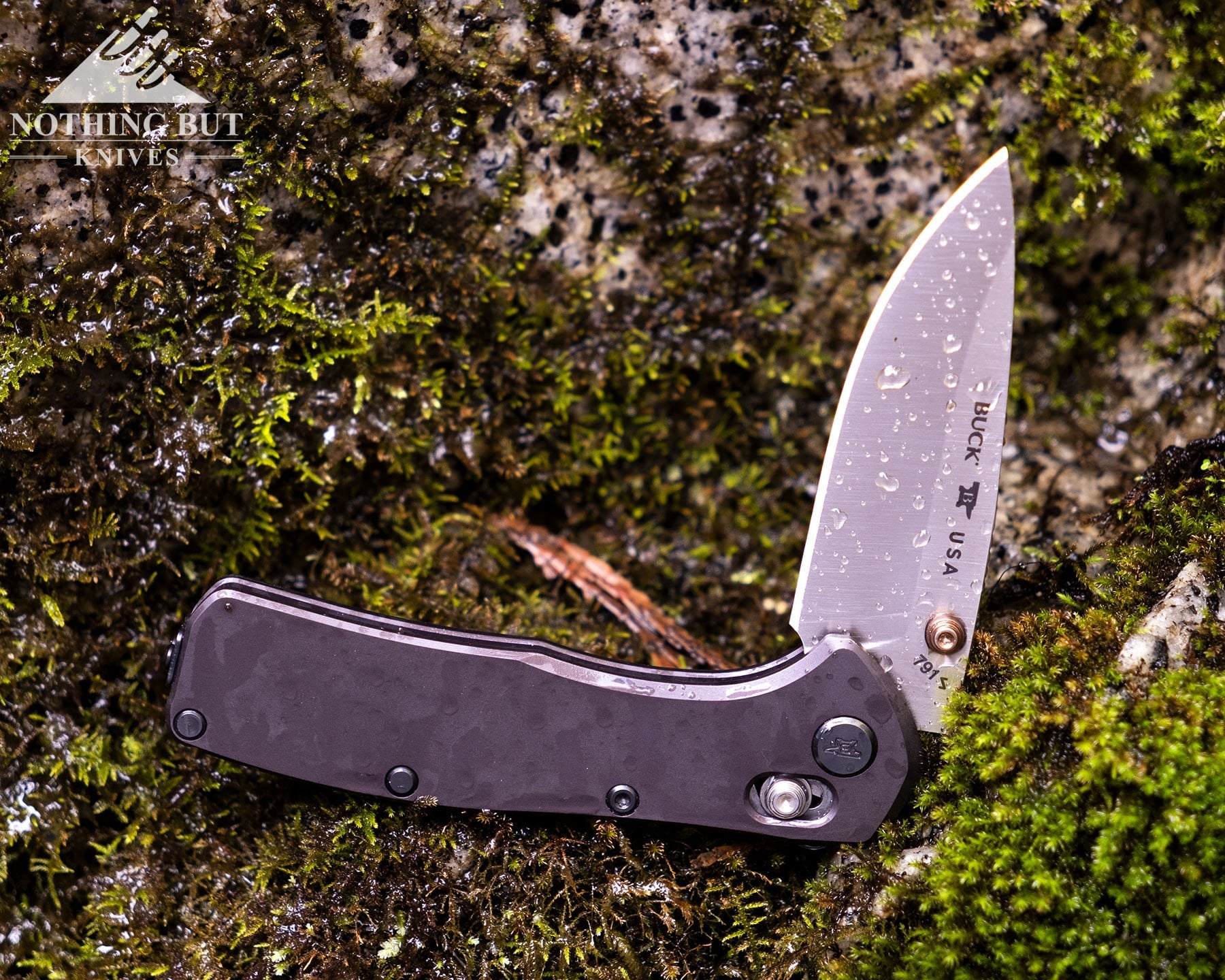
Thankfully, Buck made the Range Pro. The GFN handles on that should have better texturing and fewer hotspots. Unfortunately, they didn’t send us that one, so my assessment is based mostly on pictures and my experience with the Mini Range Pro.
This is also a problem that could be fixed one way or the other by swapping the scales or putting your own finish on the edge. But Magnacut can be a bear to tighten up, and making your own scales is another skill entirely (unless of course, the aftermarket latches onto the Range series)
I do want to reiterate that I like this design. I’m harping on it like this because it feels so close to being a great knife if Buck had just let it be more specialized one way or the other. But, working with what I have, I’d recommend the 791 Range Elite as a nice camping folder if you don’t mind the harshness of the aluminum handle.