TL;DR
- A great knife for carving wood, general yard work, and cutting boxes.
- It has buttery smooth action on bronze washers.
- The Richlite handle feels plasticy when dry, but gets grippier in wet conditions.
- The biggest issue is the pocket clip could stand to be a little tighter.
Hogue’s Manufacturing Makes them Stand Out in a Packed Crowd of Good Crossbar Lock Folders.
It’s easy to glance past a knife like this these days. A mid sized folder with a drop point blade in a midrange price point is kind of like seeing a crow in a park: cool, but really not interesting enough to talk about unless you’re talking to someone who’s already really into birds.
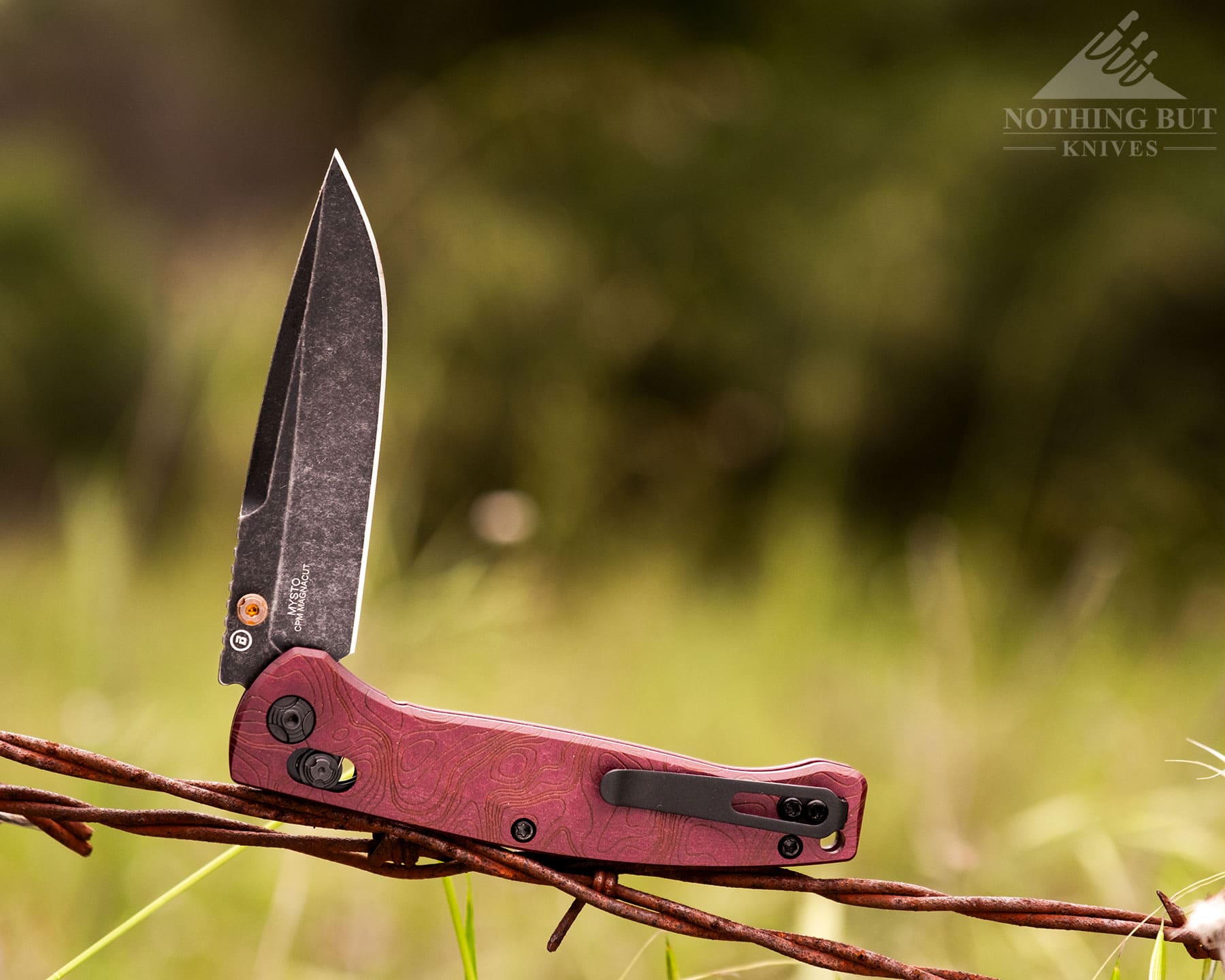
I very nearly did look past the Mysto, but Hogue has a reputation for top notch manufacturing, especially where folding knives are concerned. That isn’t an easy for US-based knife companies to achieve right now, and I guess it’s kind of my job to occasionally try to gauge whether they deserve the hype every now and then.
So here’s that gauge: yeah, they absolutely deserve that reputation.
I love the way the action feels on the Mysto, and the edge practically makes materials melt around it. The handle does its job well by giving a little bit of texture and not getting in the way.
The Mysto is a good knife in a similar way to how a lot of knives are good these days, but after digging into the guts and abusing it for a few weeks, I’m left especially impressed at how dialed in everything feels. I’m tempted to say Hogue is the best US manufacturer when it comes to folders, but I don’t think I have the guts to back that up yet (mostly because I haven’t tested many Spyderco knives).
Specifications
| Overall Length: | 7.8” |
| Blade Length: | 3.4” |
| Blade Steel: | Magnacut |
| Open System: | Thumb stud |
| Blade Thickness: | 0.115 (about 3 mm) |
| Blade Shape: | Clip point |
| Blade Grind: | Flat |
| Handle Length: | 4.4” |
| Handle Material: | Richlite |
| Lock Type: | ABLE lock |
| Weight: | 2.5 oz |
| Designer: | Scott Bruhns |
| Made in: | USA |
| What I Liked | What I Didn’t Like |
|---|---|
| Great hard use knife | Pocket clip hot spot |
| Blade is surprisingly tough, and the edge slices clean | Pocket clip could be tighter |
| Righlite handle scales feel good | Handle scales feel plastic-y |
| Fully ambidextrous | Thumb stud sits pretty high behind the edge |
The Mysto’s Time as a Very Small Machete
One of the first things I did with the Mysto was take it into the overgrown parts of my yard. In retrospect that was an unprofessional move as a knife reviewer, since I didn’t give the knife a chance to cut clean before I used it to brutalize nature.
Eventually I did all the regular tests with the Mysto, though, and it pulled through just fine.
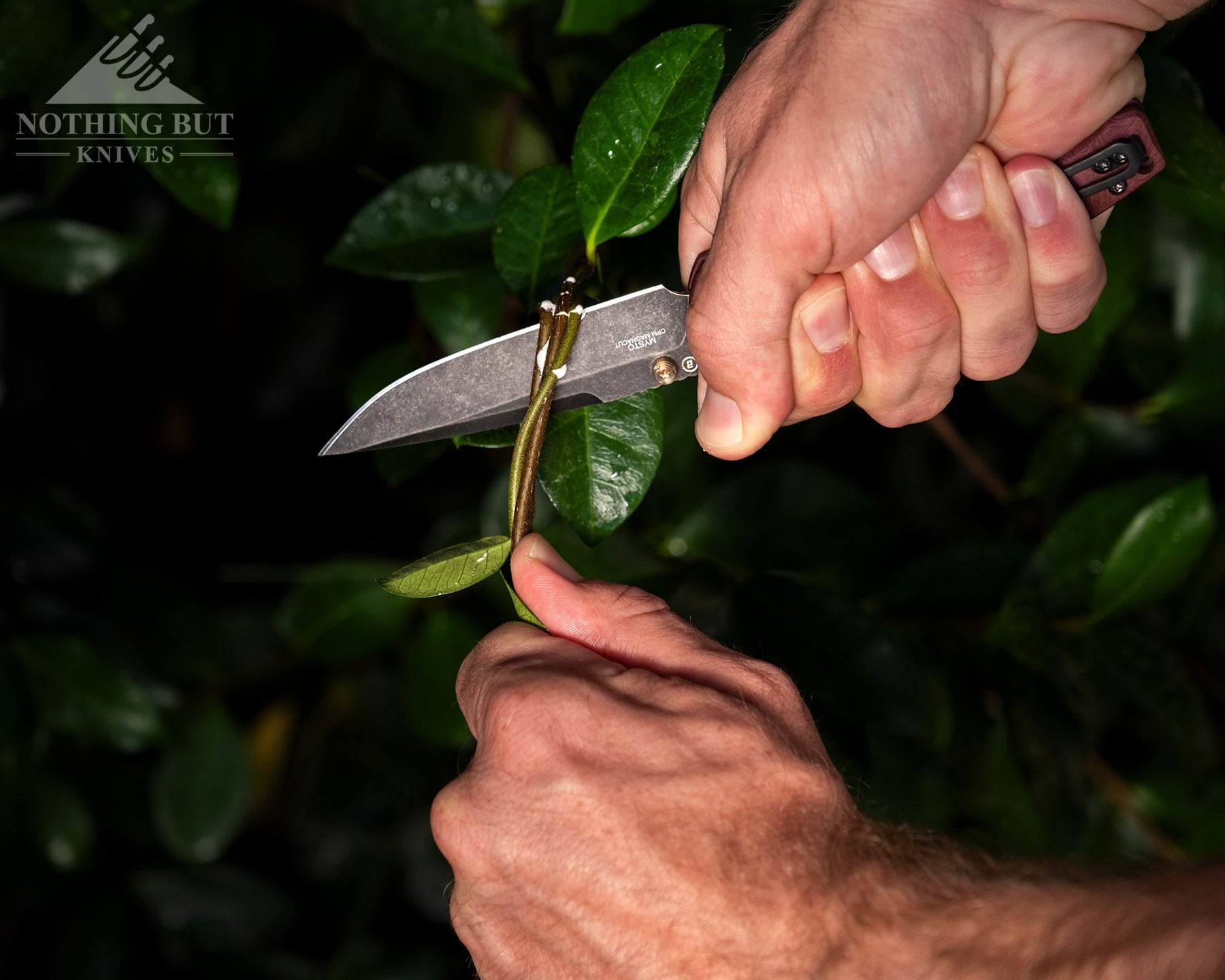
I used this thing to hack through some rough overgrowth. The kind that’s low-growing and vine-strangled and generally back-breaking to get to a point where you can even clear enough to see what actually needs to be cleaned up.
The Mysto ended up being my vine cutter. “Vines” in this case mean wisteria-type things I couldn’t identify, but they were thin and soft and growing all around a shrub I didn’t want to cut up too much in the process. That meant I needed a blade that was small and sharp so I could cut with some degree of precision, and tough because I had to work low to the ground and contact with the ground was inevitable. I could have used shears but that would have been slow and awkward because of the way I had to crouch and reach beneath the canopy.
The Mysto cut the vines pretty much on contact, so I ended up using it in a machete-like fashion. There were a couple of times I considered grabbing an actual machete, but if I used anything much bigger I would have risked slicing into the trunk of the shrub (that’s just about a tree at this point). Another inch might have been ideal, but I managed to make quick progress just by pulling the vines tight with one hand and cutting half blind as close to the ground as I could.
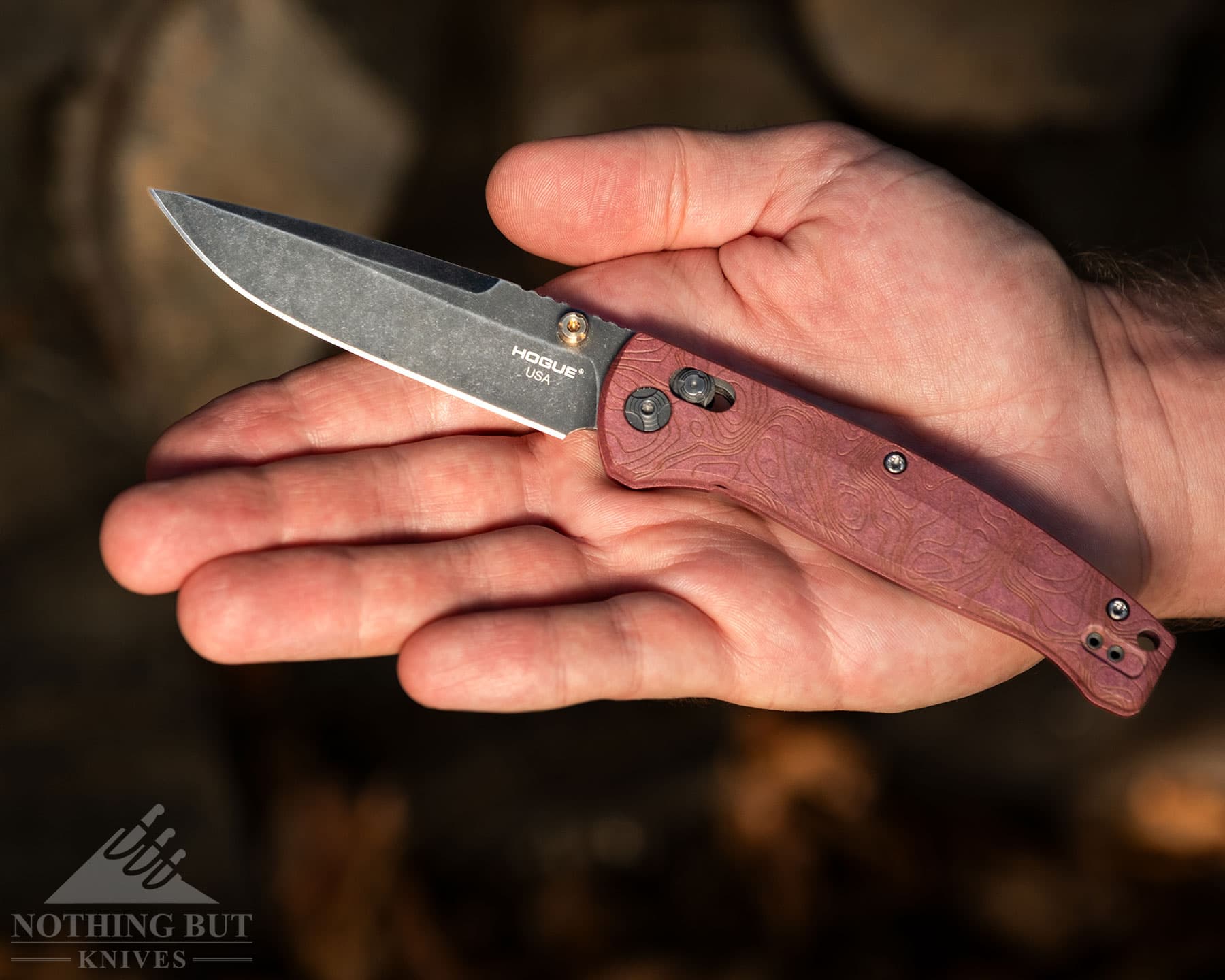
This experience also made me appreciate the handle. I was wearing gloves and throughout the process was constantly pocketing the knife and taking it back out as I switched between it and loppers. I only misfired a couple times when I tried deploying it. Working the crossbar lock felt a little awkward, but otherwise I had no trouble using it while completely gloved up.
It also showed just how much the blade could take since the edge didn’t really need to be fixed up after this. I cleaned the blade off, and it still cut just fine. I didn’t detect any rolls in the edge, and it cut cleanly through paper.
The cleaning process was a little tricky, not only because it was difficult to get all the gunk and wood stains wiped off the blade enough to allow for a clean cut, but because the finish made it harder to see where I needed to scrub. It’s also possible the black stonewash finish makes the knife hold onto stains and gunk a little harder than, say, a satin finish. But maybe that’s a small price to pay for a cool looking blade.
The Blade is Surprisingly Easy to Maintain
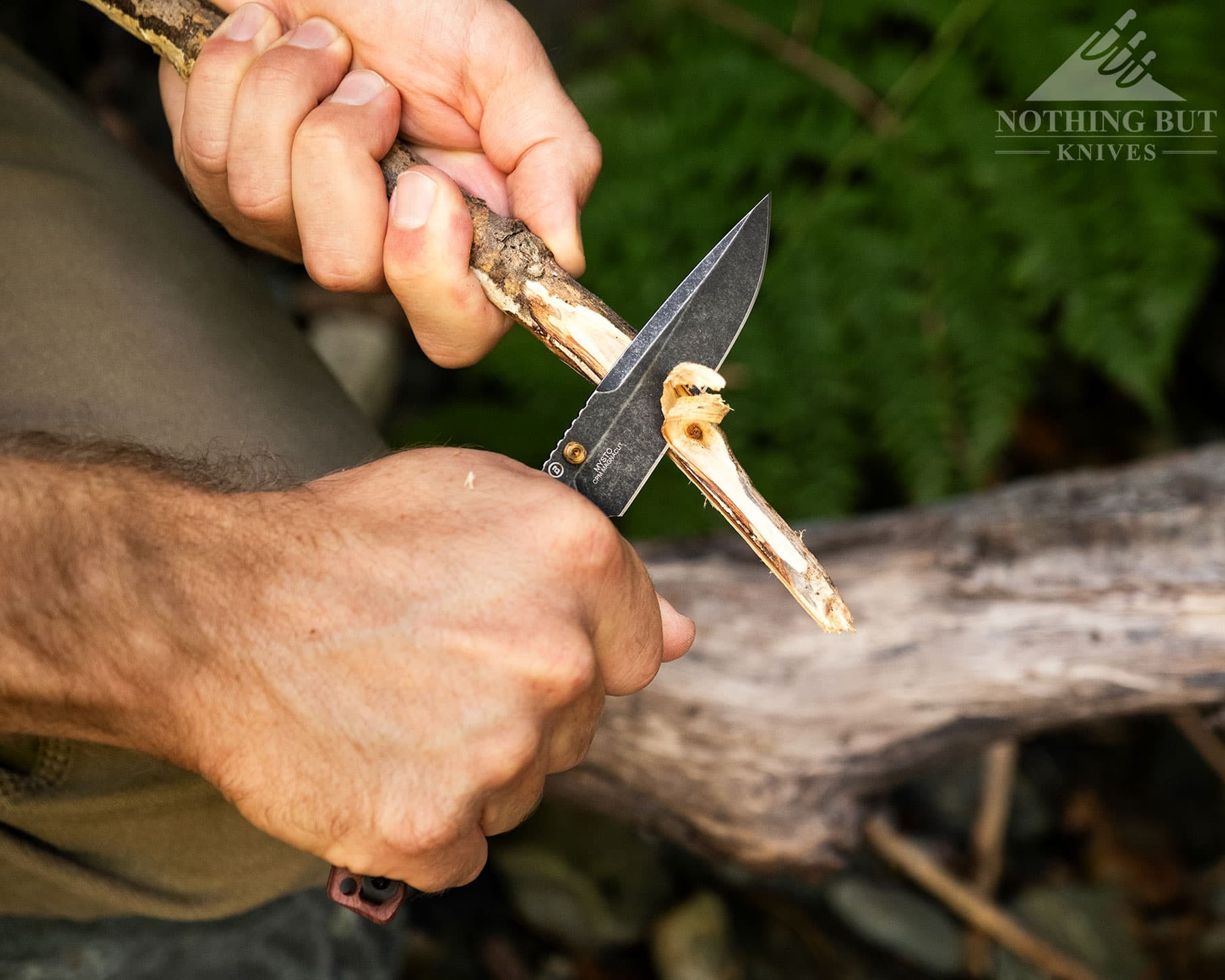
This blade has a clean-cutting hard-working edge. It has a prominent secondary bevel that makes it feel smooth cutting through cardboard and carving wood. It does great for its size when I use it in a chest lever, and the edge held up against all kinds of yard and wilderness tasks, and was still, somehow, easy to fix up afterwards.
The Magnacut surprised me a little, because it feels easier than usual to fix up. I ran into some cutting problems after using the Mysto for a few days where the curved part of the edge had gotten deformed badly enough that it was tearing paper when I tested the edge.
So I gritted my teeth and sat down with a ceramic honing rod to see how far back to normal I could get the edge. After a couple of passes I felt a bur forming, so I passed it over the other side a couple of times and had the edge realigned and cutting paper like it was out of the box.
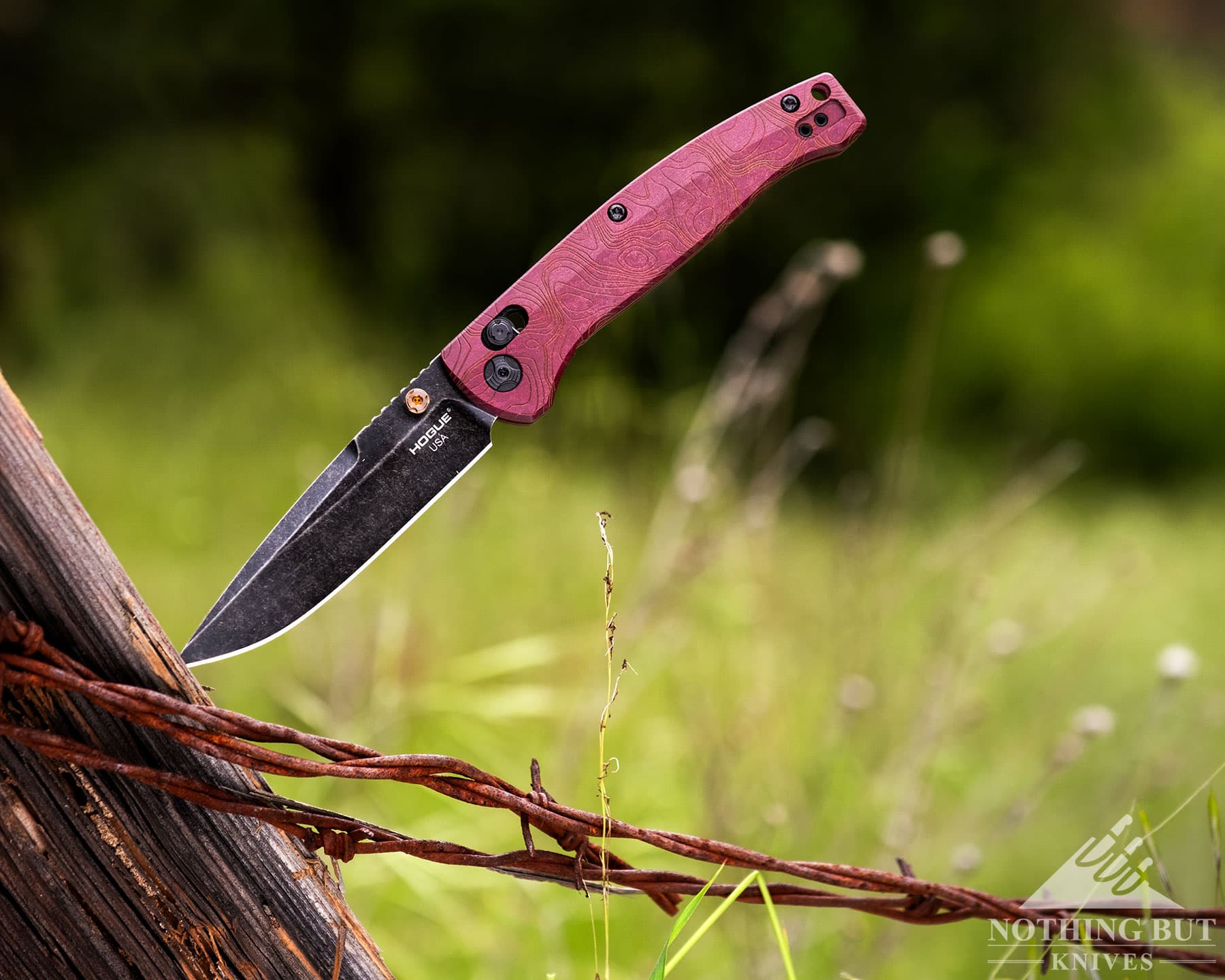
Hogue says it’s treated to 62 – 64 HRc, and I’m inclined to believe them. Partly because everything else on this knife is so well done, and I’m not equipped to challenge this kind of expertise on the complexities of heat treating Magnacut. But if you had made me guess without looking at the specifications I would have said the hardness was closer to 60. Maybe I’ll feel differently when I have to sit down and sharpen it properly, but so far this is an unusually forgiving Magnacut blade.
And I want to be clear the deformation came from hard use in the woods (and my yard). The Mysto has a great edge retention through regular use, but few edges are safe when I start whittling on the rocky shore of a creek. Whatever heat treat Hogue got on this thing seems to be optimizing the edge stability. This might be one of the best examples I’ve tested of a production company taking full advantage of the balance Magnacut was made for.
Smooth Action and Tight Tolerances
The action is buttery smooth. It only takes a little encouragement from the thumb to get the blade to glide out. The fact that it feels like this on bronze washers (not bearings like I thought when I first started carrying it) is a credit to Hogue’s manufacturing tolerances.
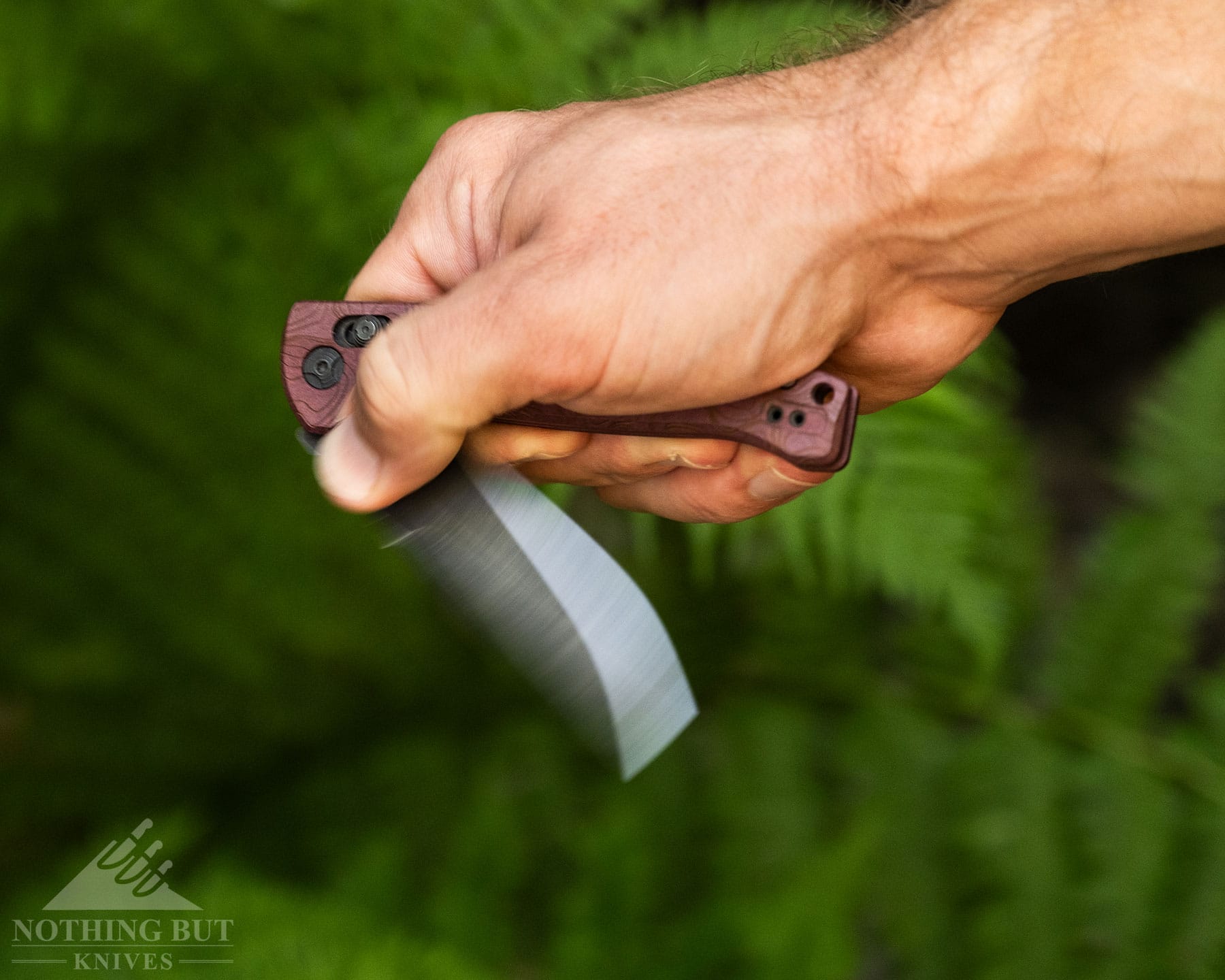
I have felt first hand just how tight these tolerances are during disassembly. The way every screw and liner was set perfectly in its place was both satisfying and frustrating as it made getting some pieces apart the first time tricky (they might have been a little too generous with the Loctite), and getting the pivot screw back in place was the hardest game of Operation I’ve played in a long time.
But the process (done entirely with a T8 torx driver, by the way) showed me just how sturdy the knife is, and it also made me realize I like the action better than I thought I did.
At first I had a little problem with the way the springs in the cross bar lock made the action feel gummy (the lock feels like it might be a little stronger than usual), but that feeling smoothed out after I got the knife back together. I think all I had to do was the dial in the pivot screw.
Nuance of the Richlite Handle
By function and looks, I like this handle quite a bit.
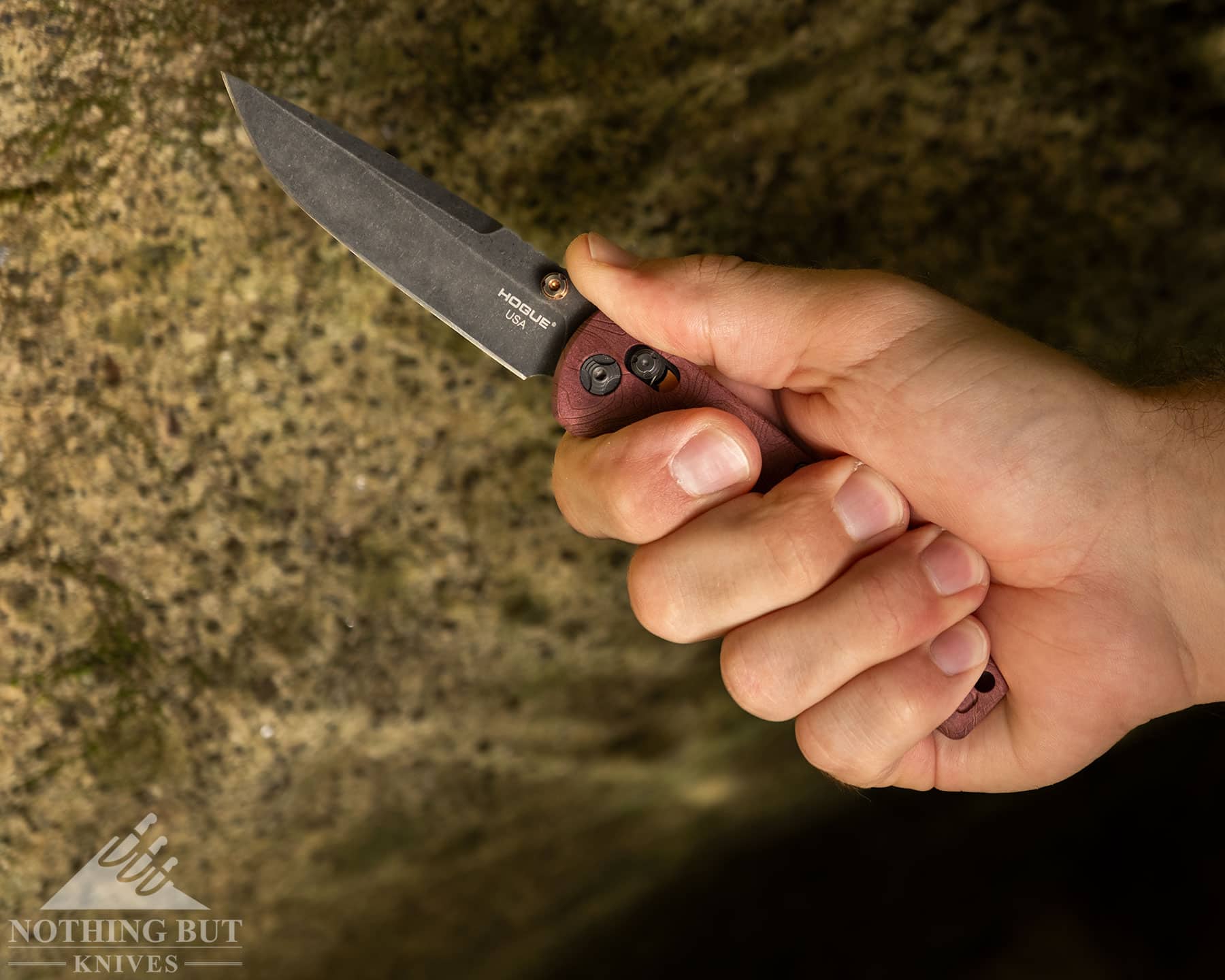
I don’t love how it feels. It’s plasticy, and even though I know the material is strong, there’s a fancy man inside me telling me that feeling is the feeling of poverty. But this is Richlite, which is not a handle material I’m in the habit of snubbing.
I love this stuff in general, but I do groan a little when knife makers do whatever it is that makes it smoother on the surface. I’ve felt how warm and soft Richlite can get, and I’m always chasing that high when I pick up a new knife.
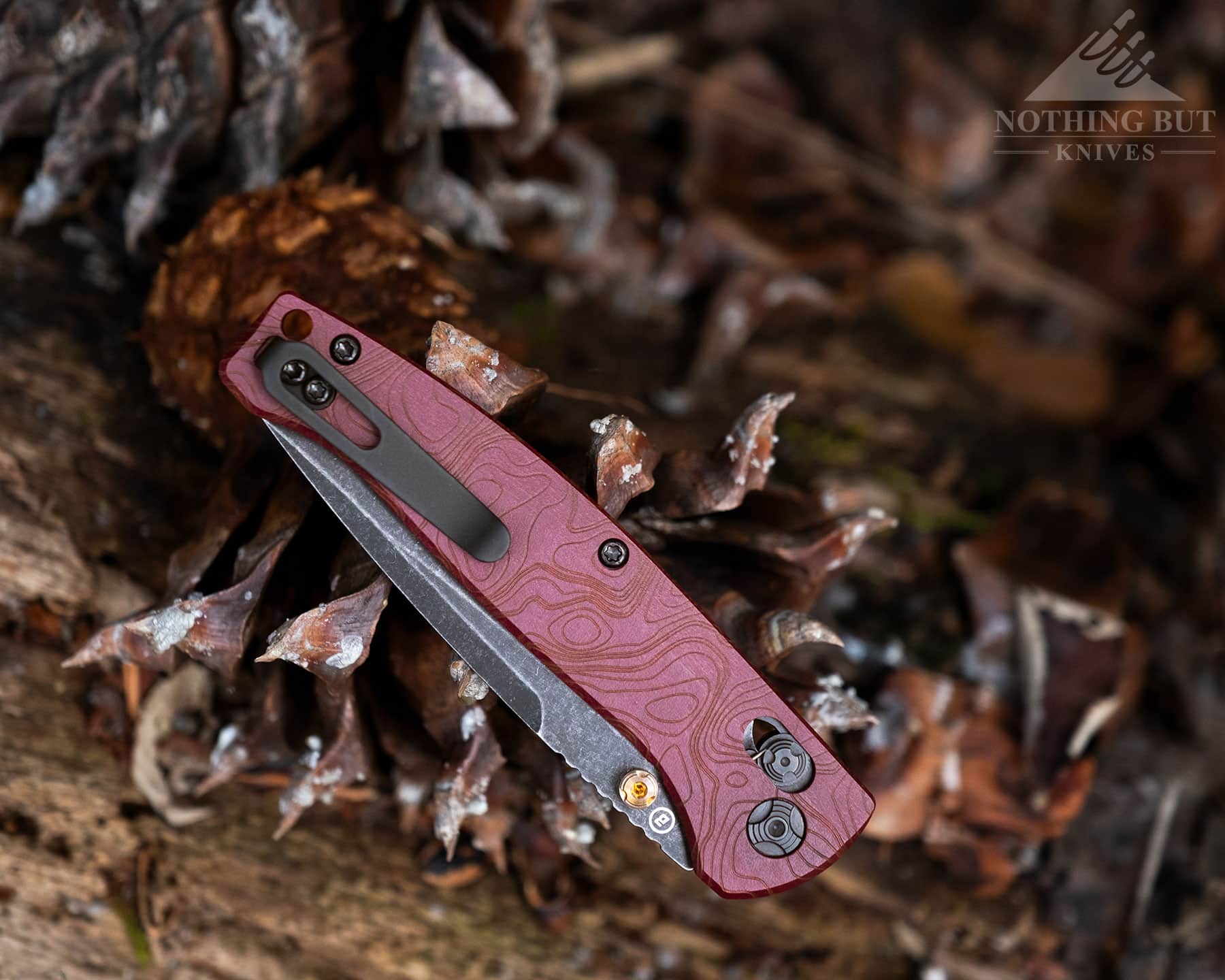
But on a purely practical level, this handle is aces. The shape is on point, and the topographical texture is a neat way to help the grip. And some of those Richlite qualities do come out in the grip when the knife gets wet.
While I don’t recommend you make a habit of submerging this thing in water, my time wading through creeks looking for cool sticks to carve with the Mysto in my pocket did show me that the grip swells just a little and makes the knife a lot easier to hold in wet conditions.
The Pocket Clip is the Main Weak Point
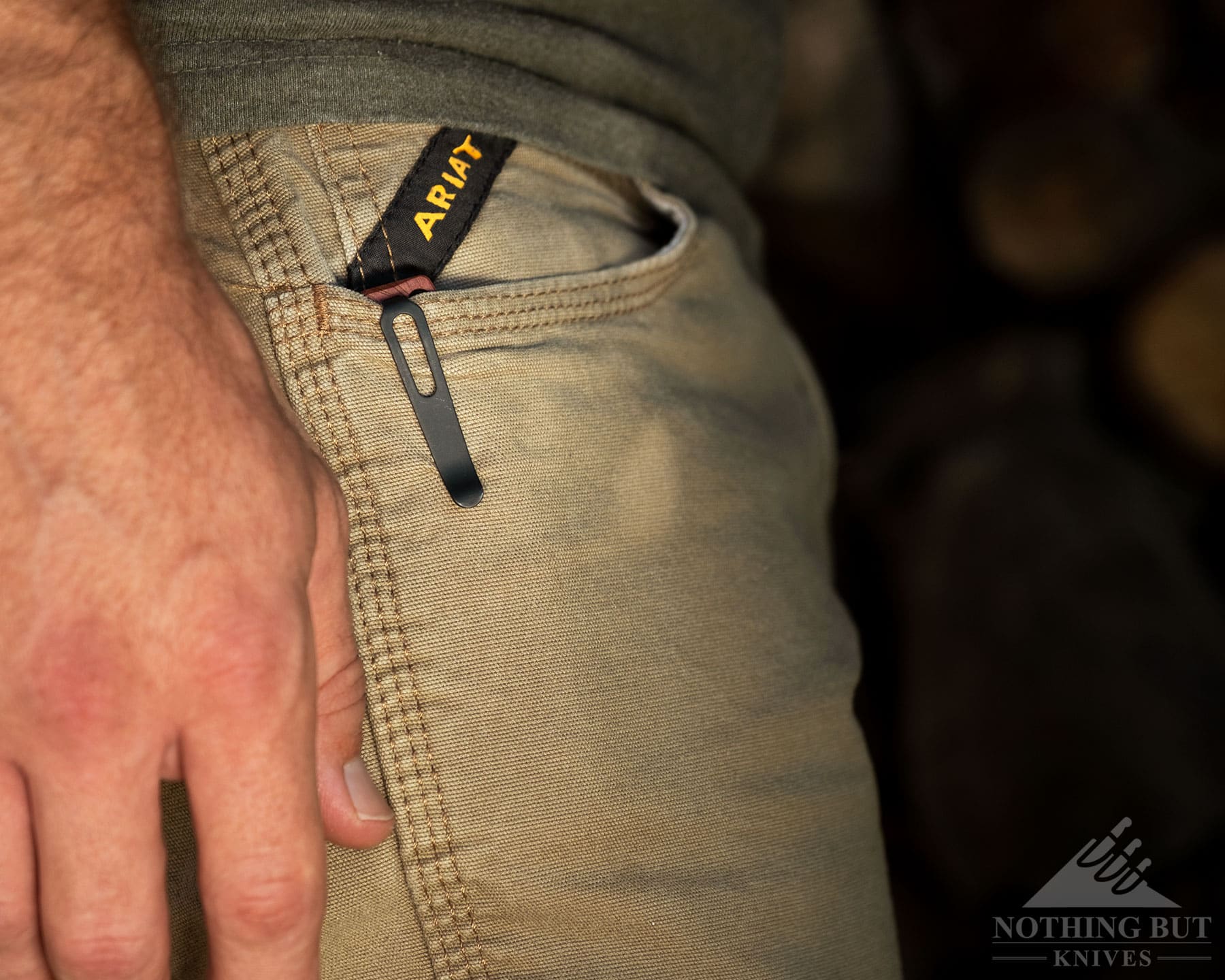
The only real issue I had with the knife was the pocket clip. It creates a minor hotspot in a full grip, and it’s a bit of a flight risk.
Day to day it was fine, but there were a handful of times I was carrying something heavy and awkward, or pulling something out of my pocket and the knife started coming out. Once it came out fully after catching the lip of my phone’s case as I was bringing it to my ear for a call, which was a new one for me.
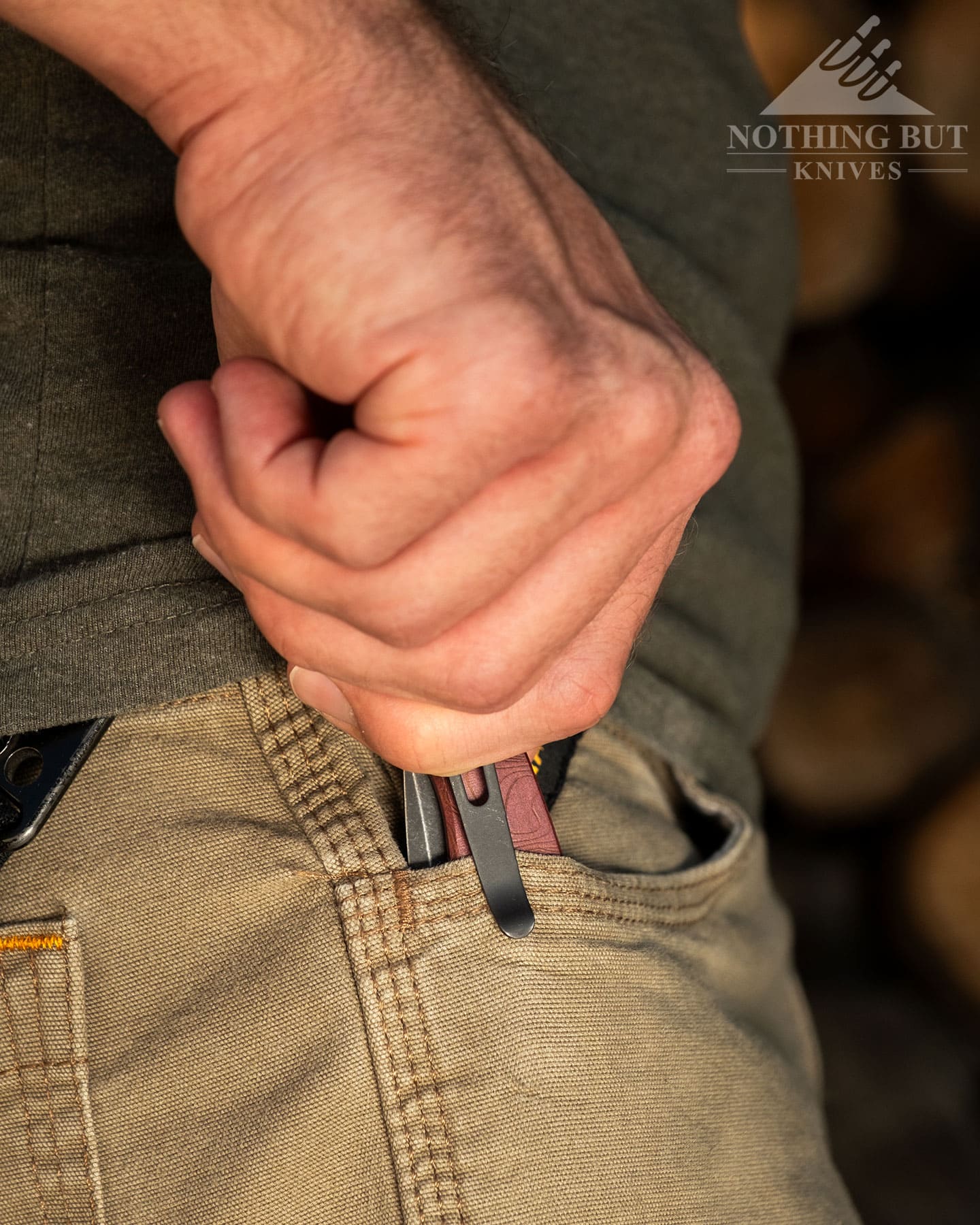
The hotspot isn’t as big of an issue. I don’t feel much a poke when I grip the knife hard at a canted angle, which is how I hold it about 90% of the time when I’m breaking down boxes. I probably wouldn’t have even bothered to mention it if I didn’t also have the issue of the knife trying to slip out of my pocket every now and then.
If there’s anything on this knife that could stand to be workshopped a little bit, it’s the pocket clip.
Comparison and Alternatives
If I had a Benchmade 940 I would probably have tested it against this knife first thing. But I don’t, so I’m left to make an educated guess that the Mysto seems like a good alternative to the 940 (in fact, if the Deka was Hogue’s “Bugout”, then the Mysto is their 940 Osborne. The fact that the baseline model of the Mysto beats both Benchmade knives on price while maintaining a high level of manufacturing is both a good argument for this knife, and [should be] a sobering fact for Benchmade).
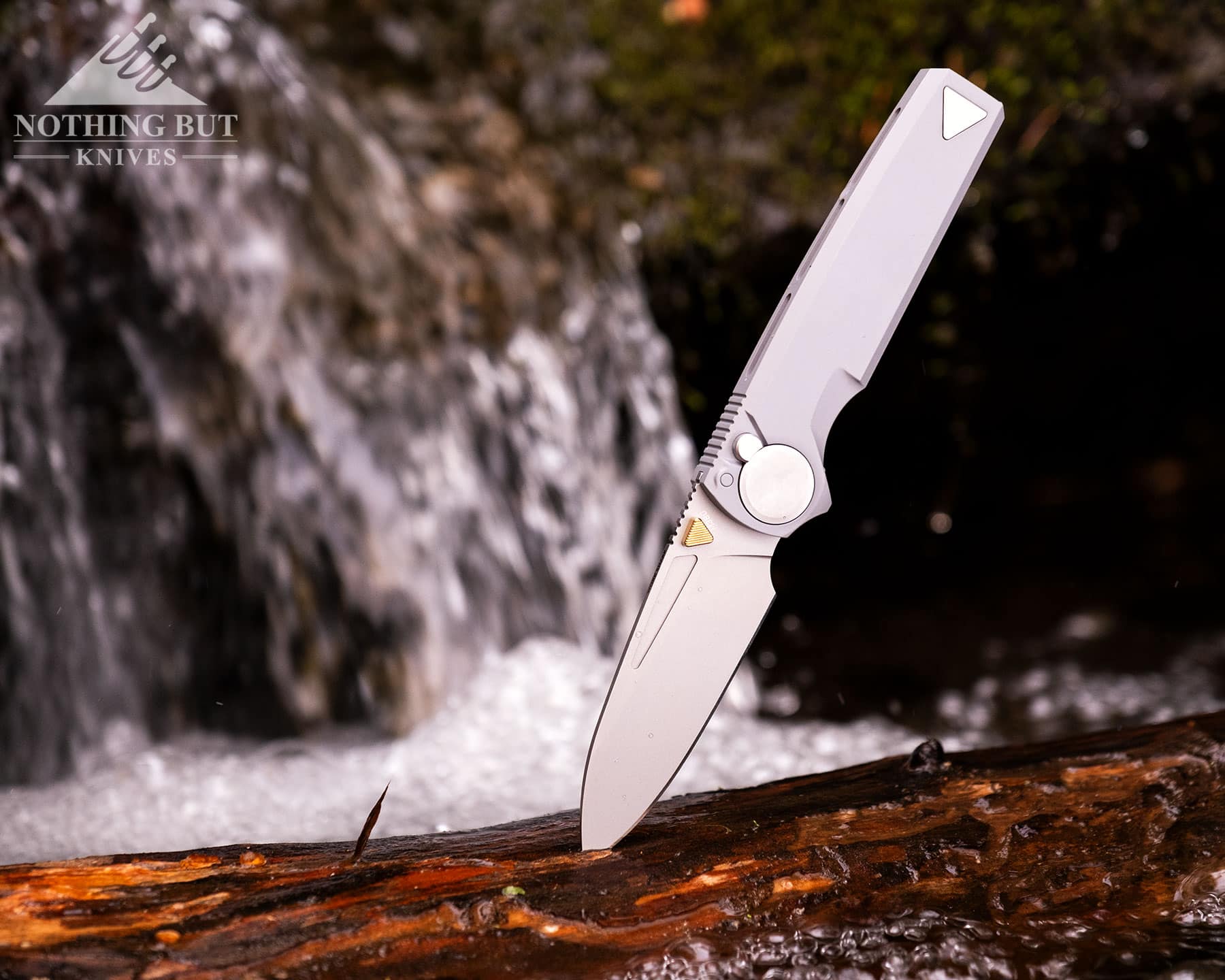
The Work Sharp RMX is lighter and thinner in the blade. I think I like the Mysto better for cutting cardboard and carving wood, but the thin geometry of the RMX’s blade makes it the more precise cutter. Also, Work Sharp made the RMX to be fixed and swapped to a level that most knives don’t reach.
To go a little cheaper, the Buck Range Pro has a good grip and decent steel with a cross-bar lock. I reviewed the Range Elite and concluded two main things: it’s a great camping folder, and I like the cheaper Pro version with GFN handles better.
The Mysto Works Hard in a Hard Price Category
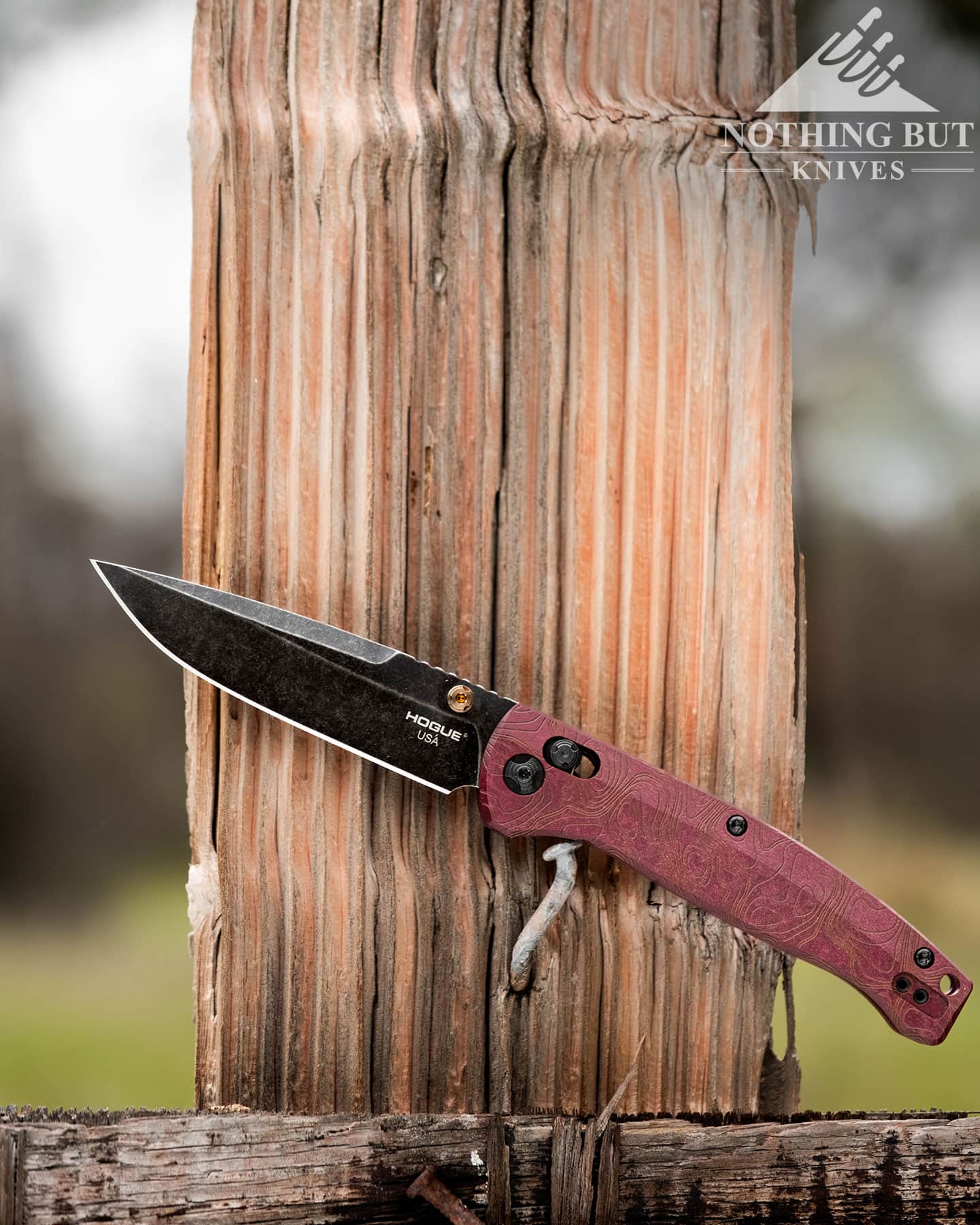
It’s a solid knife. The build and QC is there to ensure this thing lasts a long time. It’s a nice EDC, and it’s generally pleasant to use for camping and yard work. I absolutely love the way this blade cuts, and how the handle feels, even in spite of the hotspot and slight tendency to escape from the pocket clip.
Hogue has made an exceptionally good hard use knife with this Mysto, and if I’m recommending it in that capacity, I suggest getting this specific model with the Richlite handle. Not only will the grip be better for working, but the price is more approachable.
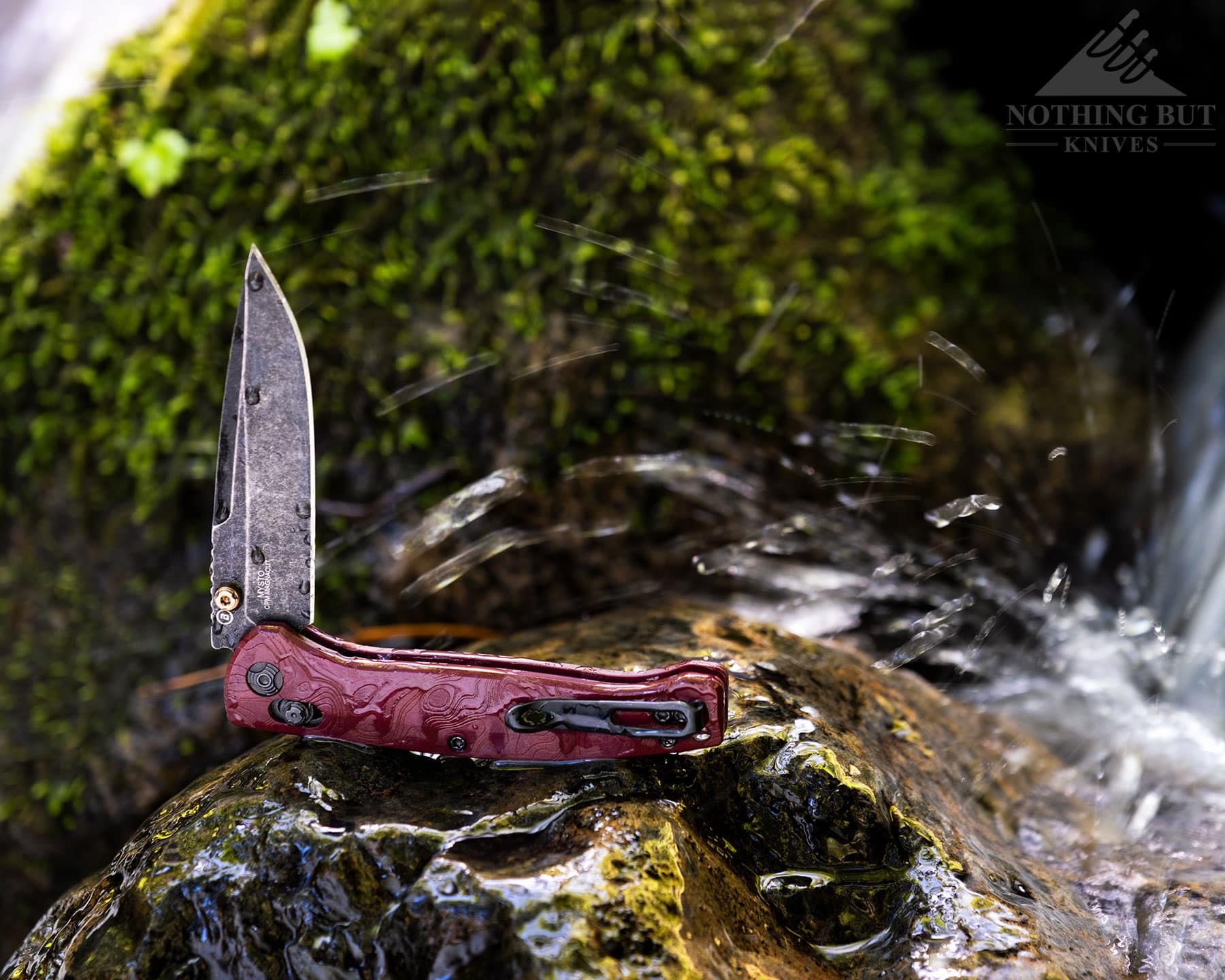
There are other versions with titanium or carbon fiber that break the $300 plane. If you’re looking for functional pocket jewelry, that’s cool, but the Mysto has been such a fantastic working knife that the idea of telling someone to get a version with smoother, less comfortable handle scales would pain me. (I should also maybe take a moment to look hard at myself, because I said something similar about the Buck Range series, and it might mean something that I keep reviewing knives and telling people “this is good, but get the cheap version”).
That said, it’s still a pricey knife for some people. At its lowest, it’s still in a mid-tier category that can feel extravagant when faced with the trove of $50 – 80 dollar knives out there with smooth action and good blades. What you aren’t likely to find in that price range is the combination of Magnacut steel, Richlite handle scales, and USA-made with this level of build quality.