
TL;DR
- The Brauler is about function over comfort.
- It’s thick-bladed and heavy, but has a nice edge and great, tough steel.
- The handle has great grip security, although trends toward uncomfortable for prolonged use.
- The sheath has a suede lining that makes for an odd feeling, but it’s effective for retention and keeping the blade clean.
It’s a Hefty Knife that Gets the Job Done
“Brauler” is a fitting name, because this is a brutal knife. It is sometimes better as a smasher than a cutter for when you want to smash something with a little more cutting efficiency.
I didn’t love this as a slicer with the out-of-the-box geometry, but it does have a resilient edge that isn’t too difficult to clean up with a strop or a stone.
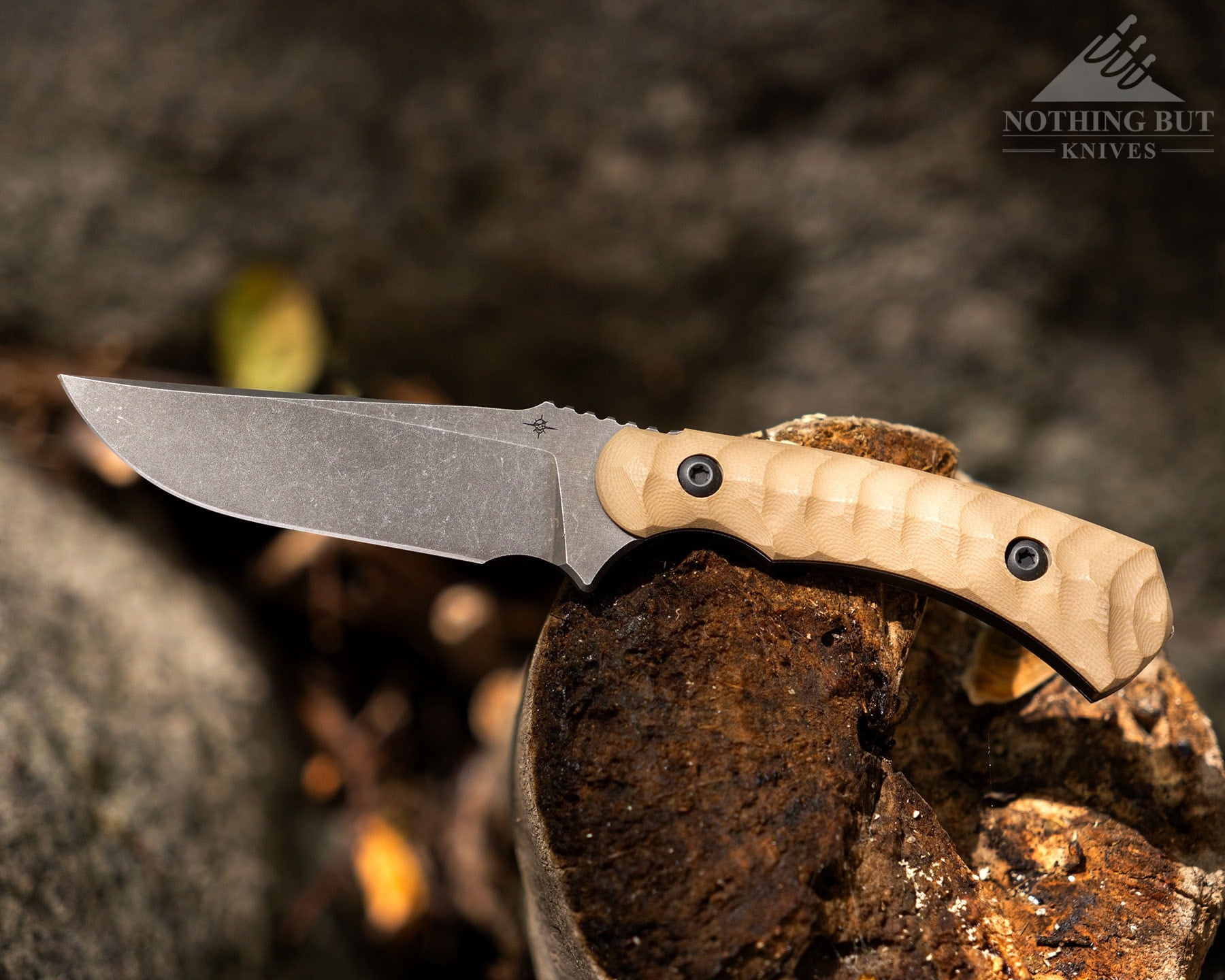
It was made to be a tactical and survival knife as a part of Toor’s Frontline series, though. That’s largely made up of thick, heavy-duty knives and hatchets meant for high impact work. So I think cutting efficiency wasn’t high on their design priorities.
Here’s what seemed to be the goal based on what I’ve noticed in testing:
- A secure grip
- A tough blade
- A versatile sheath.
The Brauler gets work done. It won’t always look pretty, but pretty isn’t what the Brauler was made for.
Full disclosure here is that Toor sent this knife to us to review. That’s probably worth keeping in mind especially when I go on at length about the price near the end.
Specifications
| Overall Length: | 8.0” |
| Blade Length: | 3.875” |
| Blade Steel: | CPM Cruwear (60-62 HRC) |
| Blade Thickness: | 0.1875” (4.76 mm) |
| Blade Shape: | Drop point |
| Blade Grind: | High flat |
| Handle Material: | G10 |
| Sheath: | Taco-style Kydex |
| Weight: | 5.7 oz |
| Made in: | San Diego, CA |
| What I Liked | What I Didn’t Like |
|---|---|
| Easy to find a firm grip | Heavy and harsh in hand |
| The blade has a great balance of toughness and edge retention | Thick blade makes cutting slow |
| Sheath is widely compatible and surprisingly slim | Price really makes you question how badly you need a knife like this |
Performance: Cuts Like a Truck, Drives like a Bat
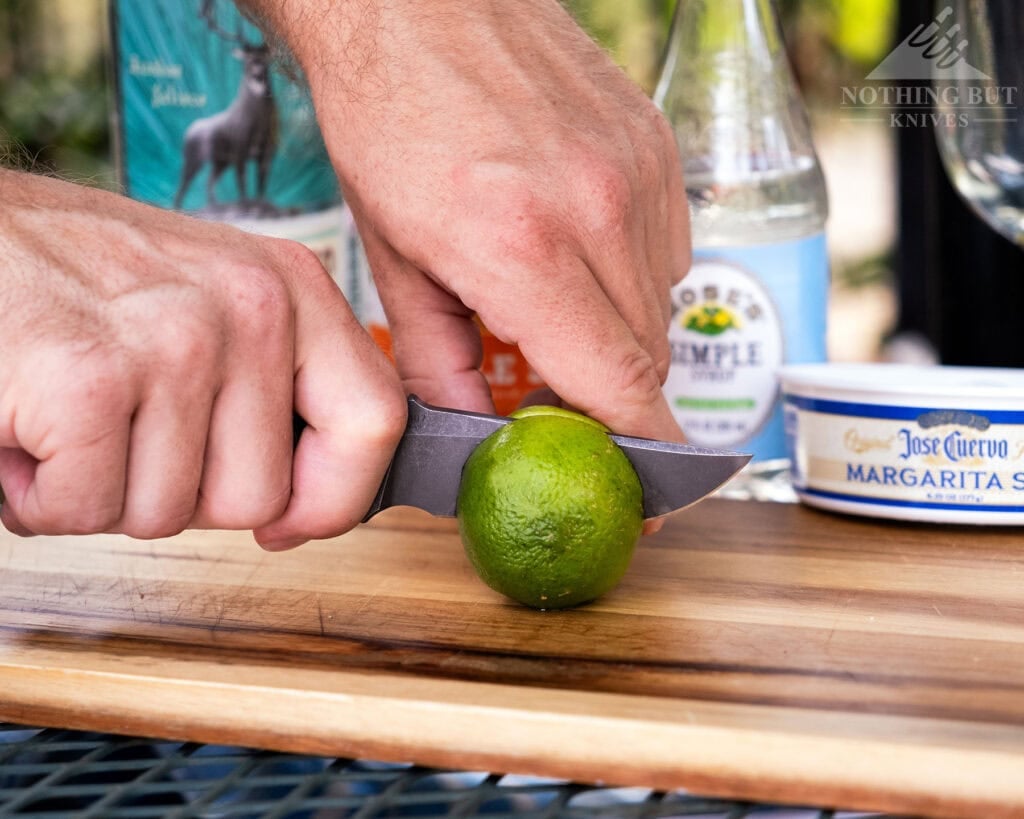
This is not an optimized slicer, but it is a highly functional slicer. It turns out there’s some utility to be had from a tool that can both cut and break at the same time.
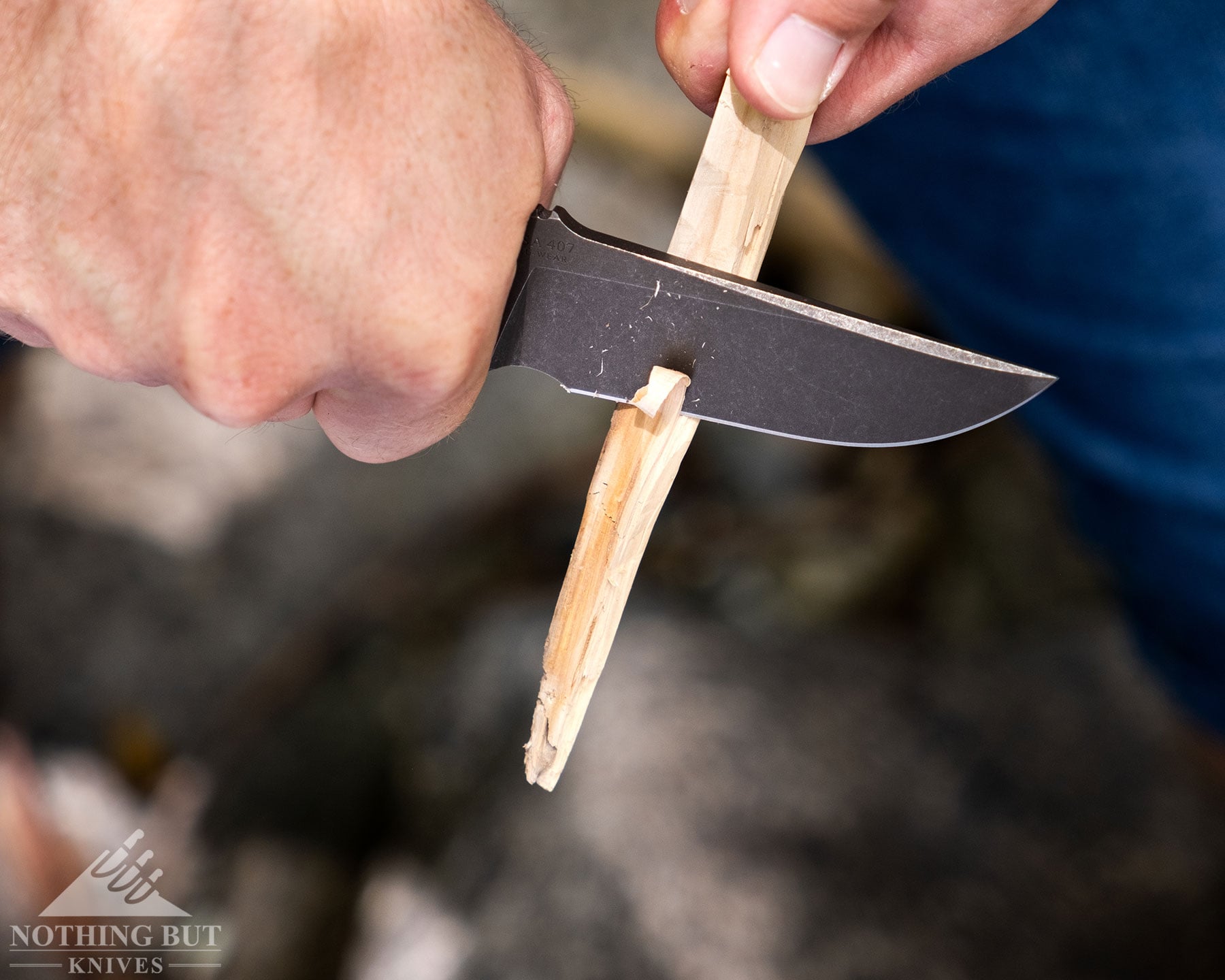
Let’s cover my usual testing tasks, though.
It’s slow on cutting thick rope, and when I test it on different kinds of paper it always ends up tearing the paper halfway through the cut. It’s interesting to note, though, that it often starts a cut just fine. But when I cut thinner gauges of paper the thickness of the blade pulls the material apart faster than the edge can cut.
None of this is surprising. This thing is thick behind the edge.
It’s sharp, though, and the steel can hold an edge.
Quick Camping Thoughts
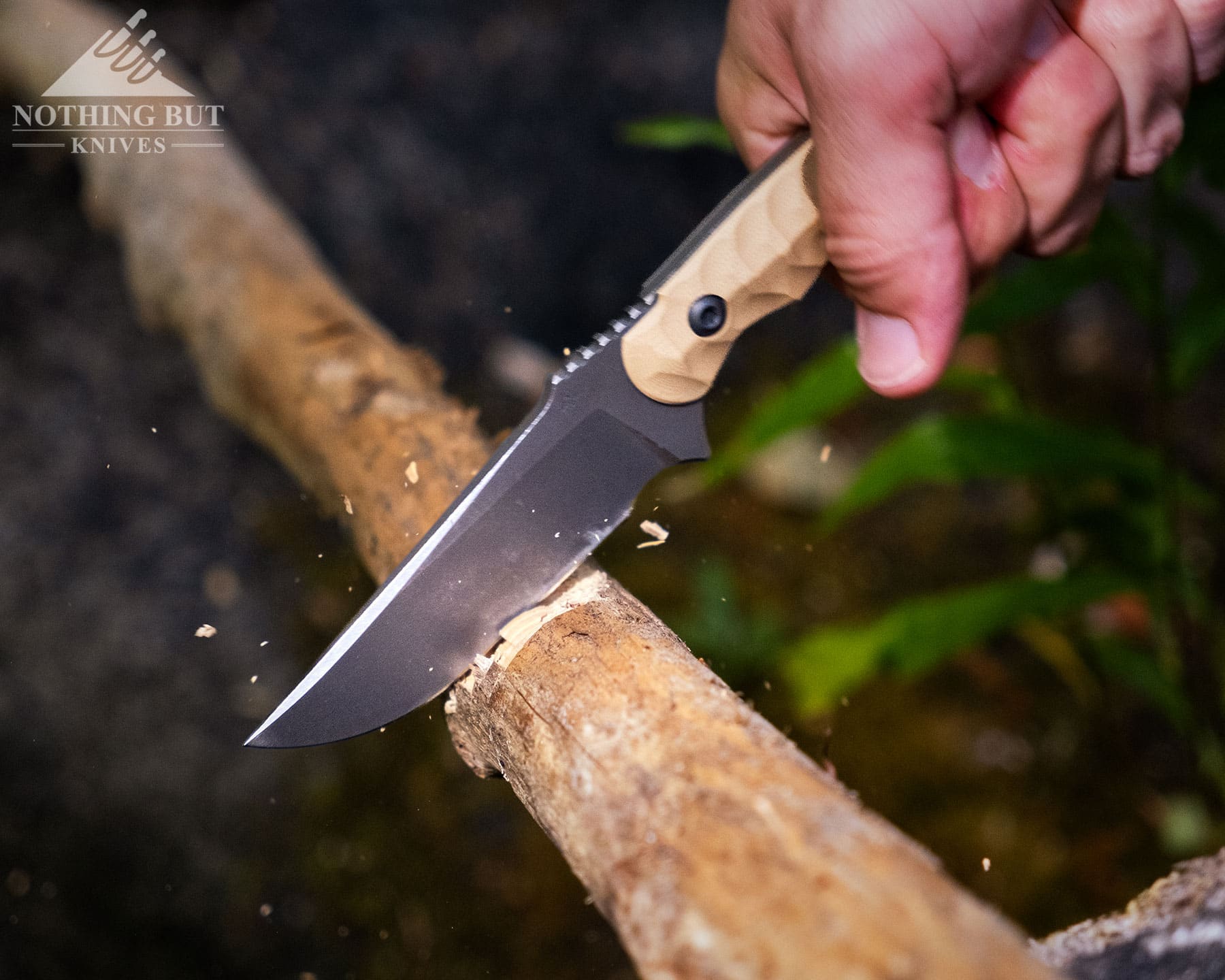
Putting piles of paper strips aside, this has good geometry for chopping and batoning. It’s pretty good for carving too, because the edge doesn’t bite too aggressively, so I can control the size of the wood shavings a little easier.
It can throw spark, but I found it awkward because of the blade shape. The jimping on the spine is beveled, which makes it a little harder to find the right angle, and the rest of the spine drops pretty quickly, so I have to hold the knife in odd positions to get a firm scrape. It works, but it wouldn’t be my first choice for starting fires.
Tactical Thoughts
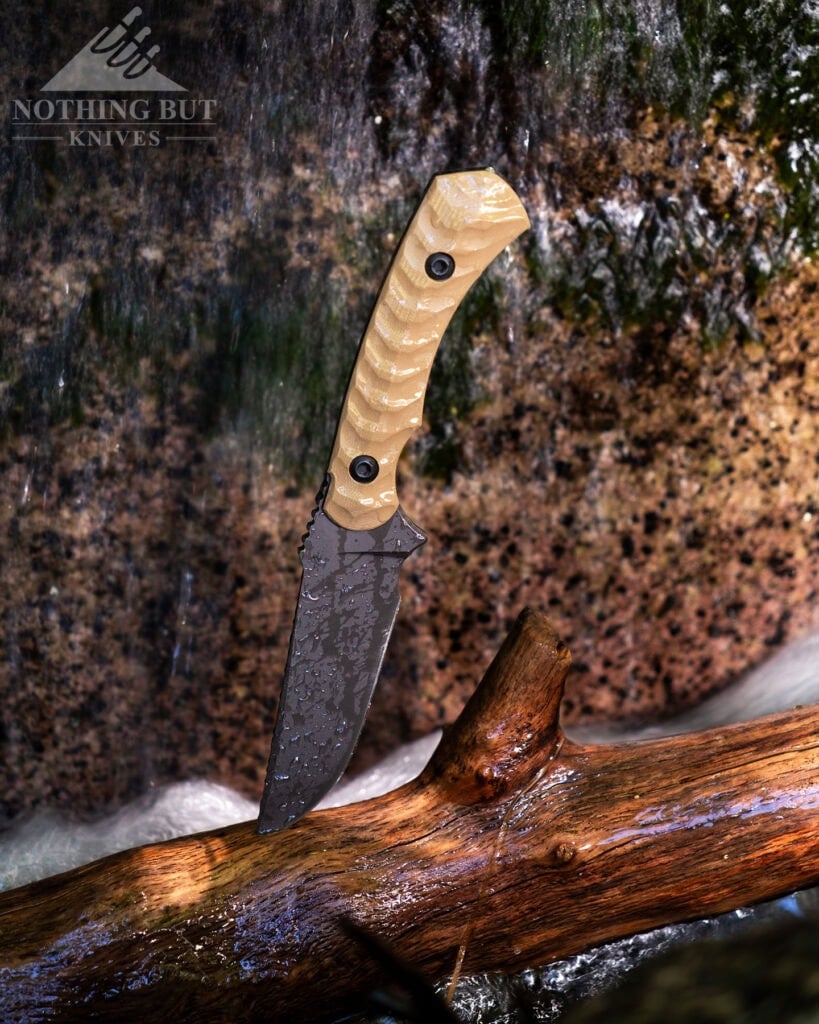
Out of curiosity, and a cautious desire to test it in a more tactical capacity I covered some cardboard flats in an old shirt and took a few swings and stabs. Here’s mainly what I took away.
- It doesn’t penetrate deep, either in a thrust on a cut (no surprise there)
- It does, however, cut reliably and widely. What it left behind were better described as gashes rather than cuts.
In the old adage, it will “keel” just not very efficiently. It’s still a monster of a self-defense blade, because it will do a lot of damage quickly, if that’s the direction you want to think.
It’s not hard to make a blade that does damage, though. The tricky part is in the handle.
A Handle that Stays With You

It’s a harsh-feeling knife. It has lots of ridges and hard corners meant to give the knife more traction.
What all those unforgiving elements do, though, is make you aware of your grip in a way that might be helpful in a high-stress situation, and maybe that’s the important thing here.
The knife feels nimble, despite the weight. I can shift grips and twirl the knife pretty easily. That’s where all the ridges and angles come in handy as well.
That’s actually another kind of grip security feature, in a way. When a knife starts to slip out of your grip, some are easier to recover in the brief but critical moment between dropping the knife and fixing your grip just in time, and the shaping and texturing of the Brauler help weight that situation in your favor.
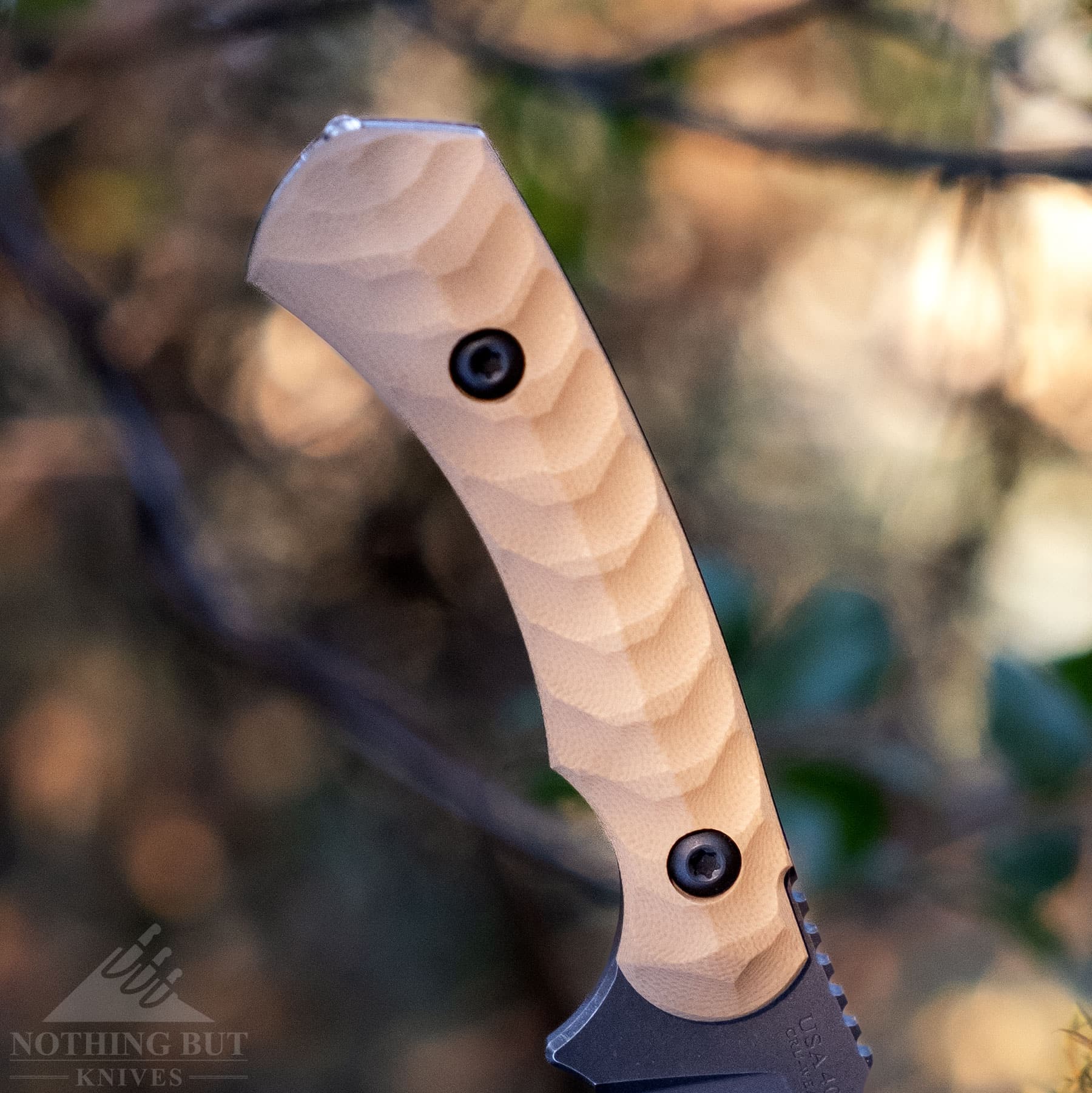
I don’t like the handle for most tasks. It’s harsh. The texturing grates against my hand, the jimping is aggressive (although helpful), and the front edges of the handle aren’t fully buffed, so I always feel them pretty hard when I need to tighten my grip (which is a lot when working with wood).
I understand why they made the handle like this. It works. It’s easy to grab and it stays in the hand, so keeping the design intent in mind, these aren’t really criticisms. I just feel the need to keep reiterating that this is a knife for a particular range of times and places. Comfort isn’t the priority. It’s about reliable function.
Soft Sheath Feelings and Mounting Options
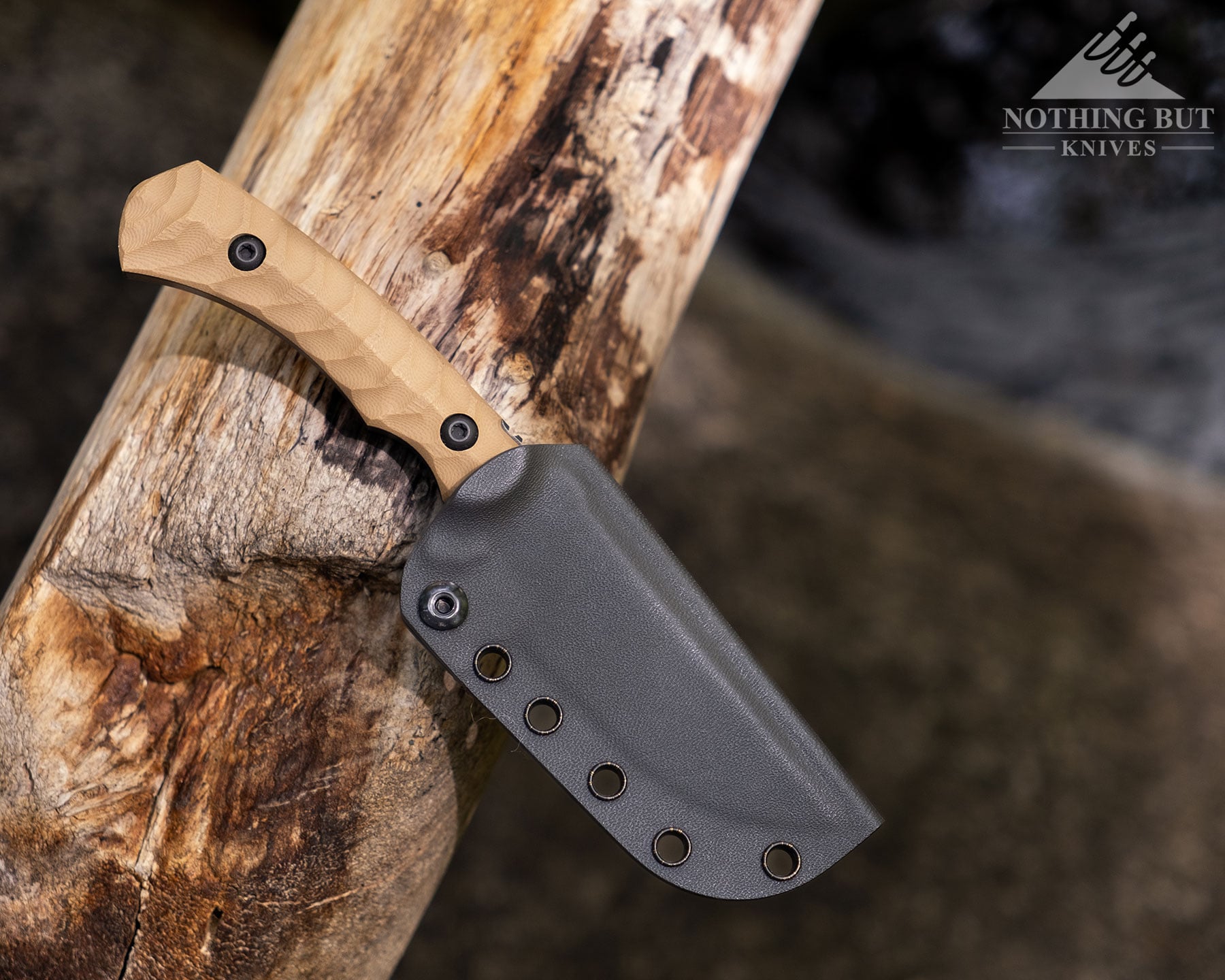
The retention in this sheath has an odd feeling.
The inside of the sheath is lined with suede, which must be where most of the actual retention comes from, because the knife doesn’t exactly click into place when I sheath it. I still haven’t really grown to like the feeling of it, but I can appreciate the practicality.
This sheath holds the knife no problem. I’ve packed it upside down and shaken the hell out of it. No reasonable circumstances run a high risk of pulling this knife out on accident. But the suede also has the benefit of cleaning the knife, keeping the Kydex from scratching the blade finish, and makes drawing and sheathing the knife a little quieter.
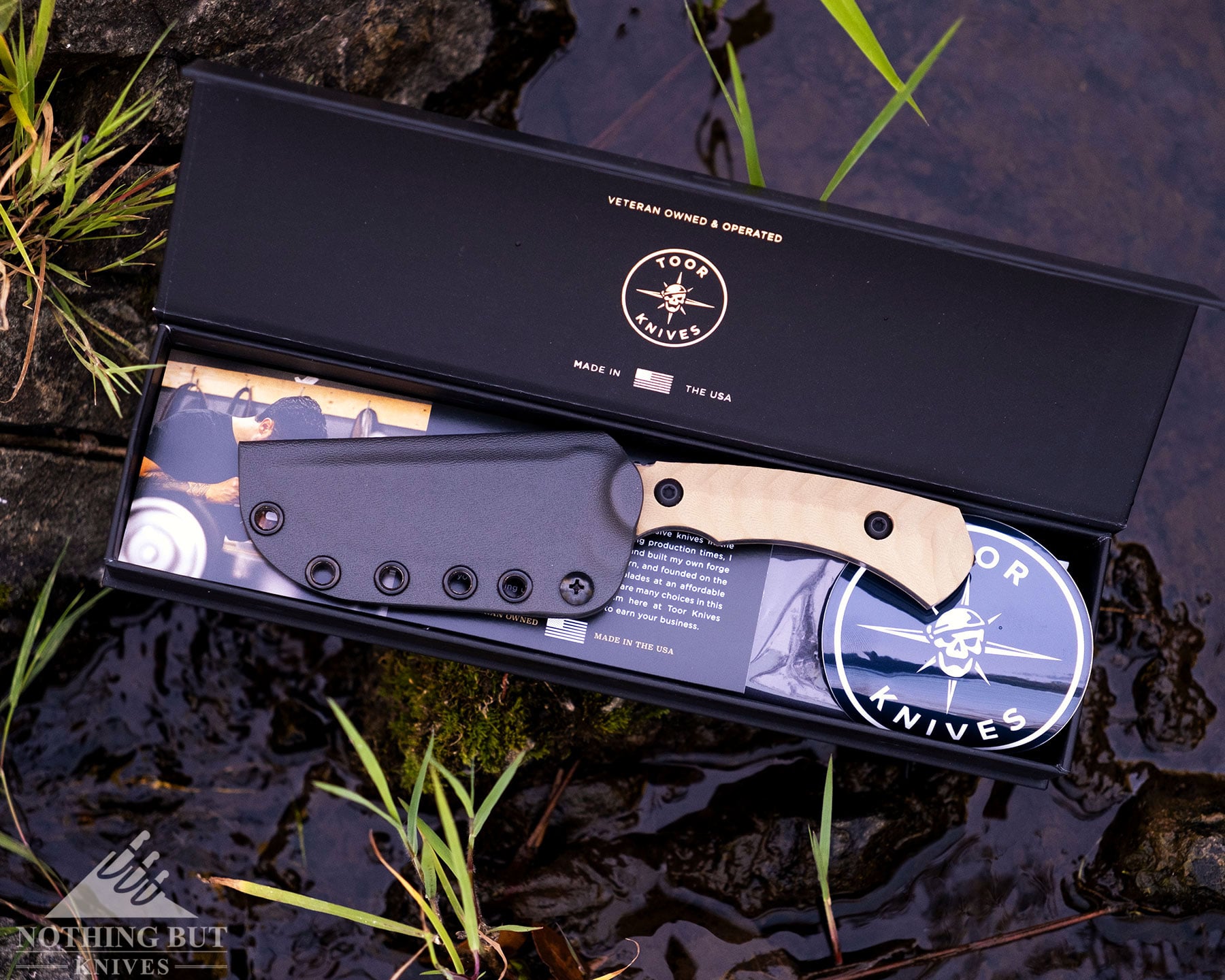
It also has a retention screw if you want to take a little extra precaution (or if you’re planning on going through more vigorous environments like thick jungle with a lot of grabbing vines and bushes, or crawling through swamp, or dropping through thin air. I don’t know your life).
Belt vs Waistband vs. Pocket
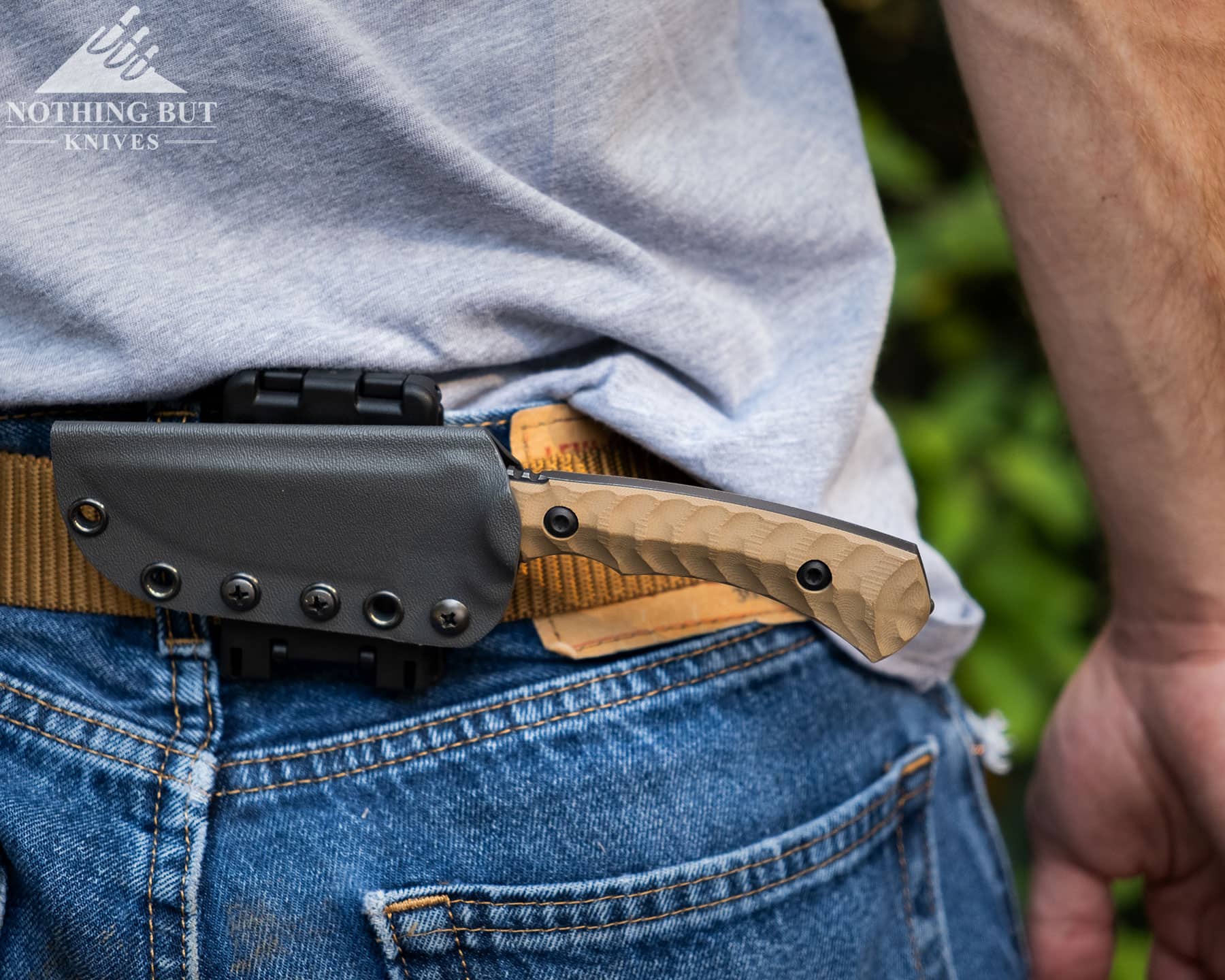
I find that I don’t really like the way this carries on the belt in any configuration. The handle just sticks out too much. While that’s nice for actually deploying the knife, it always feels just a little awkward to me when not in use.
I tried it as a vertical, scout, and appendix carry, and I always found myself having to negotiate with the handle any time I shifted too drastically.
- As a vertical carry it scans my ribs constantly,
- As a scout and appendix carry (at a full horizontal) the handle always feels like its moving around too much,
- As appendix or scout carry at an angle (the sheath holes are spaced so you can use two corner holes to mount the knife) the handle would sit right on my spine, poke at my stomach, or stick too much off my side.
That was all with using a standard-sized Tek Lok.
It’s compatible with most aftermarket mounting solutions, though. In fact you can add a few different kinds of Ulticlip, a waistband clip, or a Dots MOLLE mount at check out when you order from Toor’s site.
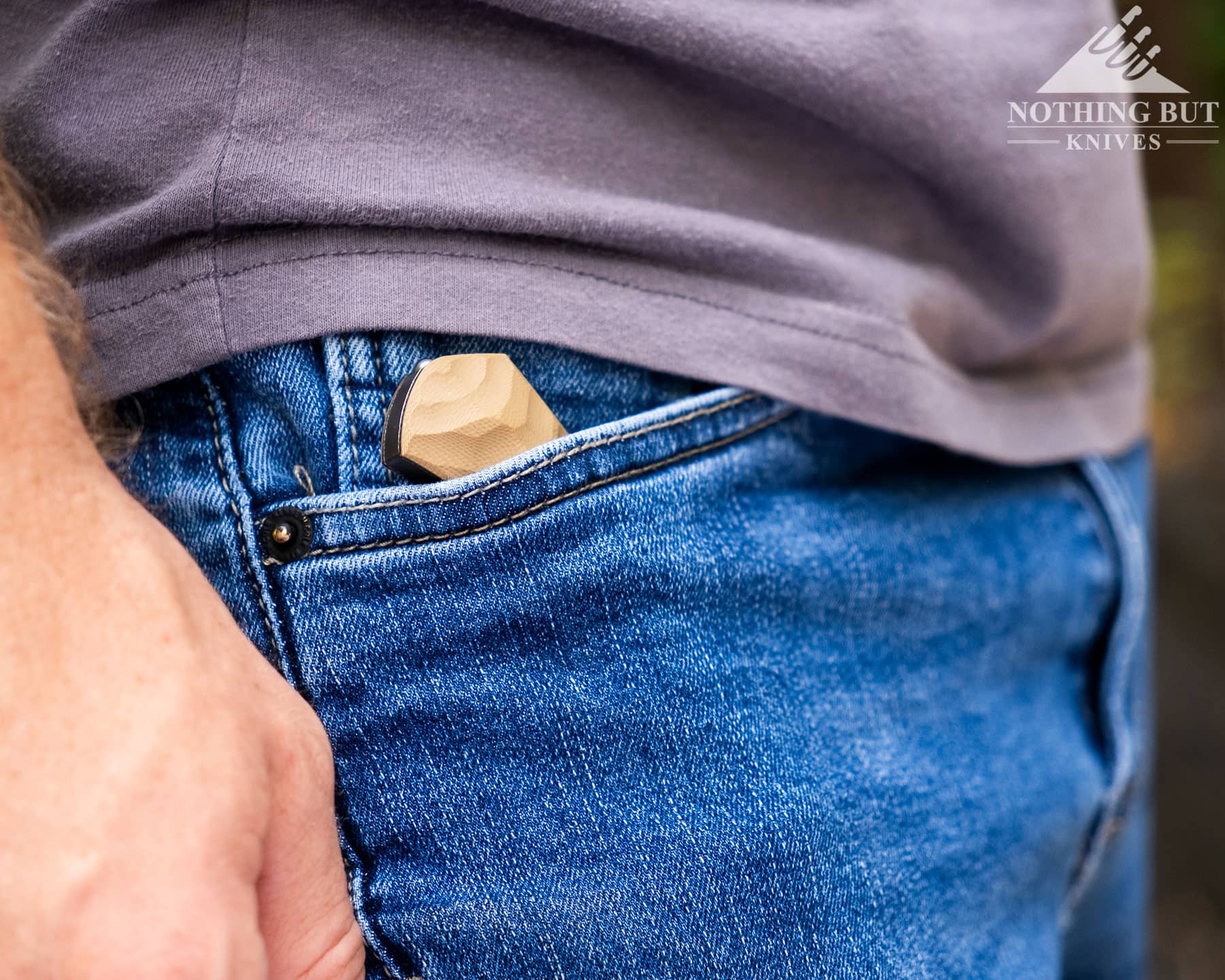
Just extrapolating, I feel like the MOLLE rig would the best option here, because the Brauler feels just a little too big to be a comfortable pocket or waistband carry, but after a certain point that’s a discussion of body types.
I put a Tek Lok on the Brauler, and mostly hiked around with it in the vertical position. That worked fine except for a couple of oddities:
I had to use two screw holes right next to rather than spaced apart because of the size and curve of the sheath, and that made it ride a little weird. I think the handle is prone to move around a little more as a result.
Nuances of Price, Value, and Effort
The Brauler has a listed MSRP of $350. As I’m writing this, there’s a sale taking it down to $280. It has become pretty common to see these kinds of numbers on US-made knives, and I can picture the bug-eyed face of some readers here on seeing them, because I’ve seen it in person several times when I tell people about Reiff knives or Spartan Blades.
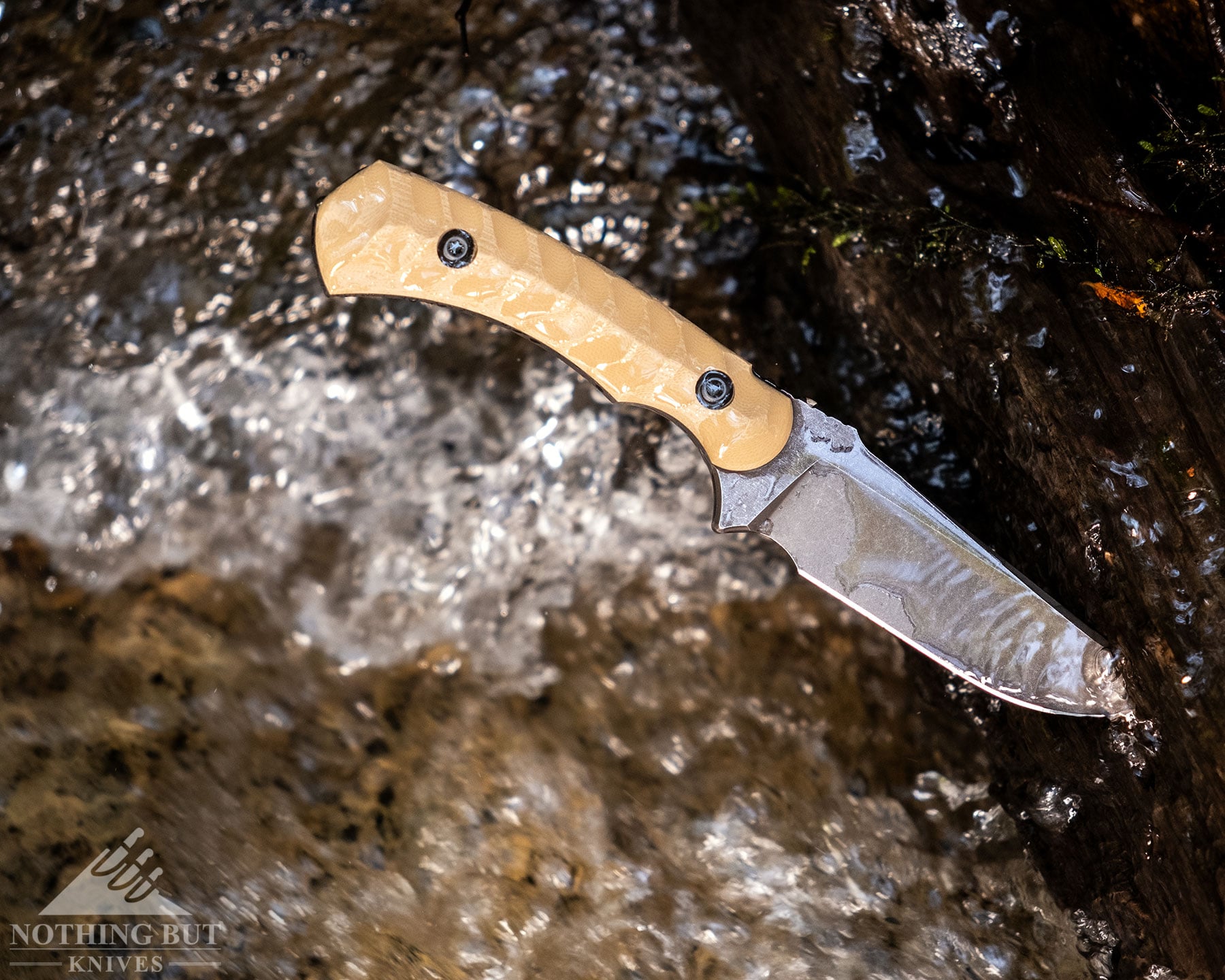
For some people it’s enough to know these companies make their knives in America. In the case of Toor, they make or source everything in the States down to the hardware. That’s an impressive feat, and the benefit is they have complete control of quality and specs through every step of manufacturing.
Still, people need to eat, no matter how impressed they might be with Toor’s manufacturing practices. For the people who don’t have the money lying around to grab up one of these knives and only use it once a year, there’s that anxiety of value that understandably brings up questions like “will this be worth it?” and “how do they justify charging that much?”
My answer to both is “I don’t know”.
But I can tell you that value is more about personal use, and the Brauler is tough enough to last so long that, if you use it regularly, it will eventually be worth its price by most metrics.
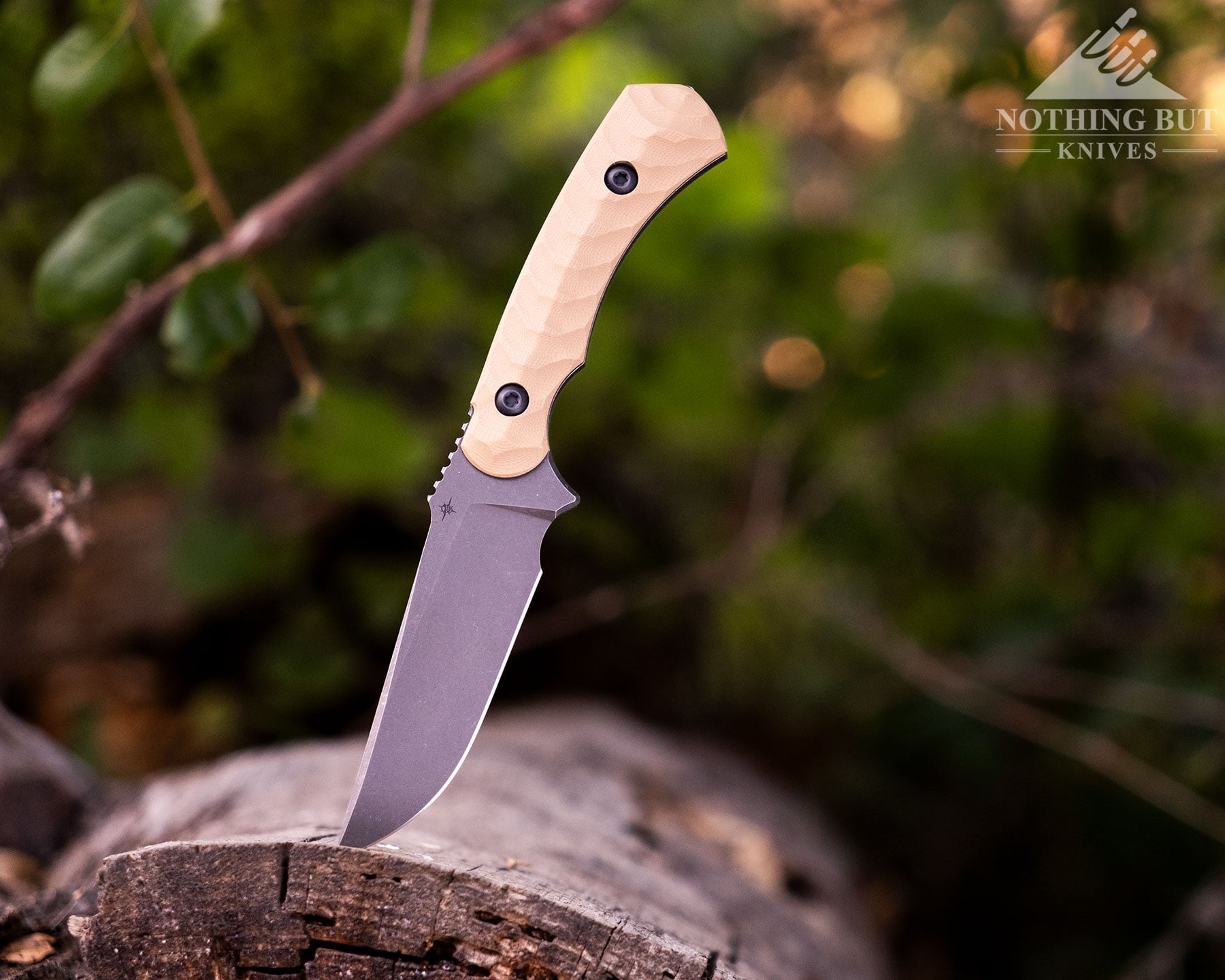
I can also tell you with reasonable certainty that the people at Toor want to make good tools, have good employees with a living wage, and support their community while still making a profit doing something they love.
I honestly don’t know if all that still justifies their prices. It wasn’t too long before writing this review that I was talking to some people about Leatherman’s drop of fixed blade knives with Magnacut and raging about the price. I also had an odd moment of seeing a listing for a Ka-Bar Becker Campanion and wheezing out the question “when the hell did they start selling for $245” before realizing it’s the new Magnacut update.
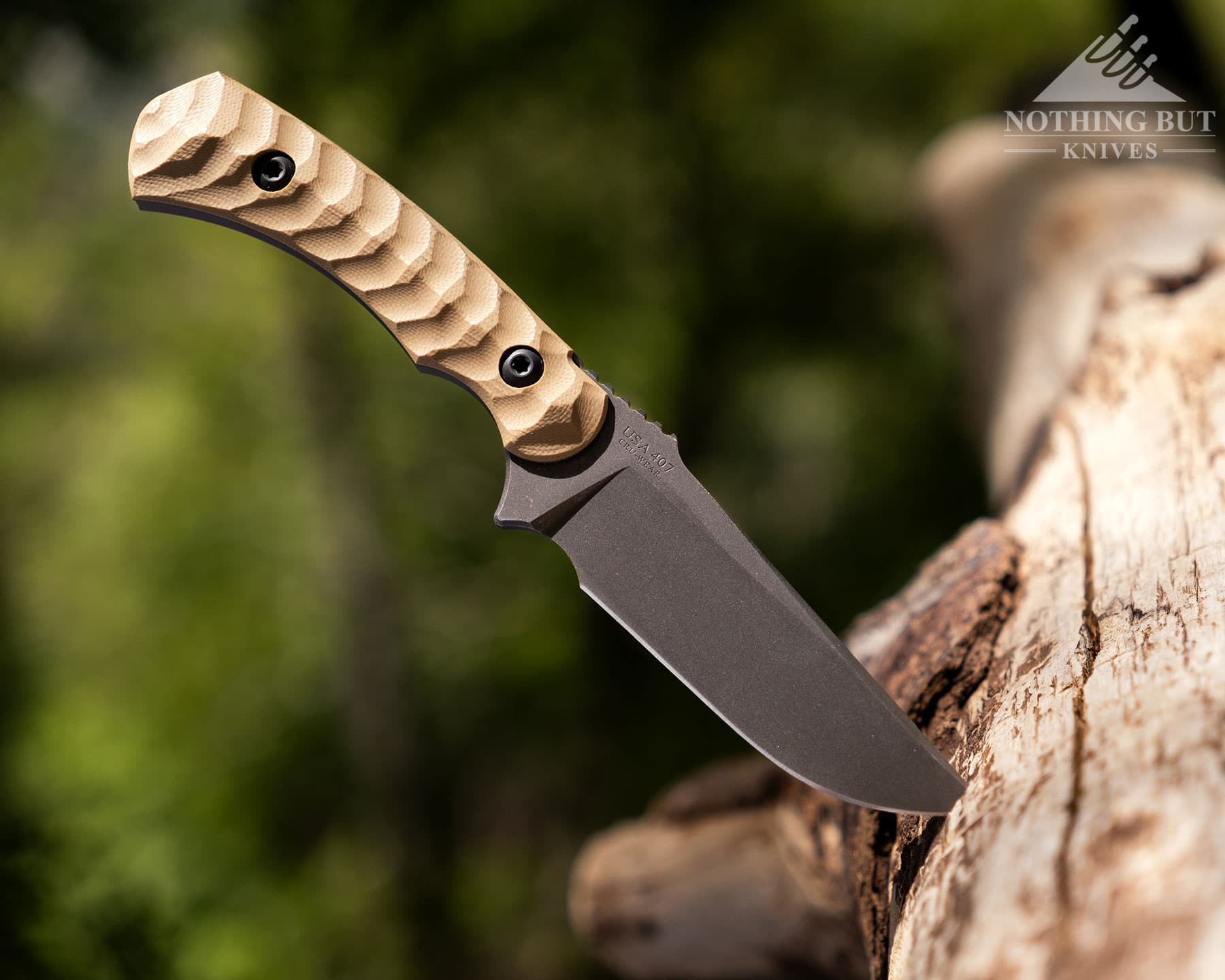
Now here I am playing with a three-hundred-dollar Toor knife and trying to say “that’s not too bad for what you’re getting”.
My point is that good US-made knives are prohibitively expensive almost by default. Even TOPS knives are starting to average close to the $200 mark. Whether or not that makes the price of the Brauler okay is, I think, at least ambiguous enough to warrant respectful debate.
With that in mind, let’s talk about some alternatives.
Comparison and Alternatives
A couple of decent pry bars came to mind pretty much as soon as I held the Brauler.
The CRKT Ramadi is right in the same size range, but quite a bit cheaper and easier to get a hold of. The trade off is that the SK5 steel (much as I love it) is soft and rust prone, although it has a thick coating to help with that. The handle is also more comfortable to me, but probably has a little less grip security. Still, I have always loved the way the Ramadi carries and deploys.
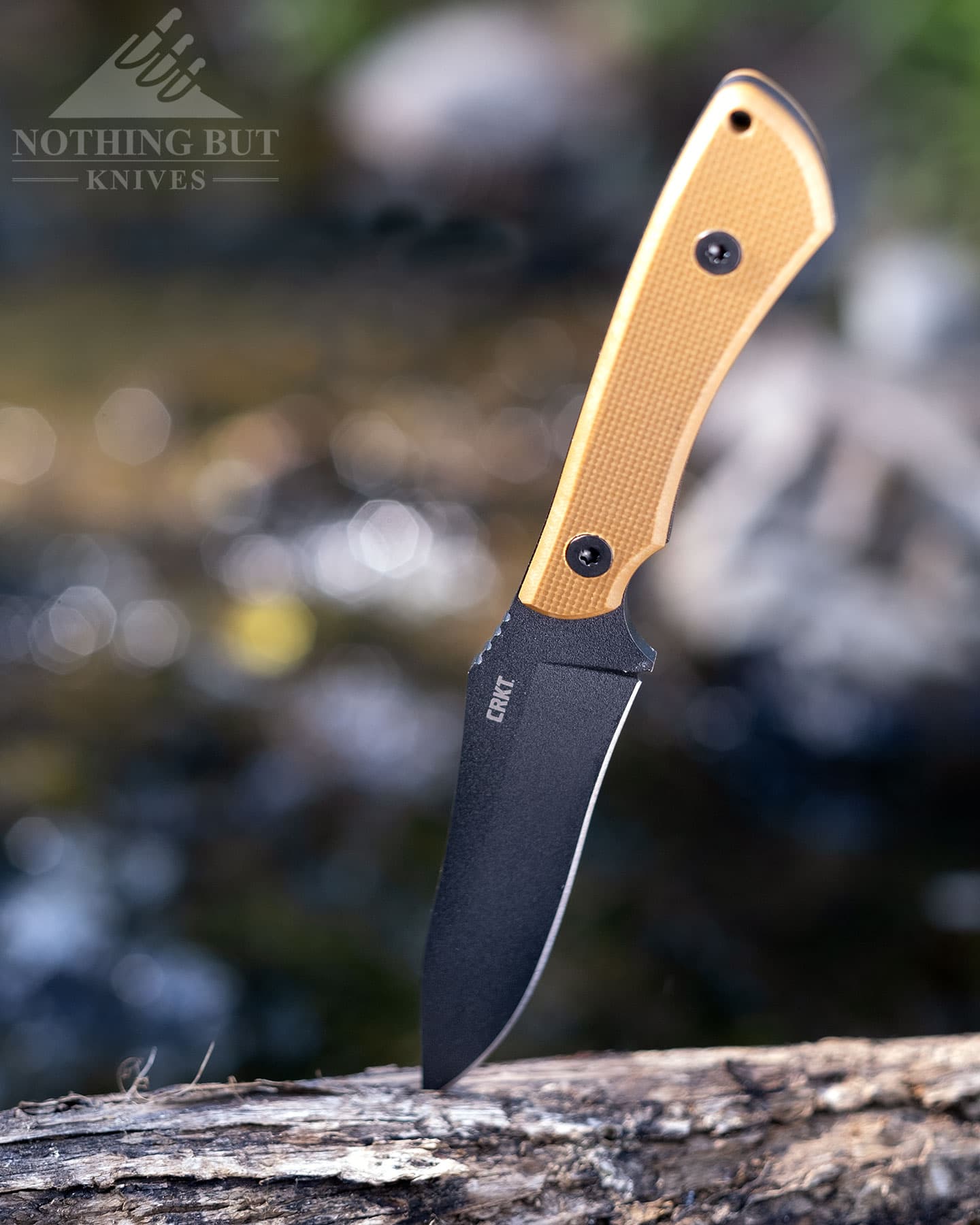
The Spartan Blades Alala is a little smaller, but still has a thick blade in a decently hard steel. It was designed to be compact and secure in the sheath, so it’s easier to find a comfortable carry solution, but there isn’t as much handle to grip here.
The Reiff Vicon has a lot of the same pros and cons. It’s thick and heavy but a fast-working terror when you get down to chopping or carving larger pieces of wood. I like its sheath a lot more for vertical carry, which is nice because the Vicon is also bigger and not at all practical for me as a scout or appendix carry. It also usually runs quite a bit more expensive, partially due to size, and partially because it has a Magnacut blade.
The real alternative, though, is the Cold Steel SRK. That’s been a mainstay for military for years, and I’ve abused it plenty as a camper. The SRK-C specifically will get you in the same size range as the Brauler, but it feels and cuts very differently due to the rubbery Griv-Ex handle and a thinner blade stock of SK-5 steel.
The High Functioning Prybar
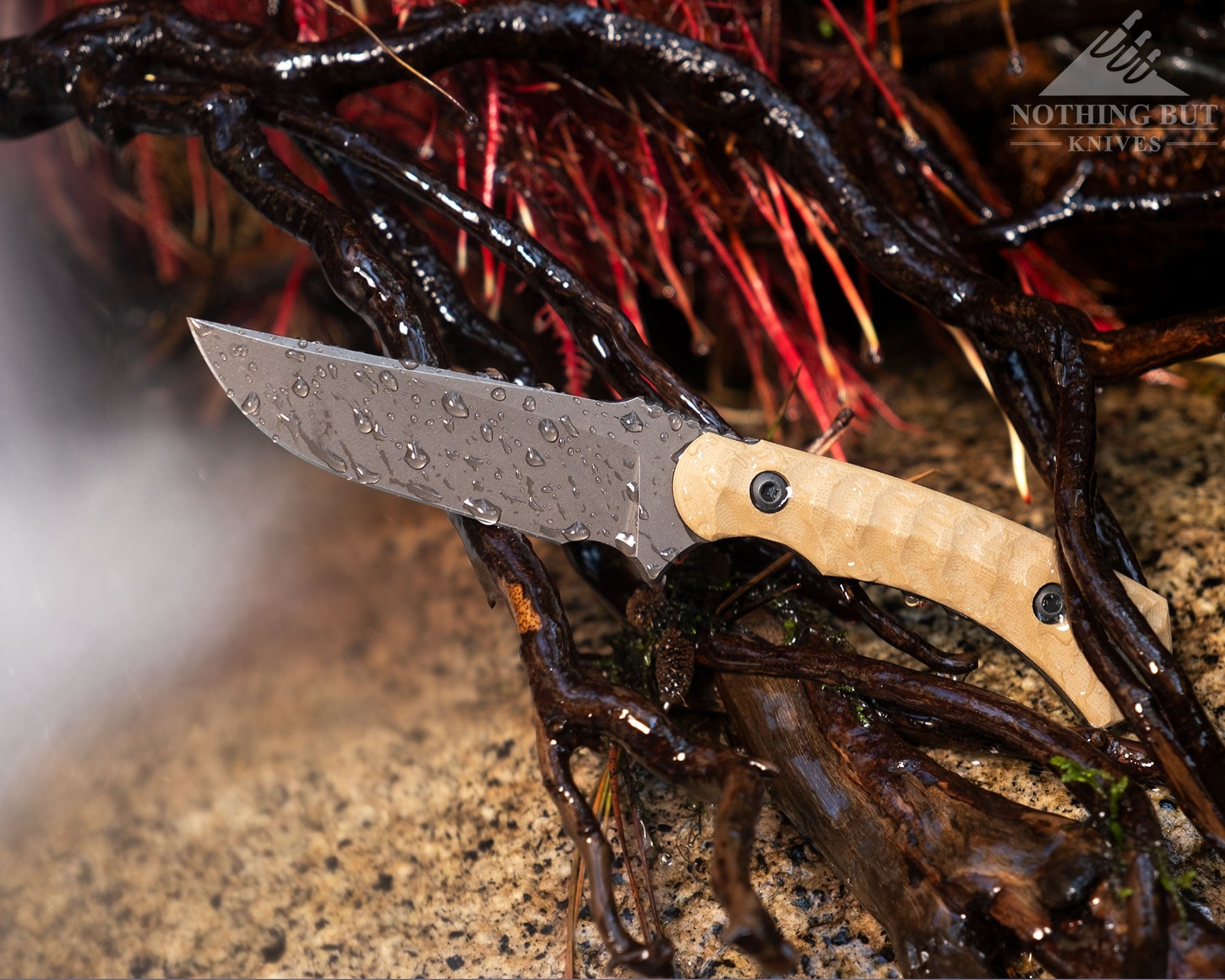
The Brauler is in a category I’ve taken to calling sharp prybars. It’s a category I enjoy testing but always have trouble reviewing because these knives have a lot characteristics not normally desirable in knives:
They’re heavy and thick behind the edge, often have harsh lines in the handle, and a sheath that’s necessarily clunky in order to contain all the material.
The Brauler hits all those points except the last. The taco-style Kydex with a suede liner is surprisingly refined. The rest is there, though. This is a bruiser of a blade, with a handle that aggressively makes itself felt through hard corners and ridged texturing.
It’s not the kind of knife I would go out of my way for. I won’t jump back into the price thing again, but if I were going to spend this kind of money on a Toor knife it wouldn’t be the Brauler. But all things context:
This is a knife that will stay in your hand, and hold up to being slammed into just about everything. It’s an oddly specific general use case for a knife to be designed for, but it has its place in situations where well-crafted brawn can help with half the tasks and problems you might encounter.


As a San Diego resident for the last 25 years, and being a knife-nut, I am a bit embarrassed to say that I barely knew anything about Toor Knives. I’m a lot more familiar with Anza Knives that is also out of SD. And many years ago, Buck Knives called San Dog home as well.
So, before I read this review, I jumped on the Toor website to educate myself about the company. After reading that Connor Toor based his knife designs around his Marine Corps experience, along with input from his Army Ranger brother, your findings about this Brauler make perfect sense to me.
As a former US Army Infantryman (1991-94) and US Navy SWCC (1998-2000) I can understand why this knife is over built. Combat service members do need an overly built full-tang knife that can double as a pry bar if need be. But, one should always carry a pocket knife or multi-tool with a blade for the more delicate slicing tasks. Like opening MREs and whatnot.
So yes, having a thick blade for whatever heavy duty tasks that may arise is a thing. The aggressive texturing on the handle also makes sense since most combat service members are wearing gloves on duty and need that exaggerated texture for a positive grip. As for the sheath, more thank likely it would be mounted on a kit with PALS webbing instead of being attached to a waist belt.
The only thing that is a bit out of sorts is the price. I agree 100% with everything you stated about why it costs that much. But if this knife is to being marketed to service members, high-end priced knives are not a priority for most. Like a hammer or shovel, we just want a knife that gets the job done without breaking the bank. God forbid it gets lost or stolen. And the likelihood of loss or theft is a lot higher when you’re in the military. Ask me how I know.
But if you are in the middle to higher pay military ranks, and happen to be in a special ops unit, then I can see these types of knives being marketed in that direction. Or, if you just have the money burning a hole in your pocket and it appeals to you. Ask me how I know.
Side note: While I was attending Special Warfare Combatant Crewmember training (SWCC Class 27) we were issued the Cold Steel SRK. That should tell you a lot.
As always, a solid review, Andrew. I appreciate you bringing this blade and veteran-owned knife company to light.
See y’all on YouTube and Instagram.
Jaime @jldarchery
Thanks for reading, Jaime. Always good to hear veteran’s perspective.
Frankly, I’m a little baffled by the price and design combination too. “Expensive beater” is sort of a contradiction of terms, but that’s the heart of what the Brauler is, and there are a lot of other knives that fit the same category. Seems like it sells well along with the alternatives I mentioned, so the market clearly latches onto them, but it seems like a hefty investment for an E2 who’s about to ship overseas.
Also, holy crap, I forgot to mention the Cold Steel SRK. That was a stupid oversight on my part that I’m going to fix right now.