Skallywag Tactical has once again teamed up with designer Javan Roberts to bring a formidable knife design to life: The Wanderer. This unassuming bushcraft tool is about as genuinely utilitarian as knives come, and that makes this a standout blade for hard use in the woods.
Specifications
| Overall Length: | 9.5” |
| Blade Length: | 4.75” |
| Blade Steel: | 154CM |
| Blade Thickness: | 3/16” |
| Blade Shape: | Drop point |
| Blade Grind: | Flat |
| Handle Material: | G10 |
| Sheath: | Leather |
| Weight: | 7.5 oz |
| Made in: | Taiwan |
| What I Liked | What I Didn’t Like |
|---|---|
| Excellent blade geometry. | Only available in black/black. |
| Solid hand protection. | Sheath is adequate, but not as secure as it could be. |
| Full tang construction for durability. |
What makes The Wanderer a good bushcraft knife?
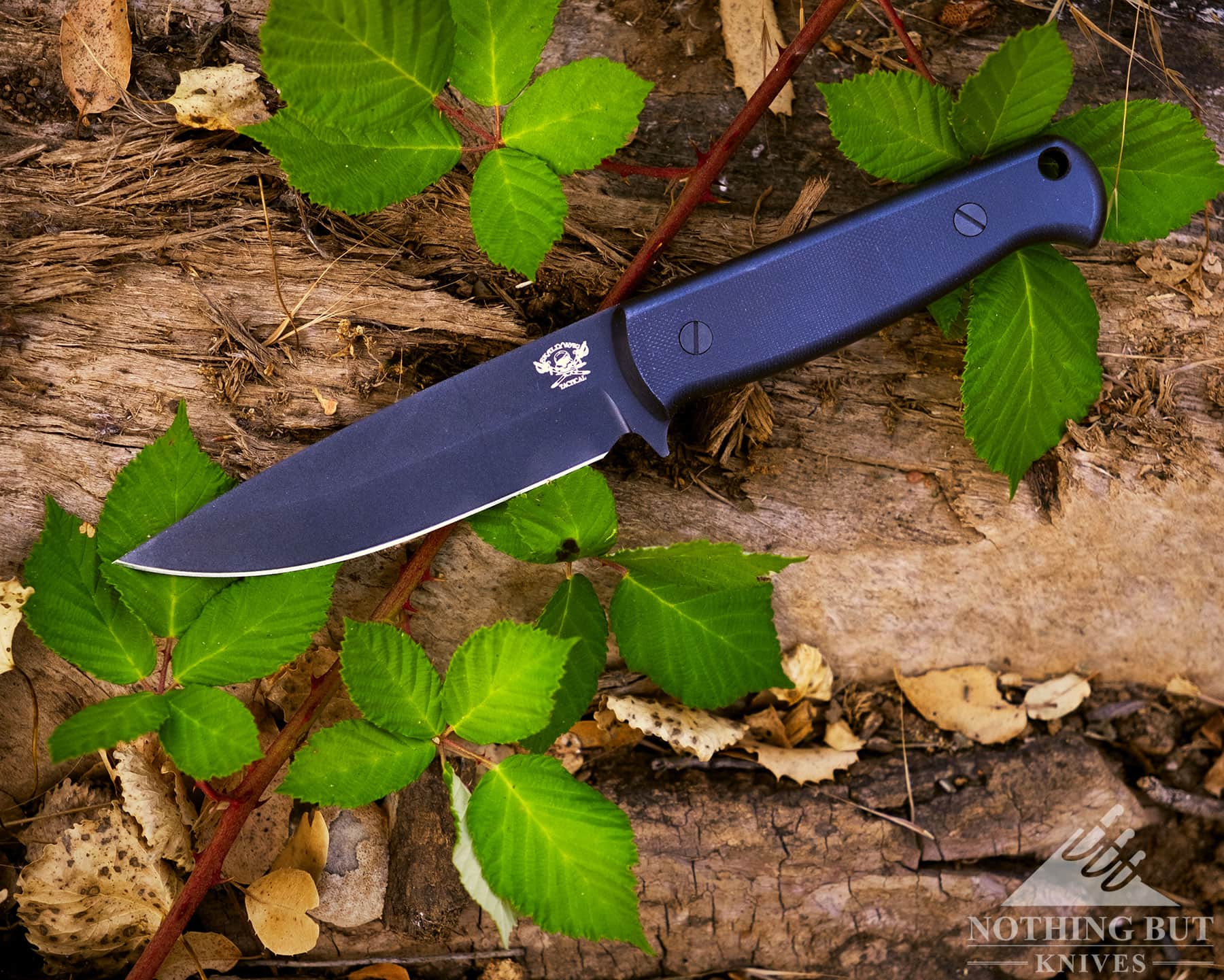
I’ll begin with an absolute non-negotiable: a bushcraft blade has to be a full tang design. Many of our ancestors survived lifetimes in the woods with hidden tang designs, but most of them used their knives for more delicate cutting as they carried axes with them, too. And that’s not the case now (or not as common).
The Wanderer meets those robust, full tang criteria.
Designs like the old Ka-Bar, though, have proven themselves fully functional for camping and war, but there’s still something to be said for a rock-solid tang construction that ensures you will have enough strength to hack and baton. I also like that full tang designs can be rehandled if the handle itself breaks.
Skallywag Tactical’s The Wanderer has enough mass in its full tang design to balance the blade without adding so much weight that it becomes unwieldy. The G10 scales are black, rounded slightly, with distinct flats on the sides.
Unlike some of the FRN scales that adorn some (typically less expensive) full tang designs, these won’t need to be replaced to make it usable. I hate the feel of FRN but have no issues with G10. The root of this, I think, is how G10 feels when my hands are wet or sweaty. I don’t lose the grip surface, which can be dangerous when what you’re holding is a knife.
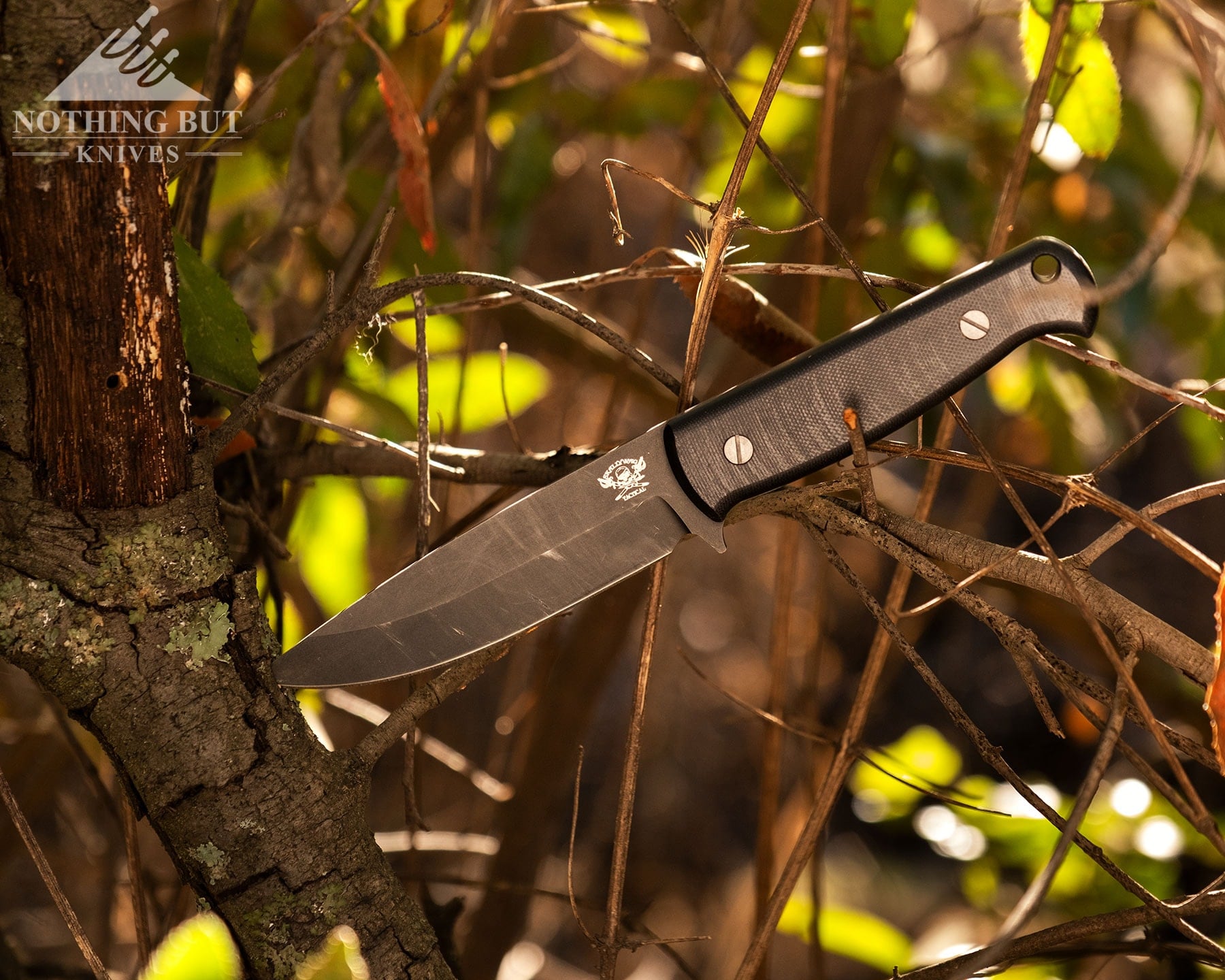
The Wanderer’s scale texture is almost smooth, though there are some slight ridges in the G10. If an aftermarket grip offering develops for this knife, it will exist to provide more aggressive surface texture.
Bushcraft blade strength
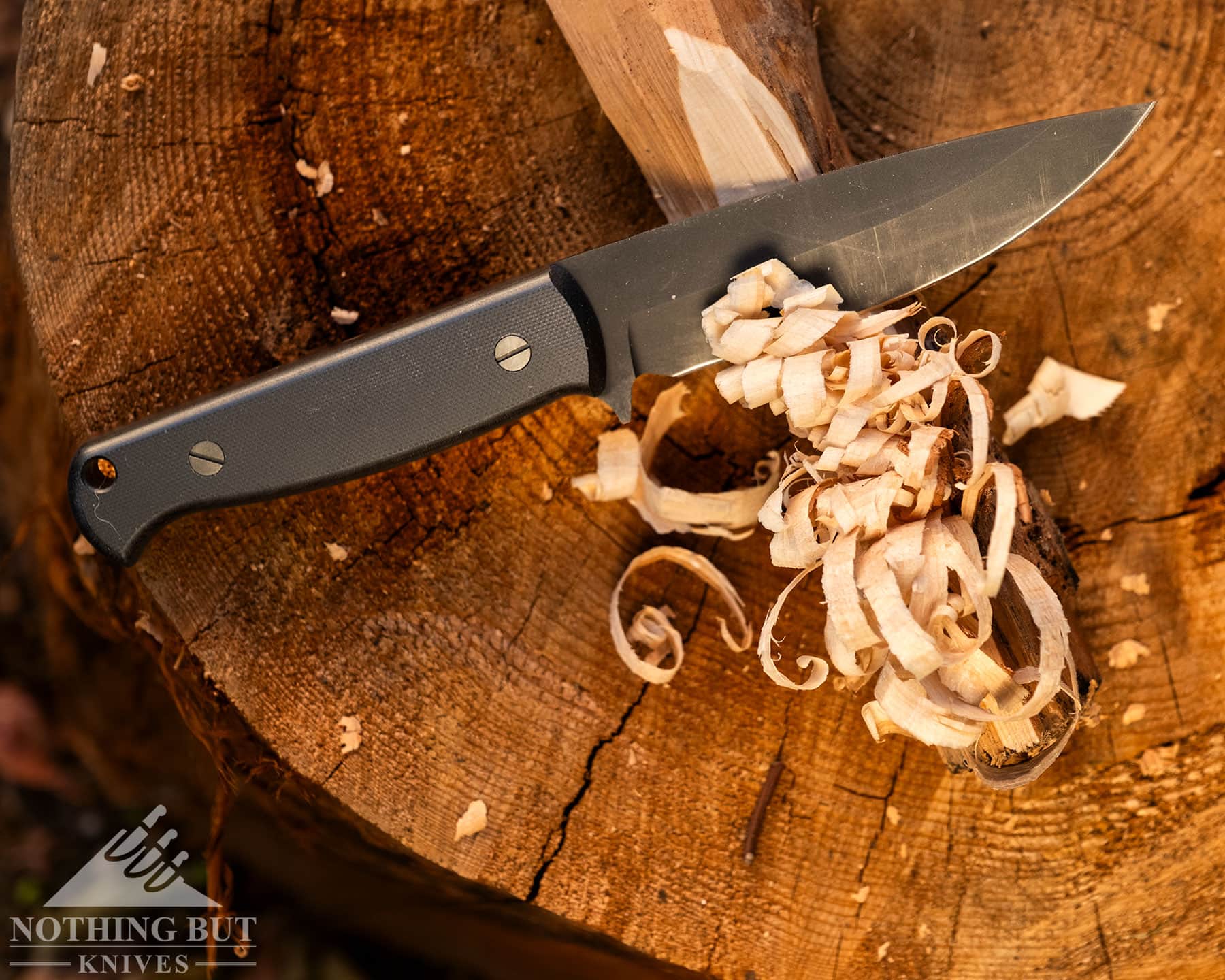
My next must-have on a bushcraft knife is a thick blade with decent flats. I’m particular about my blade grinds. I prefer flat grinds as they’re easy to sharpen, but I like to have some meat to the blade itself before those grinds begin (unlike the flat grinds that extend all the way to the spine, like on a chef’s knife). This provides some heft for prying, should that be needed.
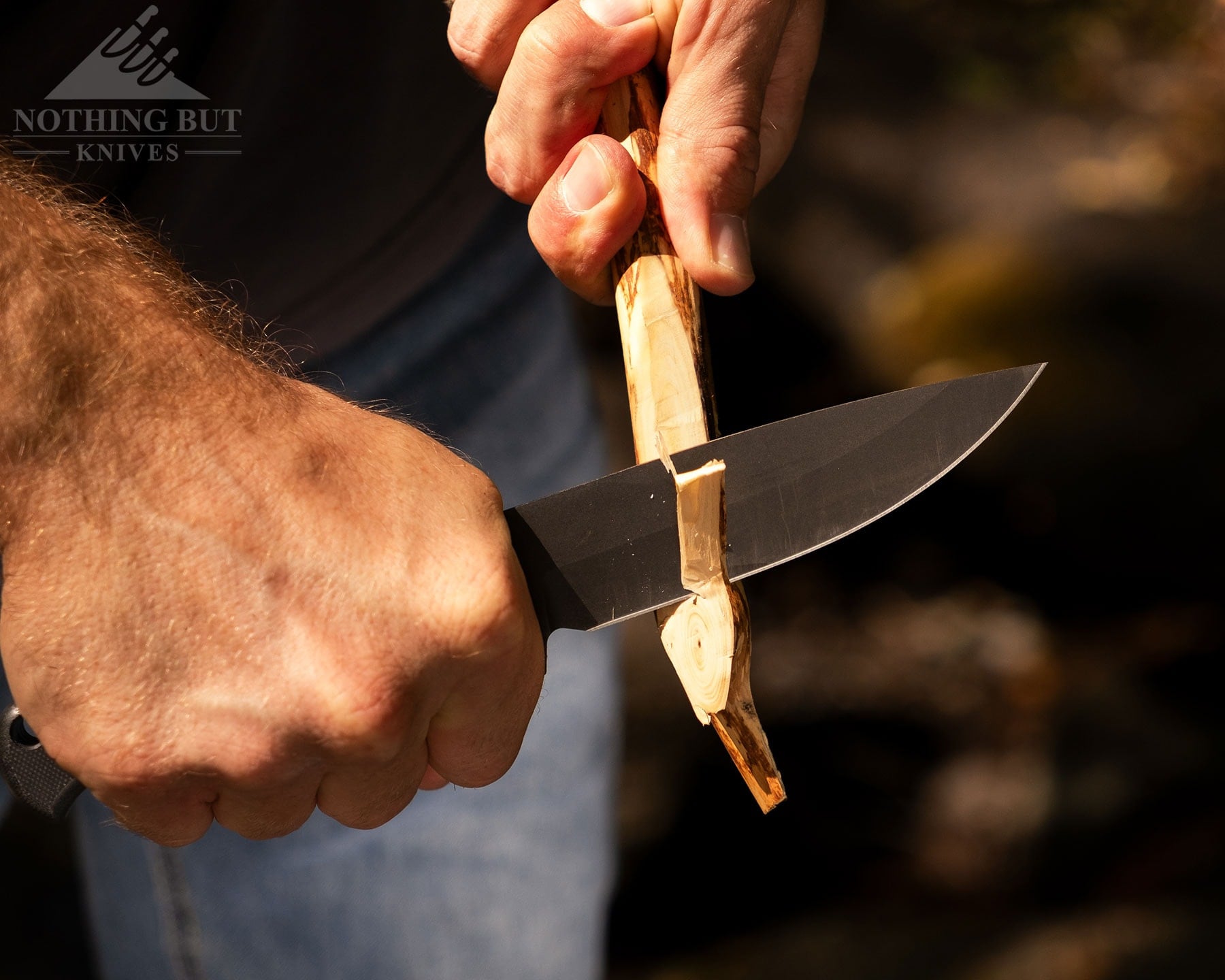
The Wanderer’s blade is .1875” thick. This is less than the monster blades from bushcraft staples like Becker, but robust enough for batoning, prying, hacking… anything really. 3/16” is enough that I can’t feel any flex in the blade, no matter how hard I pry or press into it.
The flat grind with the secondary cutting bevel sweeps gracefully up to the point, which drops slightly from the flat of the spine. While some of my favorite blades in this category have single-bevel Scandi grinds, the traditional design of The Wanderer works and is far easier to sharpen.
The overall blade shape doesn’t have the wide belly that some prefer for fleshing a hide, and the sharp point would make keep this from being a good candidate for that type of work, but it would be exceptional for butchering or breaking down a whitetail.
Get to the point
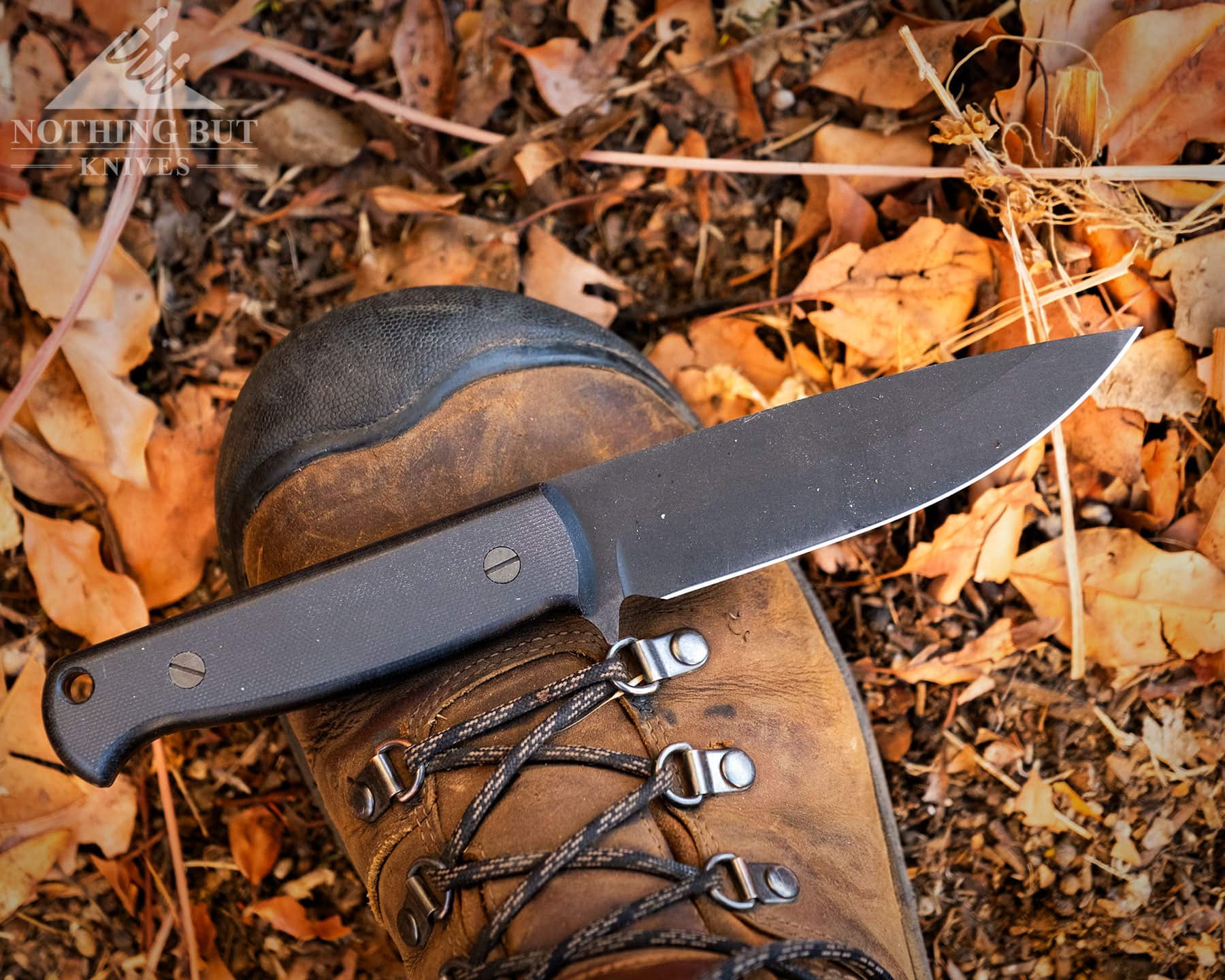
To be clear, I like the sharp point (though this is likely going to be the first thing on this knife that I’ll damage irreparably). The Wanderer’s point is needle sharp. While some older designs, like the original Kepharts and Nessmucks, have rounded over tips, this one is much more pointy.
While not delicate, exactly, it is precise and thin. The point here suggests that this might be a decent one-knife solution for those who don’t buy into the idea that your fixed blade is only for rough work. When I am in the woods, I tend to carry a robust folder, too, and a clean three-blade slip-joint in my first aid kit. But The Wanderer is enough knife that I could forgo the folder.
Keep your hand on the blade
Another big win for The Wanderer is its guard. Many working knives have no barrier between your hand and the blade. Puukkos, for example. If you do drive forward, and the blade is as sharp as it should be, you can cut yourself (and worse, these cuts are typically across the pads of your fingers and tend to occur when you are in the woods, using your hands). For those of us who field-dress game, this is a legit bigger concern.
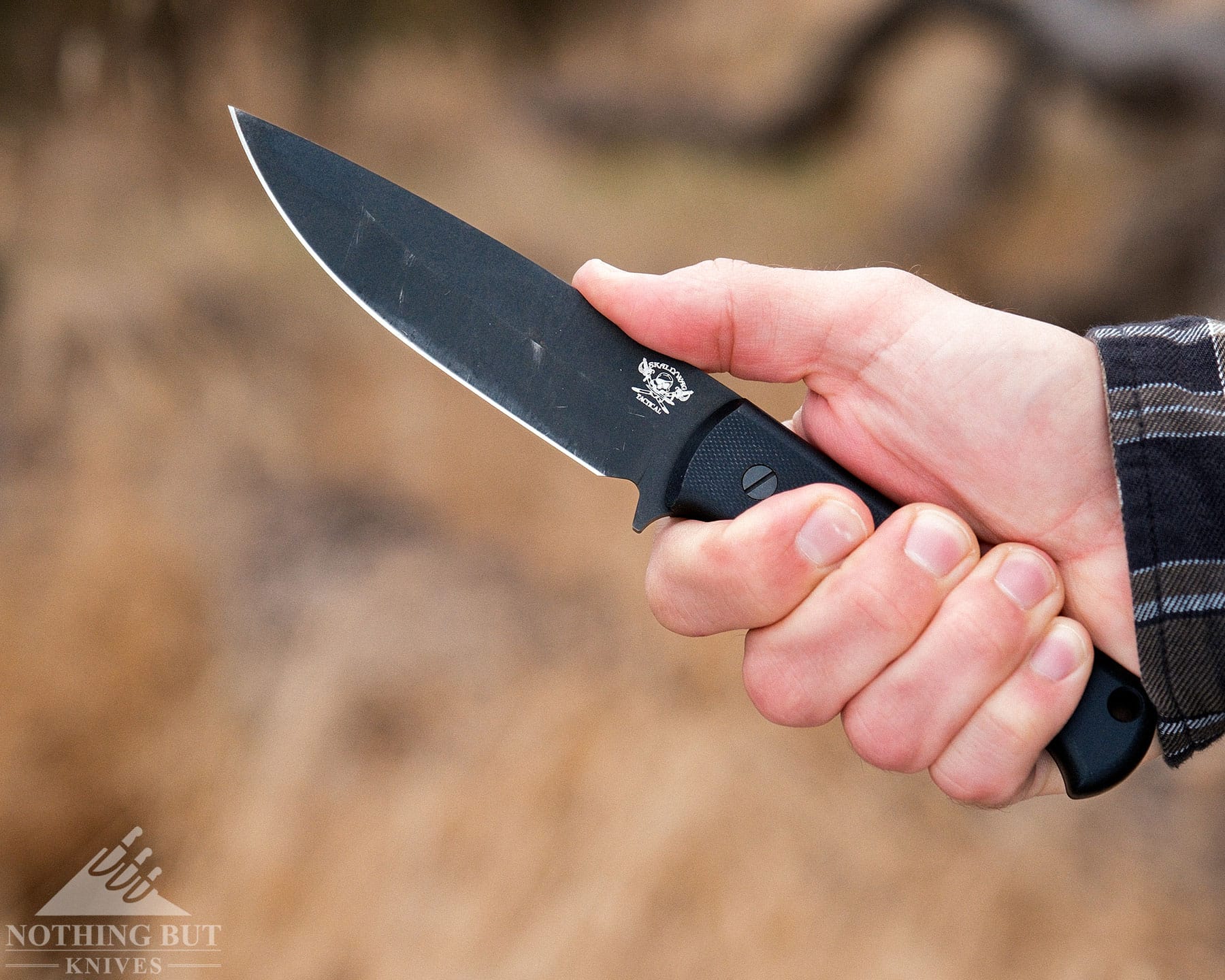
The Wanderer has an integral nubbin of a guard. It is cut form the bar stock that forms the blade and doesn’t have an additional bolster over it, which allows for a firm pinch grip ahead of the scales. While slightly pointed, the guard protects well against slipping forward. It is longer than I typically see on knives like this and it is a solid win for the design.
This guard, too, ties into the next aspect of a bushcraft knife I look for: the sheath.
Don’t overlook the importance of the sheath
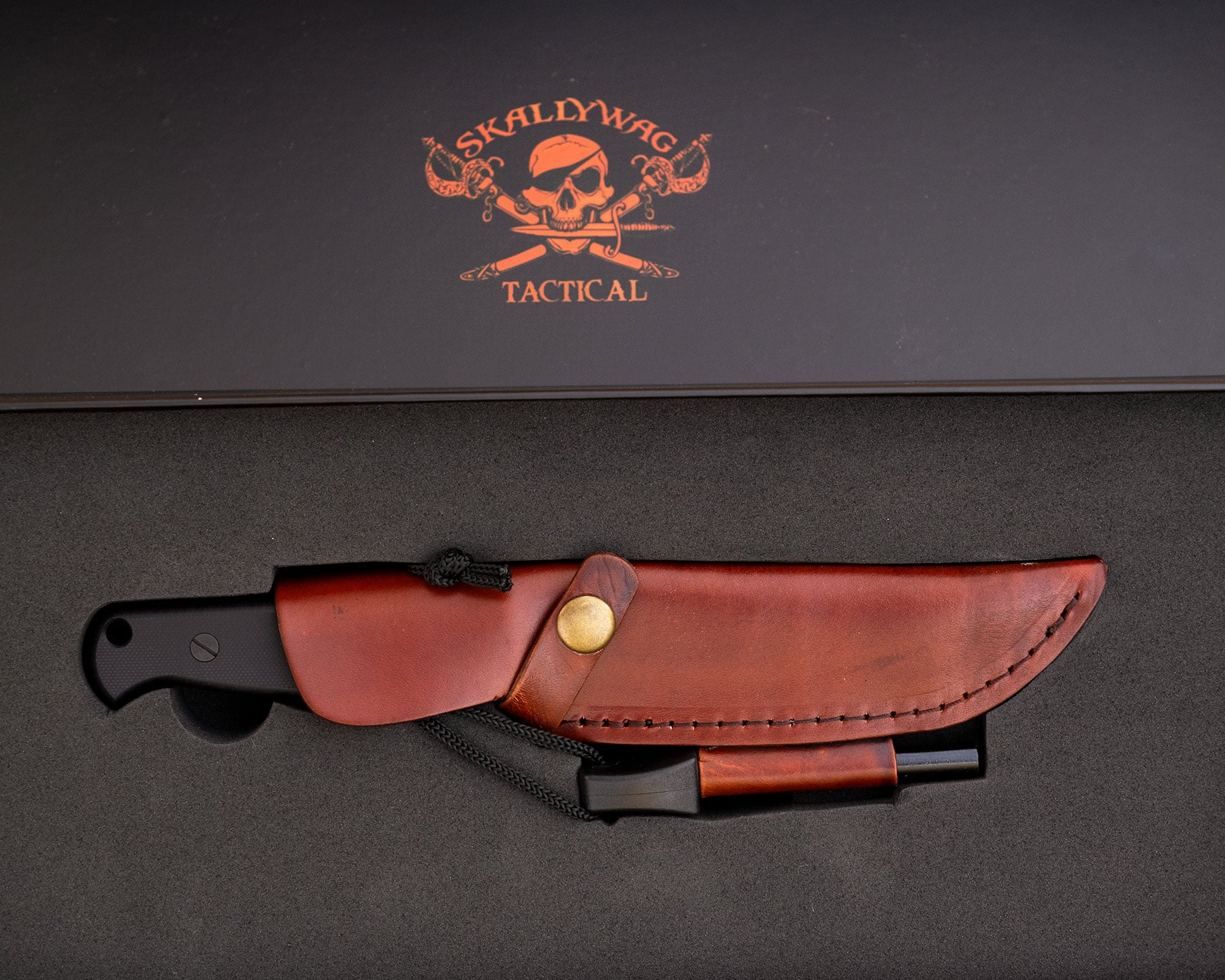
I’m not opposed to the use of plastics in bushcraft sheaths. Some bushcraft purists gravitate toward leather. This is an open, loose-fitting leather sheath with a tight-fitting snap closure and a simple belt hanger on the back. The look is classic and clean.
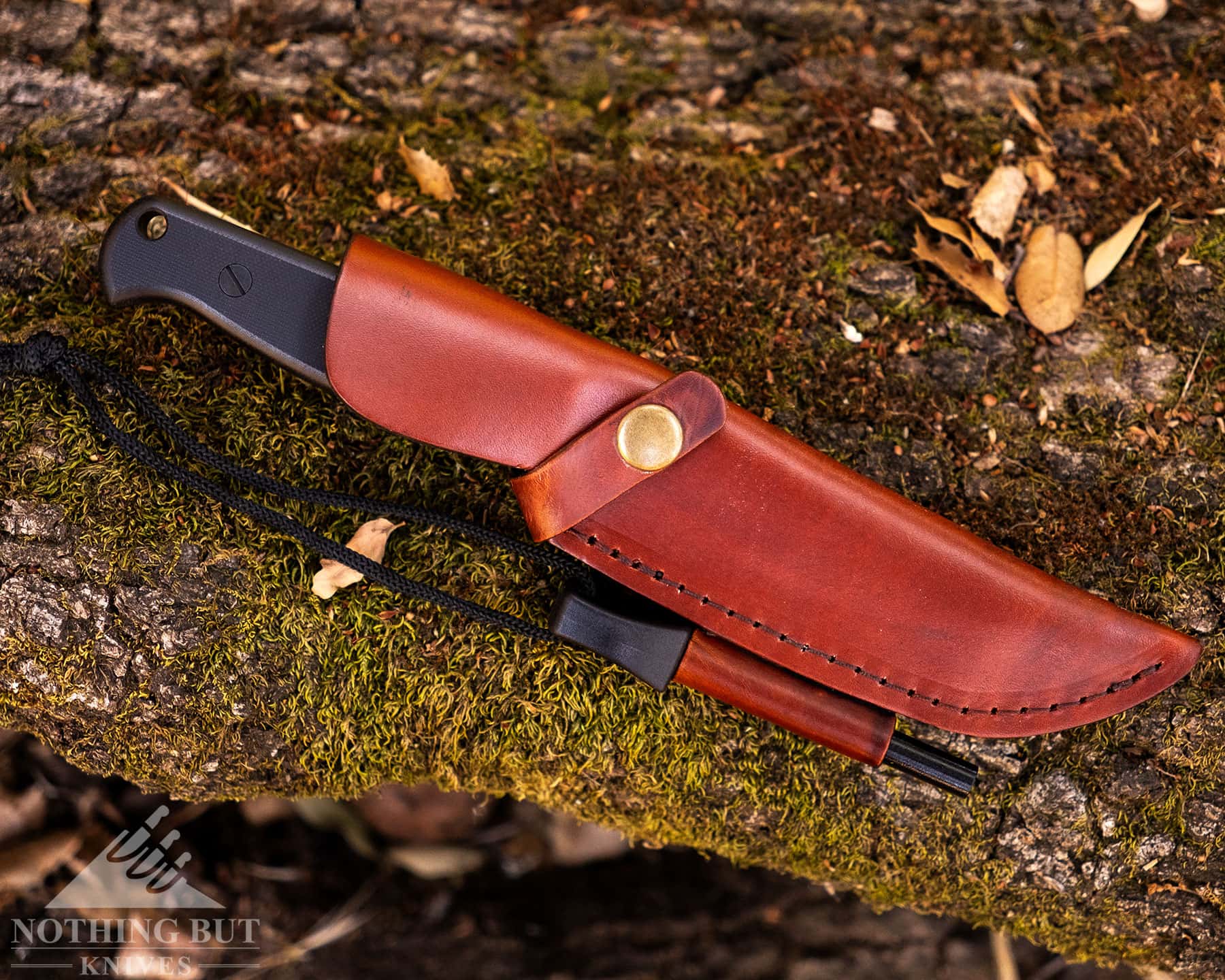
The loose fit inside the sheath (before you snap the strap closed) is good, as it allows some air flow around the blade. Wash it, wipe it off, sheath it, and you should be good. If anything, a light coat of oil on the blade will permeate the internal split-side of the leather sheath, protecting the blade and the leather itself. Wear and tear will just make the whole package look better.
The Wanderer’s guard stops the overtravel of its blade, and the snap-strap closes it down tightly. I’ve carried this on a couple of recent hikes, and it rides high enough that I don’t hit the sheath with my hand, and the snap appears to hold well enough that accidental opening is unlikely. Should it come unsnapped, though, there’s little friction to hold it in place.
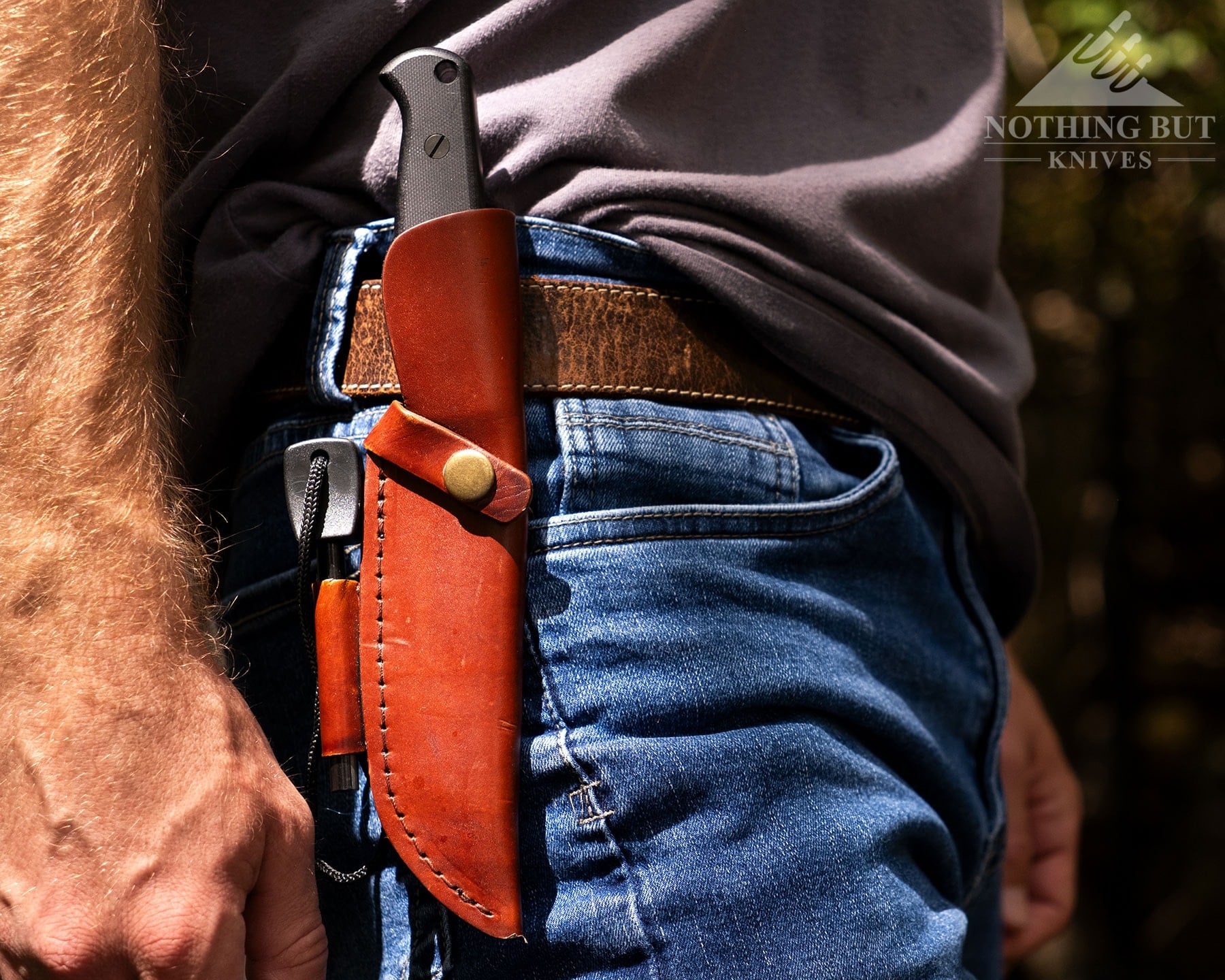
If I were to look for one upgrade to this—and it would truly be an extra—it would be a Kydex sheath that held the whole blade more tightly. Just for the extra peace of mind. I’ve lost knives in the wild because I unsnapped their sheaths without realizing it.
The Wanderer’s use of 154CM
While early American knife designs were made from whatever steel was on hand, we are living in a much different time. Blade steel is a massive marketing opportunity and 154CM steel is a workhorse that will provide strength, edge retention, and do both without much active maintenance.
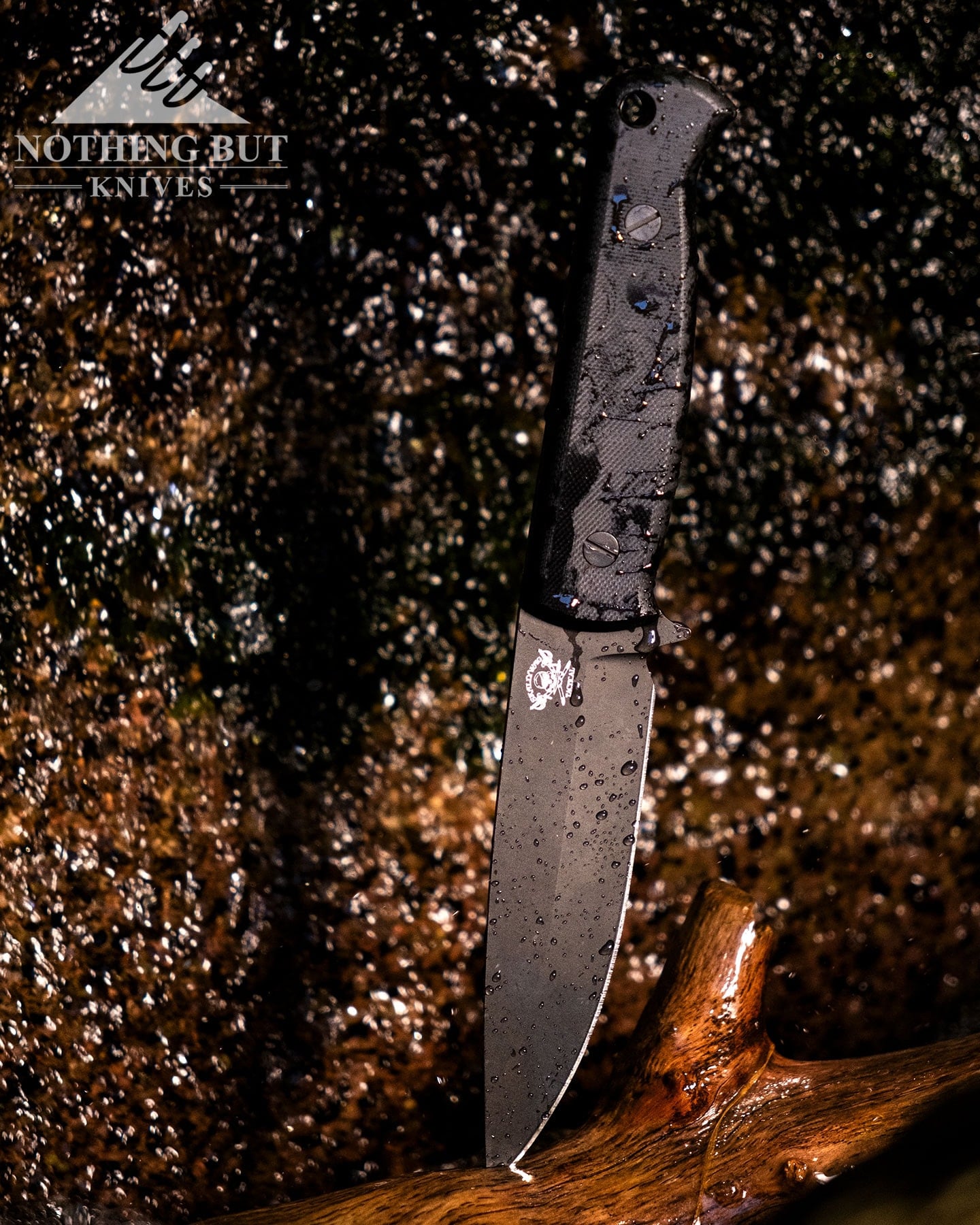
154CM was developed to provide more strength and hardness than provided by typical 440C. With 15% chromium, 4 % molybdenum, and over 1% carbon, 154CM is robust, virtually stainless, yet capable of retaining an edge. The steel was picked up by Bob Loveless in the 1970s for use in knives, and has been proving itself ever since.
The blade (and tang, too) is finished in black PVD. This keeps everything protected except the edge itself. The exact composition of the vapor deposit isn’t names, but the finish should withstand harsh abuse. Or, if you want to by cynical about it, you could argue that this black finish simply finishes out The Wanderer’s aesthetic. 154CM is capable of standing on its own.
The backbone of bushcraft
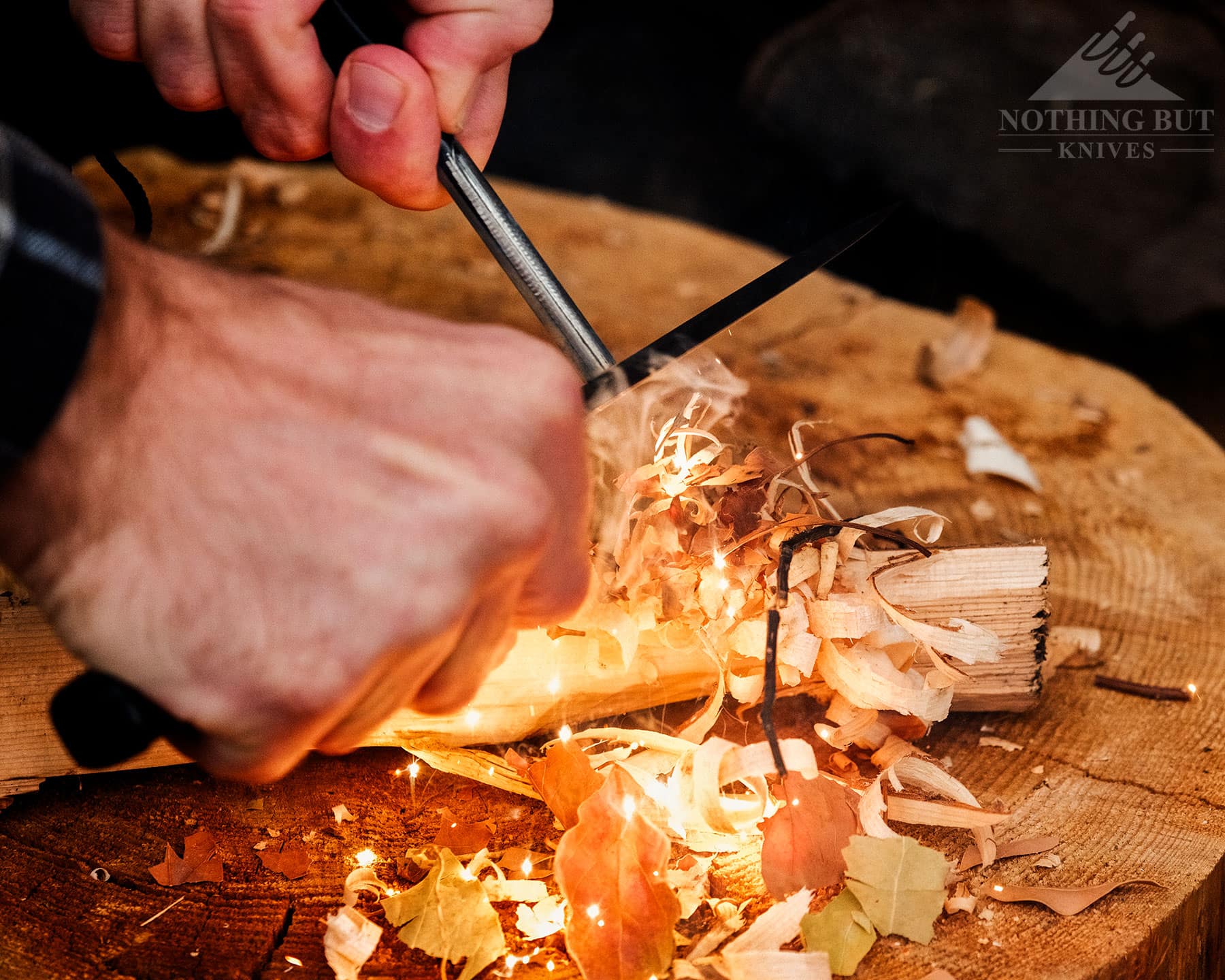
The Wanderer’s spine of the knife is ground to a crisp 90 degree angle. This prevents you from needing to sue the cutting edge to strike on the included ferro rod. While I have started fires with a ferro rod, I don’t do it often. But I like striking sparks to ignite my camp stove. This spine catches the ferro rod perfectly.
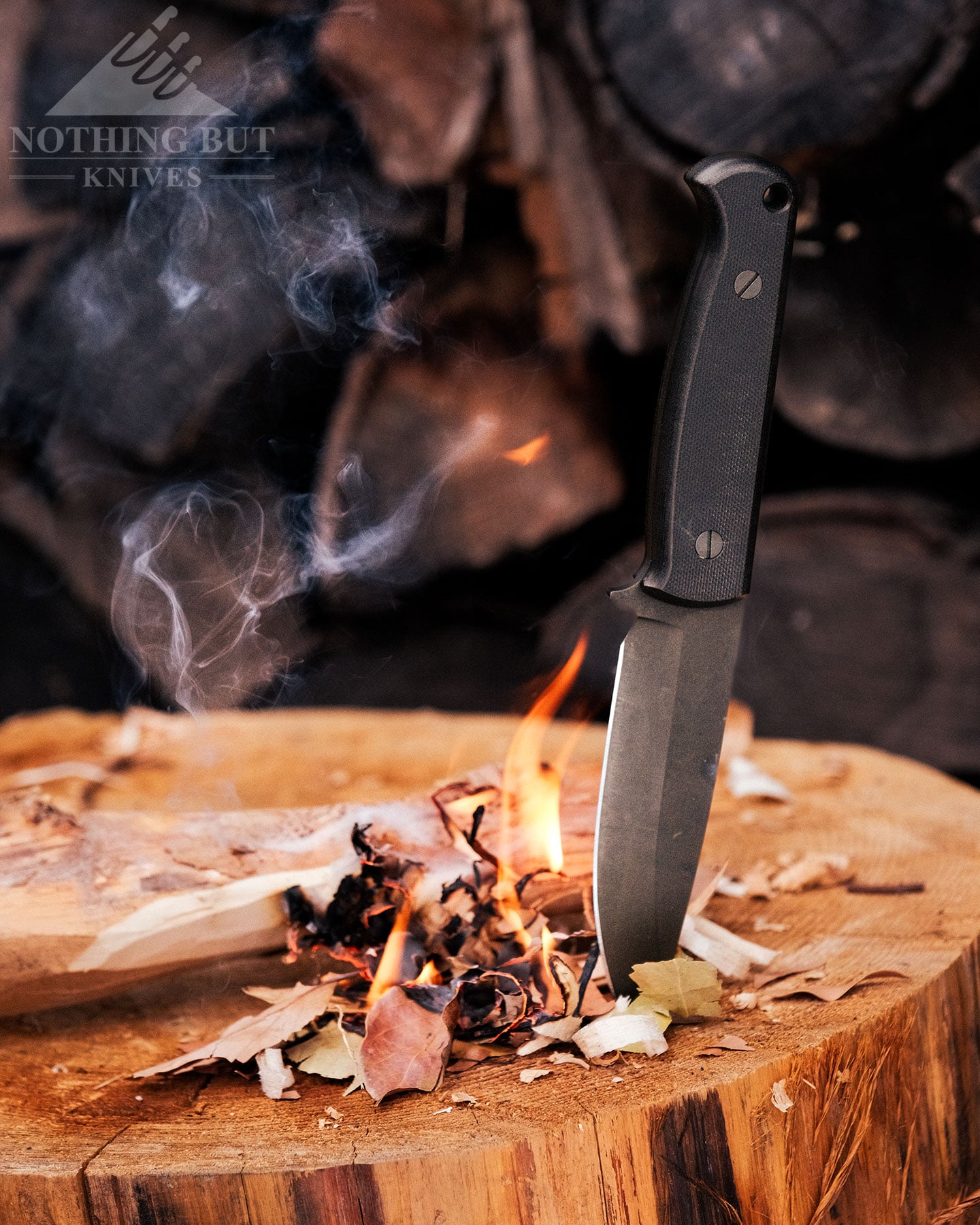
Fire just about rounds it out. This is a nuanced and capable survival knife without any of the gratuitous trappings of a Rambo movie. The Wanderer draws on the historical legacy of bushcraft greats, while embracing modern materials for performance and reliability. The design is capable, right out of its box, and—with an MSRP of $225—is a solid option for anyone who spends time in the woods.
Wrapping up
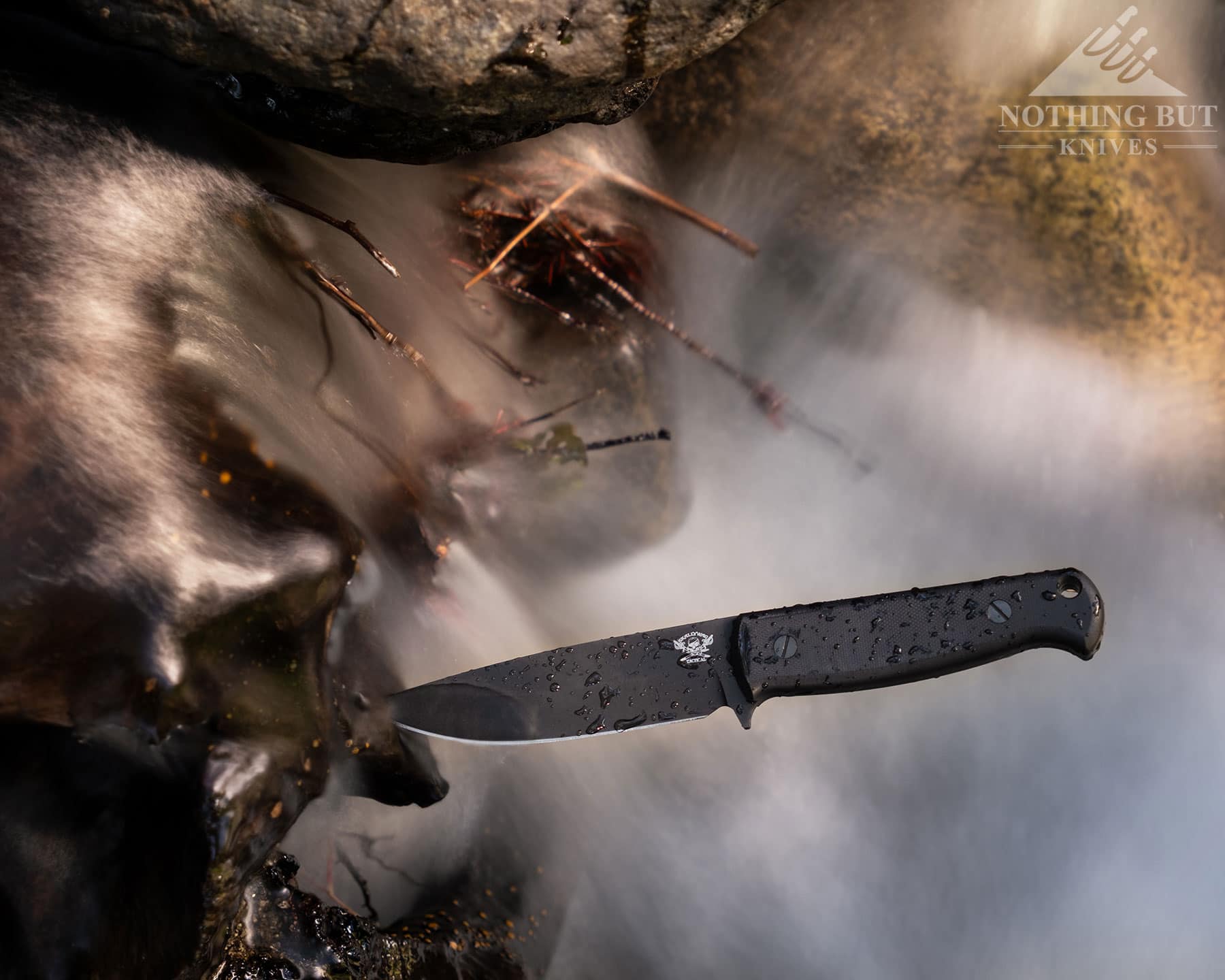
The Wanderer is a great tack for the Skallywag crew. Their catalog has a mix of designs, but most lean toward the pugilistic side common to this genre of knife maker. But Javan Roberts, one of the core contributors during the skunkworks era of Skallywag Tactical’s early days, has proved some classic designs for the team. Roberts has his own company, too—JRobert’s knives but can’t shed his piratical past. And we all win.
In the end, I ask this question of any knife I consider suited for bushcraft: if I had to trust my life to one knife, would this be it? At this early stage, after taking it out a couple of times, I’d have no hesitation.