Titanium coated corrosion-resistant stainless make these an easy choice for saltwater fishing knives.
Anyone who spends much time around salt water knows exactly what it does to knives. I don’t care who you are, or how well you think you take care of your gear, salt requires meticulous attention to detail. Slip up even once with your cleaning regime and you’ll end up grinding off rust.
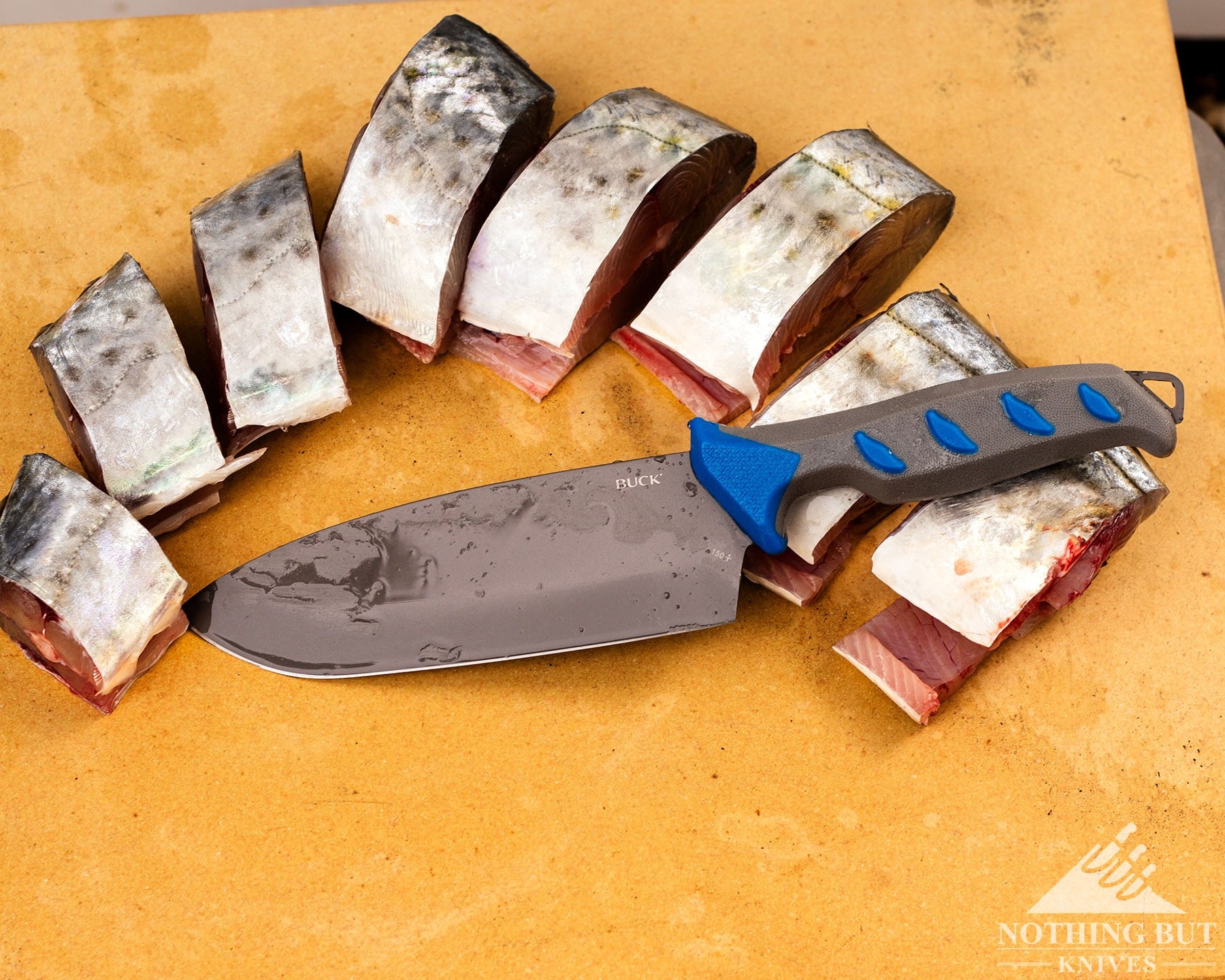
Buck Knives’ Hookset Salt fishing knives, though, are here to provide an easily maintained solution. From the basic needs of corrosion resistance, to the demanding processing needs of larger saltwater fish–this dedicated line of fishing knives are ideal for hard use.
Buck’s 150 Hookset 6″ Salt Water Cleaver Knife
Specifications
| Overall Length: | 12″ |
| Blade Length: | 6.35″ |
| Blade Material: | 5Cr15MoV |
| Handle Length: | 5.” |
| Sheath: | Injection molded |
| Weight: | 7 oz |
| Handle Material: | polypropylene |
| Blade Thickness | .118″ |
| Country of Origin: | USA |
| What I Liked | What I Didn’t Like |
|---|---|
| Titanium coated 5Cr15MoV | Would like a 9″ version for larger fish |
| Thickness provides solid chopping abilities | Could use even more weight to the blade for thicker steaks |
| Perfect for camp cooking |
Protective coatings are a good start
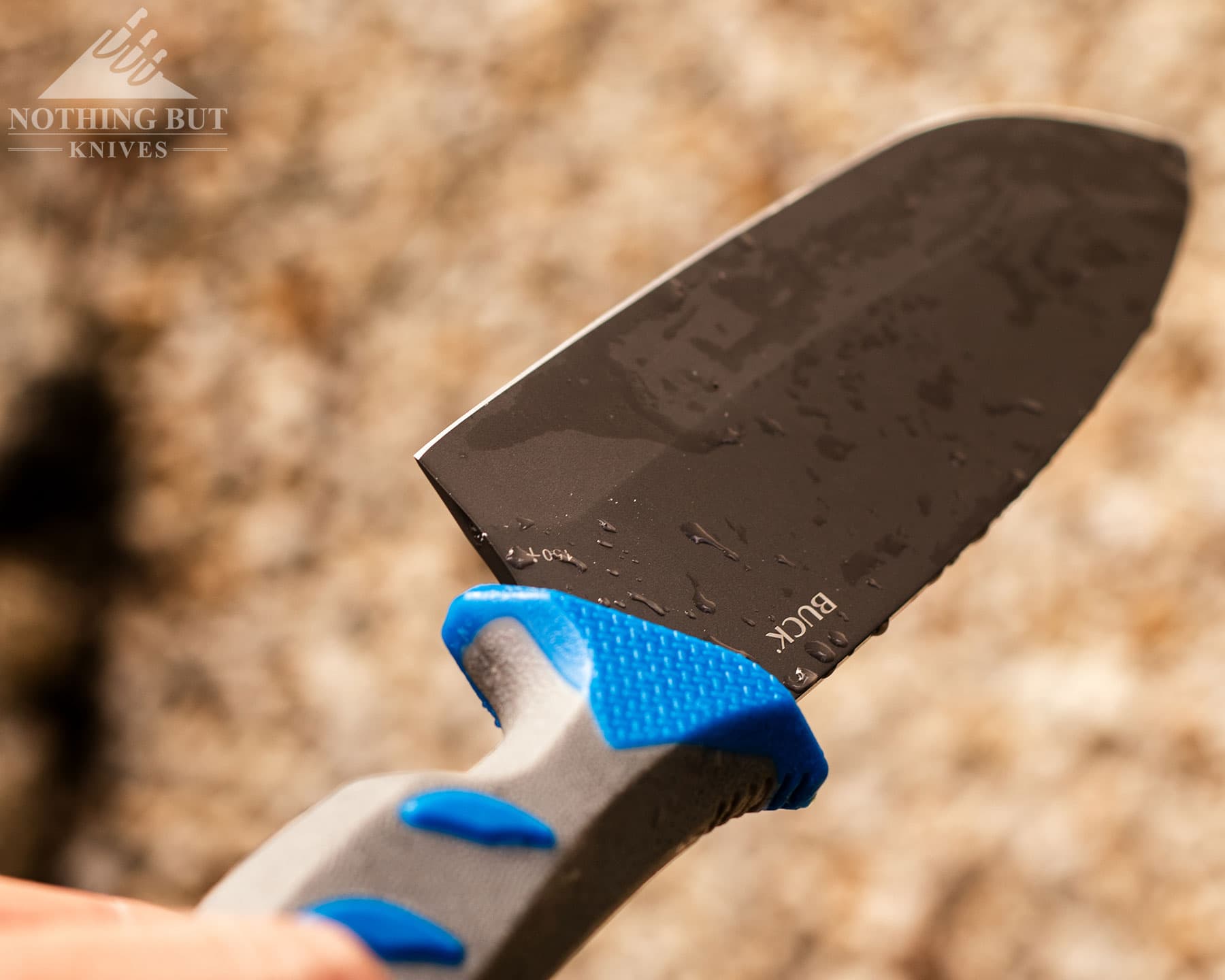
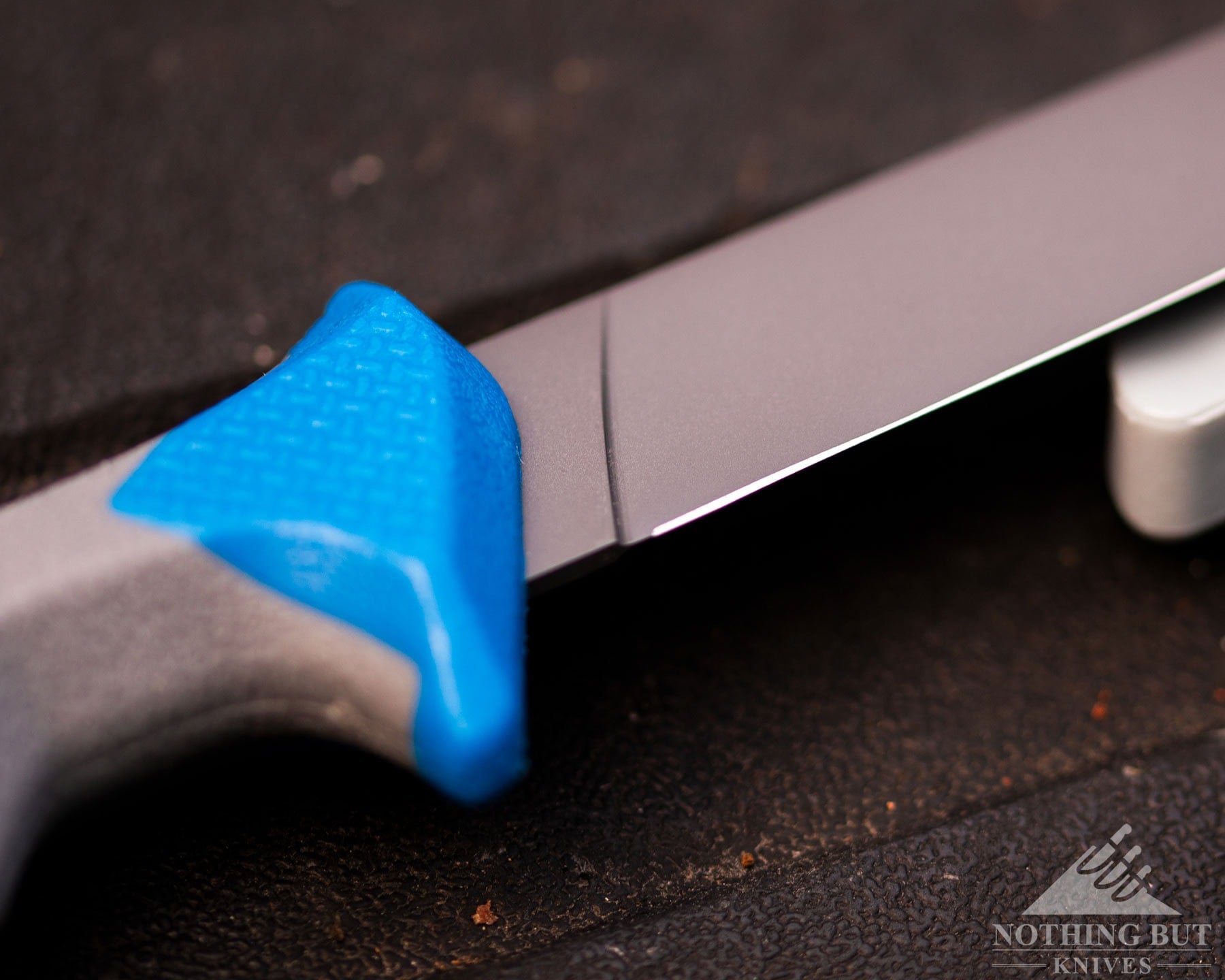
Buck coats the Salt series of fishing knives with titanium. These are likely coated by the vacuum deposition process, but those details are scarce. The result adds a minutely textured finish to the flat of the blades, but not enough to outweigh the protective benefits.
This is a solid coating. It isn’t easy to scratch, won’t wear through when going in and out of the sheath, and should stand up to year’s worth of abuse—even in the dishwasher.
That said, there are some more aggressive materials that will scratch. Sand, teeth, even some bones could, theoretically, be more aggressive on the finish than typical wear and tear—though I’m not seeing any signs after having both in rotation for almost a year.
What makes 5Cr15MoV special?
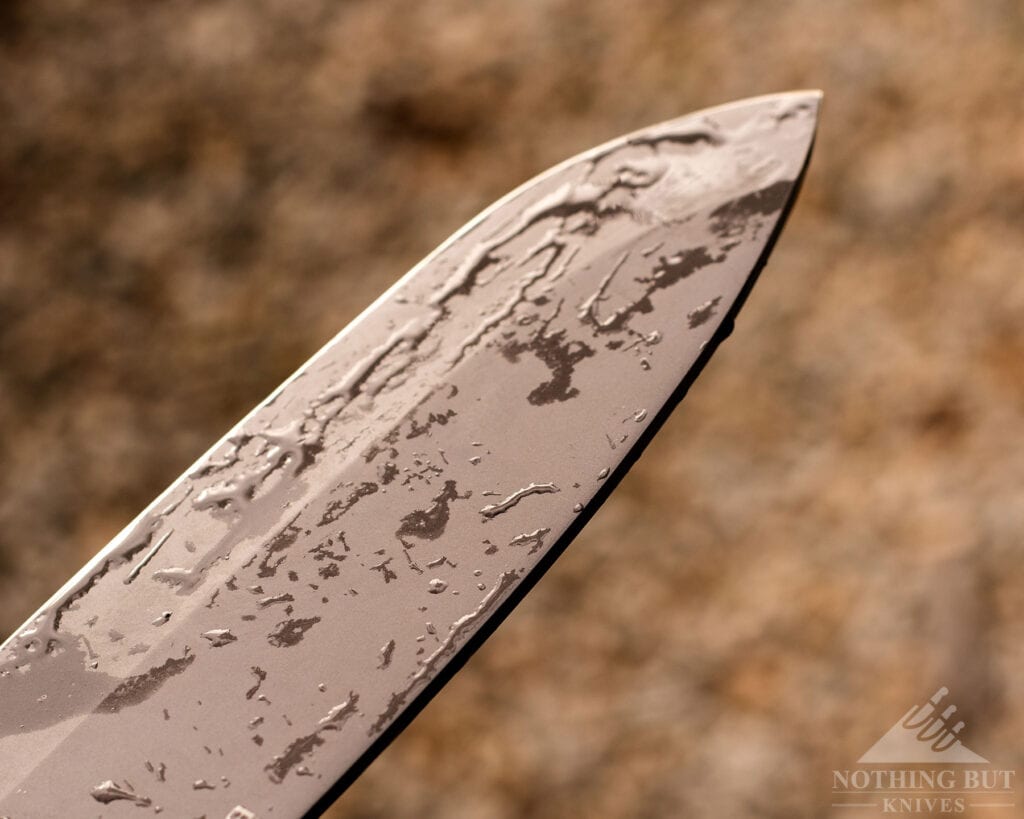
15% of 5Cr15MoV is chromium. If you are looking for something stainless, easy to maintain, virtually rust proof, easy-enough to resharpen, 5Cr15MoV is ideal. Blade steel matters on knives like these, and Buck knows it.
The Buck fishing knives in the Salt series are built of 5Cr15MoV steel. This stainless isn’t the most sophisticated blade steel, and not the latest whiz-bang unobtanium, but it is exceptionally capable and isn’t going to command such a premium that Buck will have to price these out of reach.
This steel is also used on the freshwater versions of these same knives. Those, though, rely on the 5Cr15MoV alone, without the titanium coating, to provide the corrosion resistance.
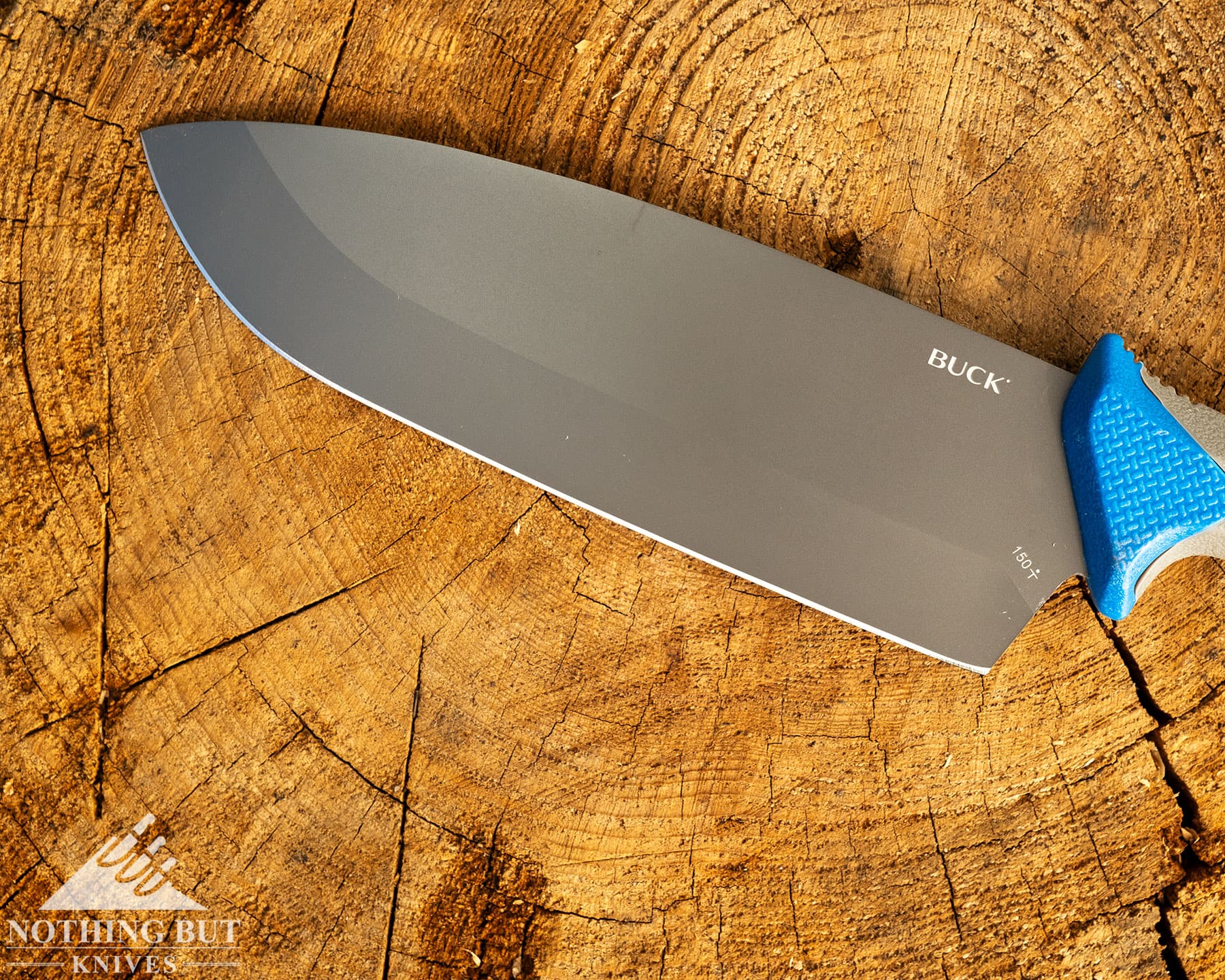
Note, though, that the cutting edge on the Salt knives won’t have the coating. This should seem completely obvious to those of you who have had to resharpen the cutting edge of a coated blade. I’ve done it many times. With a fillet knife or a cleaver, like these, I don’t loose any sleep about minor regrinds or aggressive sharpening that removes some steel.
And you will have to resharpen them. 5Cr15MoV is—as far as edge retention goes—good, but not what I’d consider professional grade. I know several butchers and a couple of professional fisherman, and they gravitate toward simple—almost disposable blade steels high in carbon that they can resharpen easily, over and over, until they are beyond hope, at which point they are tossed aside. There’s nothing remotely romantic about it.
Buck doesn’t make disposable blades. While I wouldn’t consider these knives to have any heirloom appeal (and many of the Buck knives will last for generations), they’re meant for regular use.
The 150 Hookset 6″ Salt Water Cleaver Knife in practical use
The images for this review were shot several thousand miles apart. I used the 150 Hookset 6″ Salt Water Cleaver on a fishing trip in the Keys. The knife performed exceptionally well. I grew up on the coast of Florida and frequently caught Spanish Mackerel that my father would steak out an grill.
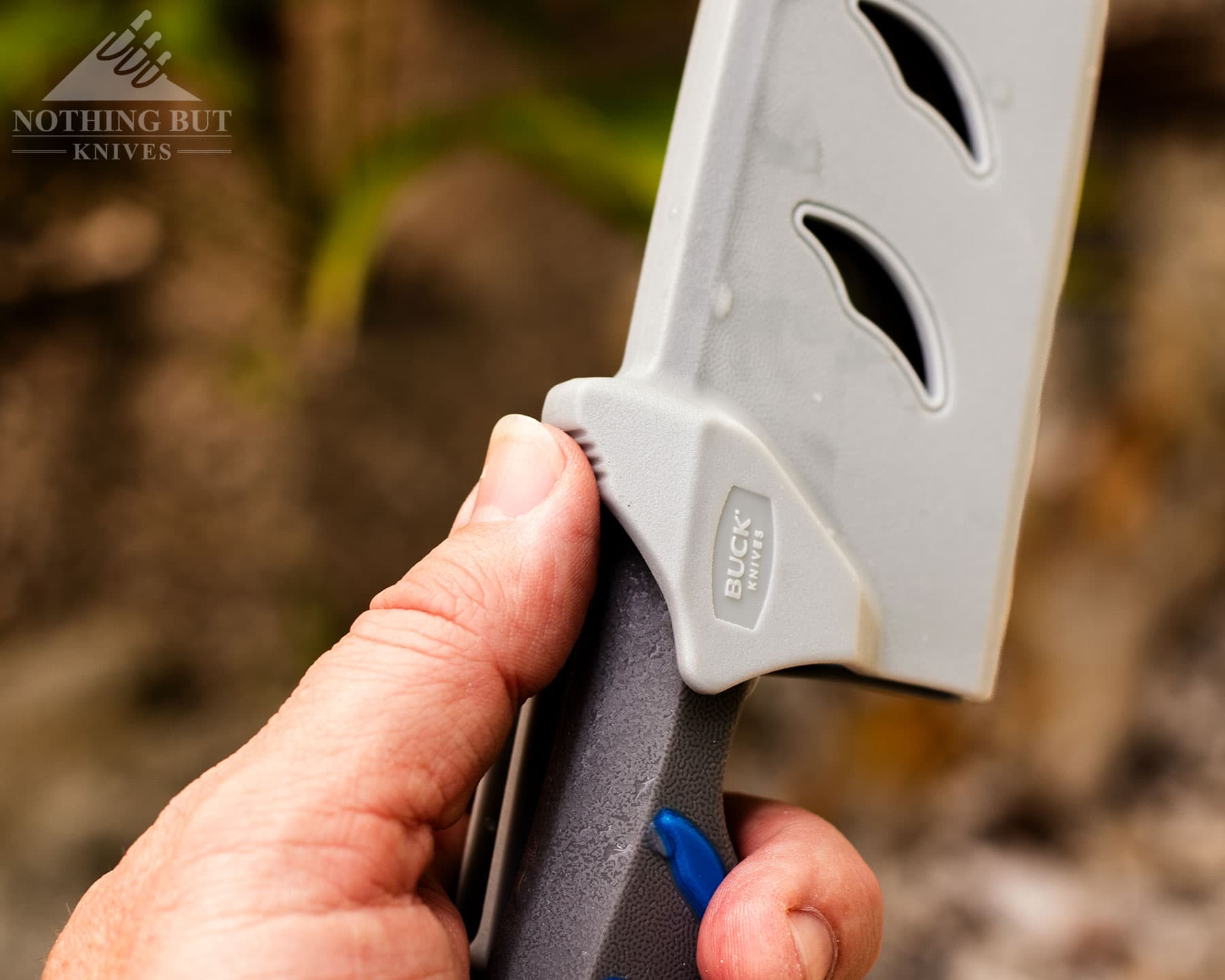
For large scale jobs, the Hookset Salt Water Cleaver is ideal. It also makes a decent camp kitchen knife for dicing and cutting other meats. It doesn’t slice as well as a 9” flat or convex ground chef’s knife, but it will get the job done and is likely much better than what you normally take camping.
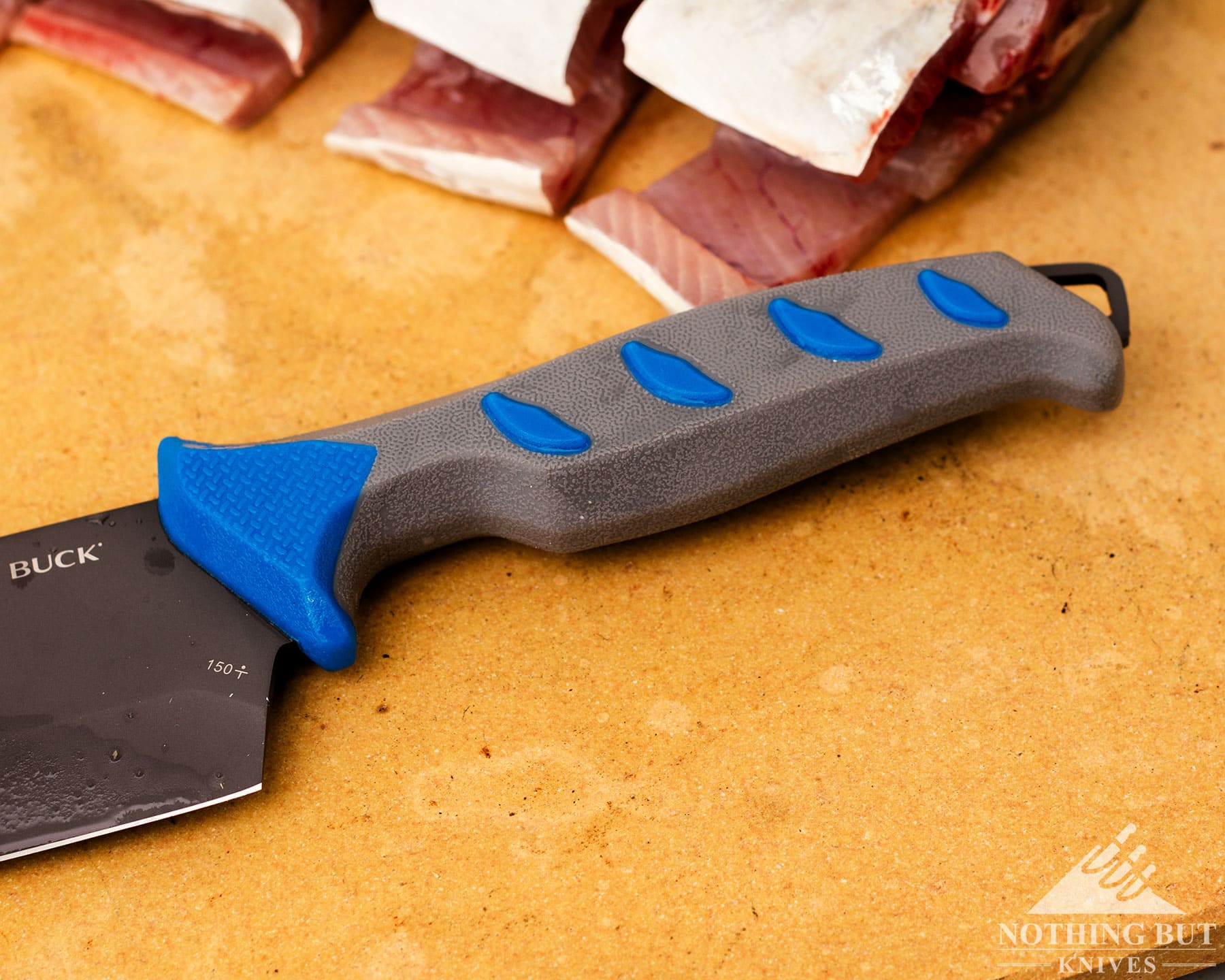
The handle, made from blue and grey polypropylene on the Salt line, is easy on the hands and provides enough grip that—even when coated in the viscera of fish—it isn’t prone to slipping.
Buck’s 147 Hookset 9″ Salt Water Fillet Knife
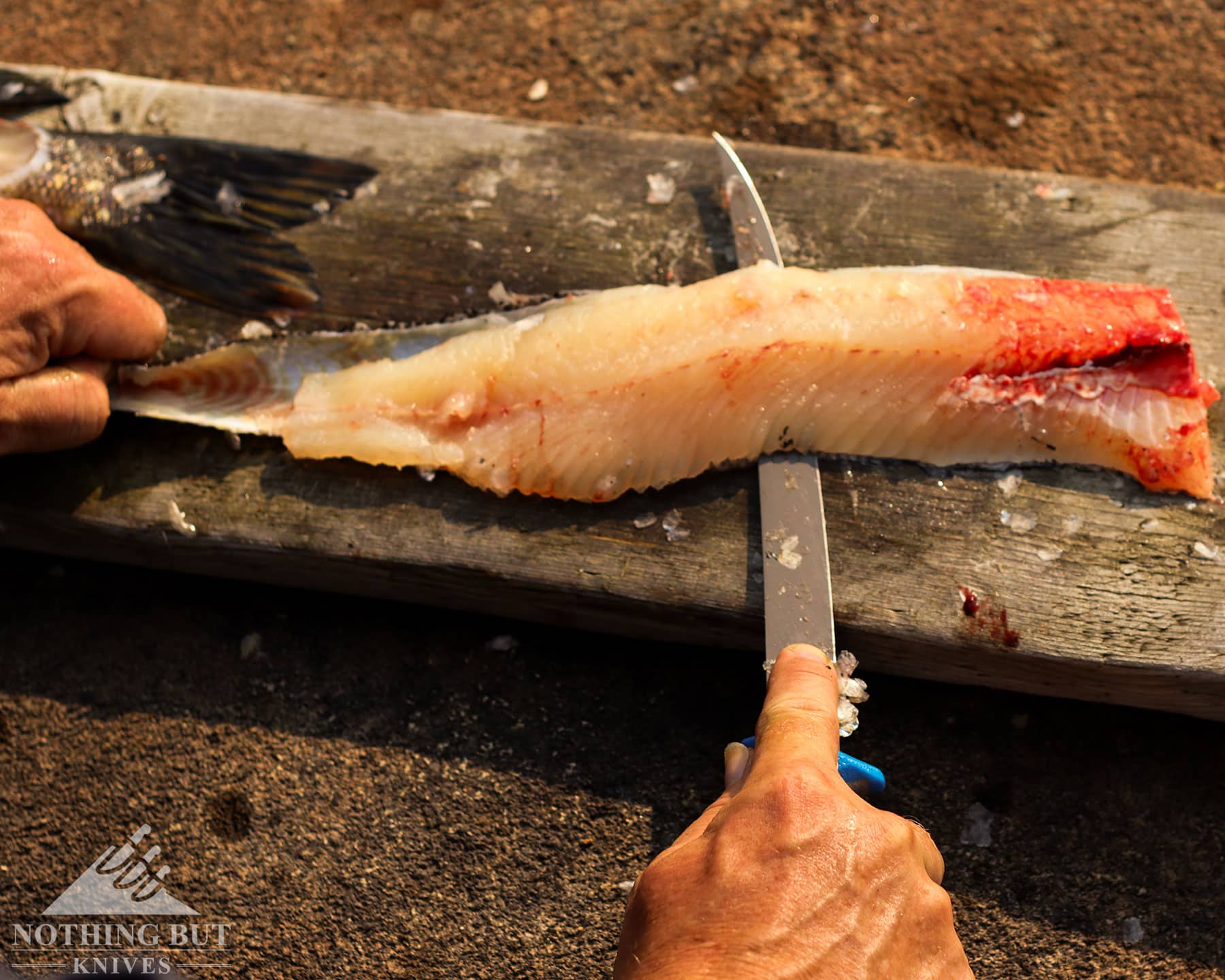
This past summer, I took a long canoe trip in Manitoba. As I was making multiple portages, I went into the woods with less gear than I normally schlep camping, but I knew I’d be cleaning pike and walleye, so I wanted a capable blade.
While I could have gone with the freshwater versions, I opted for the Hookset with the titanium coating. Better to have that extra protection, in my experience—and since I was out for 12 days, I knew the knife would stay wet for much of that time.
Specifications
| Overall Length: | 14.25″ |
| Blade Length: | 9″ |
| Blade Material: | 5Cr15MoV |
| Handle Length: | 5″ |
| Sheath: | Injection molded |
| Weight: | 4.1 oz |
| Handle Material: | polypropylene |
| Blade Thickness | .88″ |
| Country of Origin: | USA |
| What I Liked | What I Didn’t Like |
|---|---|
| Titanium coated 5Cr15MoV | As true with any fillet, edge will need regular attention |
| Flexible blade | And care is still required to keep edge free from rust |
| Sheath allows for drainage |
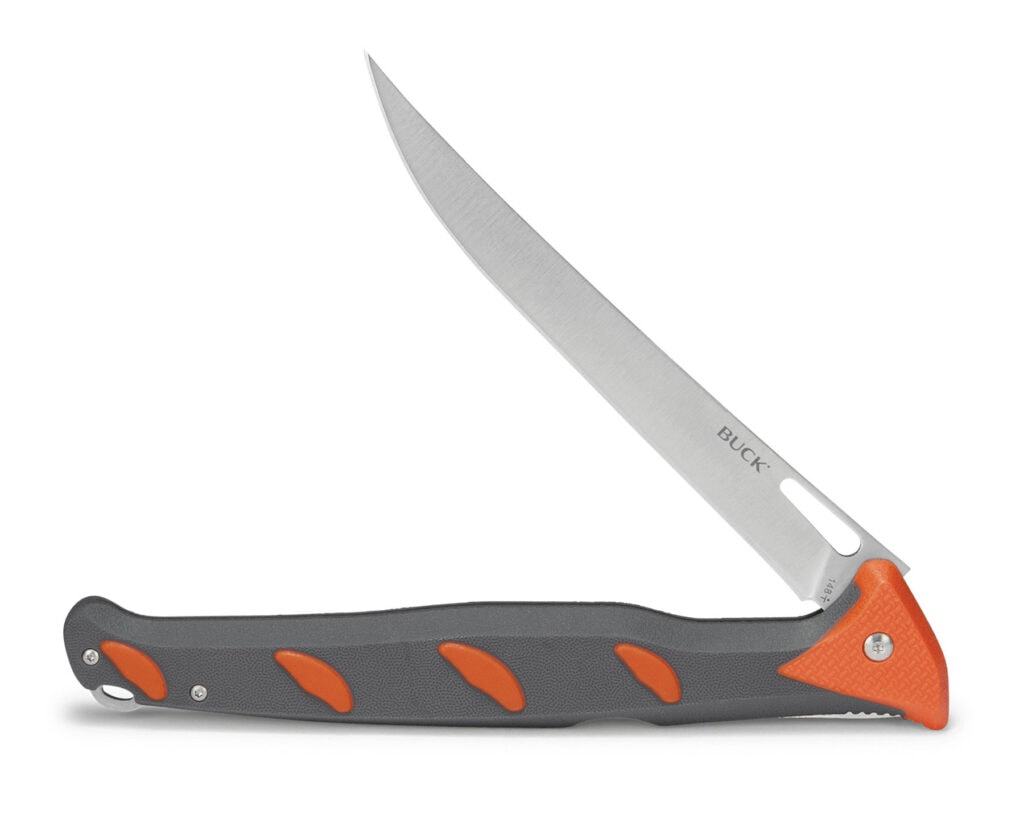
There are two lengths of the thin-bladed fillet. I like the extra length of the 9” for making sweeping cuts down the length of a backbone. If you are working with smaller fish, or want one that is ideally sized for cutting the cheeks out of grouper, say—the 145 Hookset 6” may be perfect.
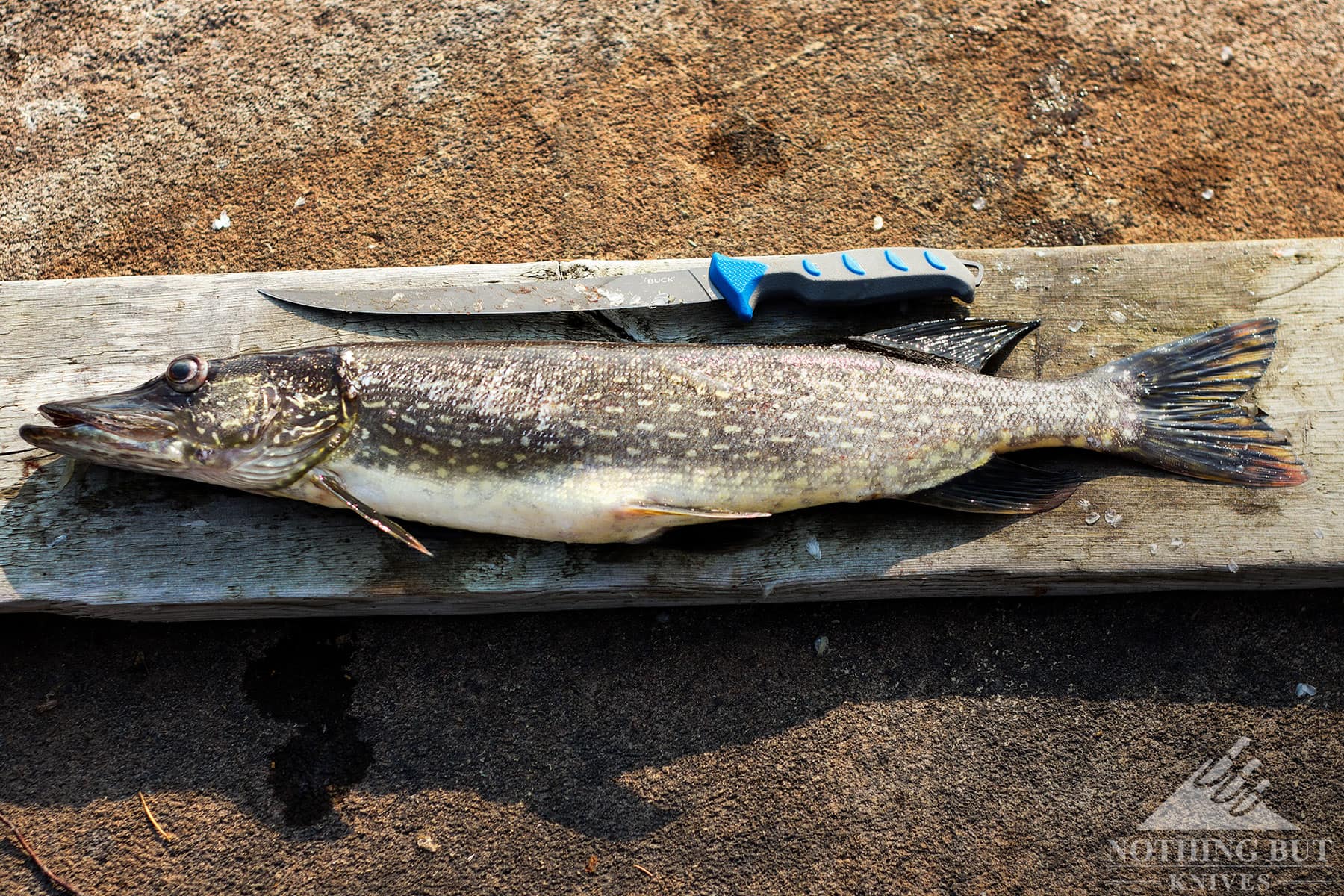
Both of these have blades that are .08” thick. That makes them incredibly bendy—even after heat treatment.
What about the other Hoosket Salt knives?
They are equally compelling. If you want a fatter blade in the fillet shape, the 149 Hookset Breaker Fillet is there, too. This would be a solid choice for much larger fish, where the extra stiffness in the blade may be an advantage for nipping through bones.
The Breaker has a .118” thick blade. This alone adds rigidity, but the blade width, too, increases its ability to bridge that gap between the fillet and the cleaver.
How do the Buck Hookset sheaths shed water?
Perfectly. Most sheaths for fishing knives or bushcraft blades will provide some kind of drainage hole. Typically this is a tiny little hole through which water can drip.
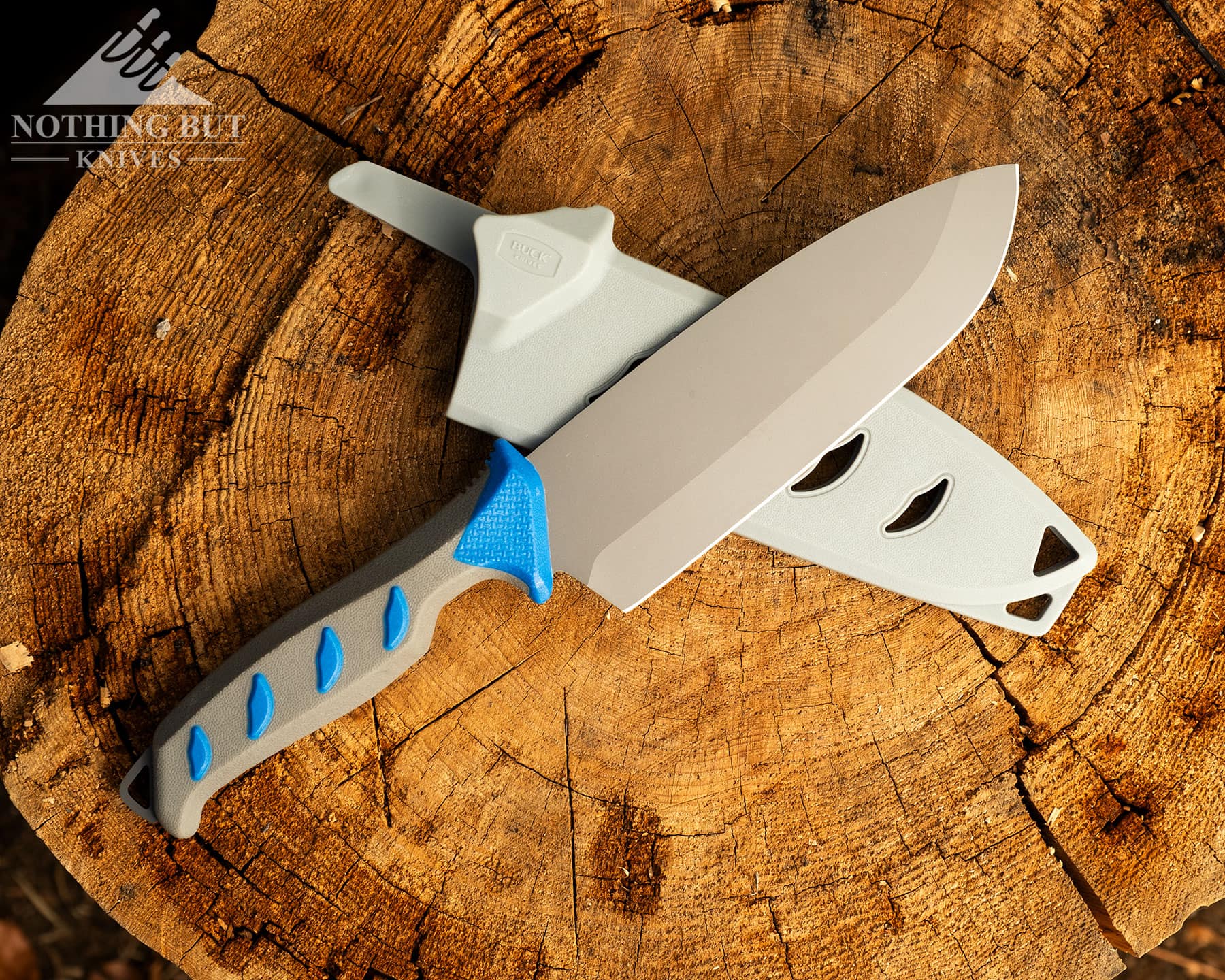
Not the Bucks. The Hookset sheaths have a big hole at the bottom. Water pours out. And the length of the sheath is cut with wide vents that allow for the whole length of the blade to get some better air flow.
This means gravity works to draw water down, but the rest of the blade will have access to air and can dry by evaporation. I’ve run these blades and sheaths through the dishwasher, washed them by hand, dried them in the sun, and in the constant overcast of the Manitoba wilds and have never had an issue with the sheaths holding water.
Final thoughts
Buck is no stranger to outdoor knives. They own a significant share of the hunting market. Yet any visit to your local big-box behemouth will reveal a wide array of fishing-only knife brands. Why can’t Buck make a bigger splash in this space?
This is a complicated question. Their knives are there, in the same stores, but the politics behind shelf space will often keep Buck’s fishing knives out of the fishing aisles.
It shouldn’t be that way. After years of experience with many of these other brands, I can say–without hesitation–that there’s good reason to consider a Buck.