TL;DR
- An immediate top ten in the lightweight, hard use knife category.
- It is one of the easiest knives to disassemble, clean, and reassemble.
- Work Sharp did an excellent job making this a knife you can fix and swap parts in for years.
The Hard Use Knife that Got Me to Stop Worrying and Love the Button Lock
I’ve always been wary of button locks, probably, in the same way that people are wary of planes. Statistics say they’re safe, but the path to total obliteration seems like it’s only one or two mechanical failures away.
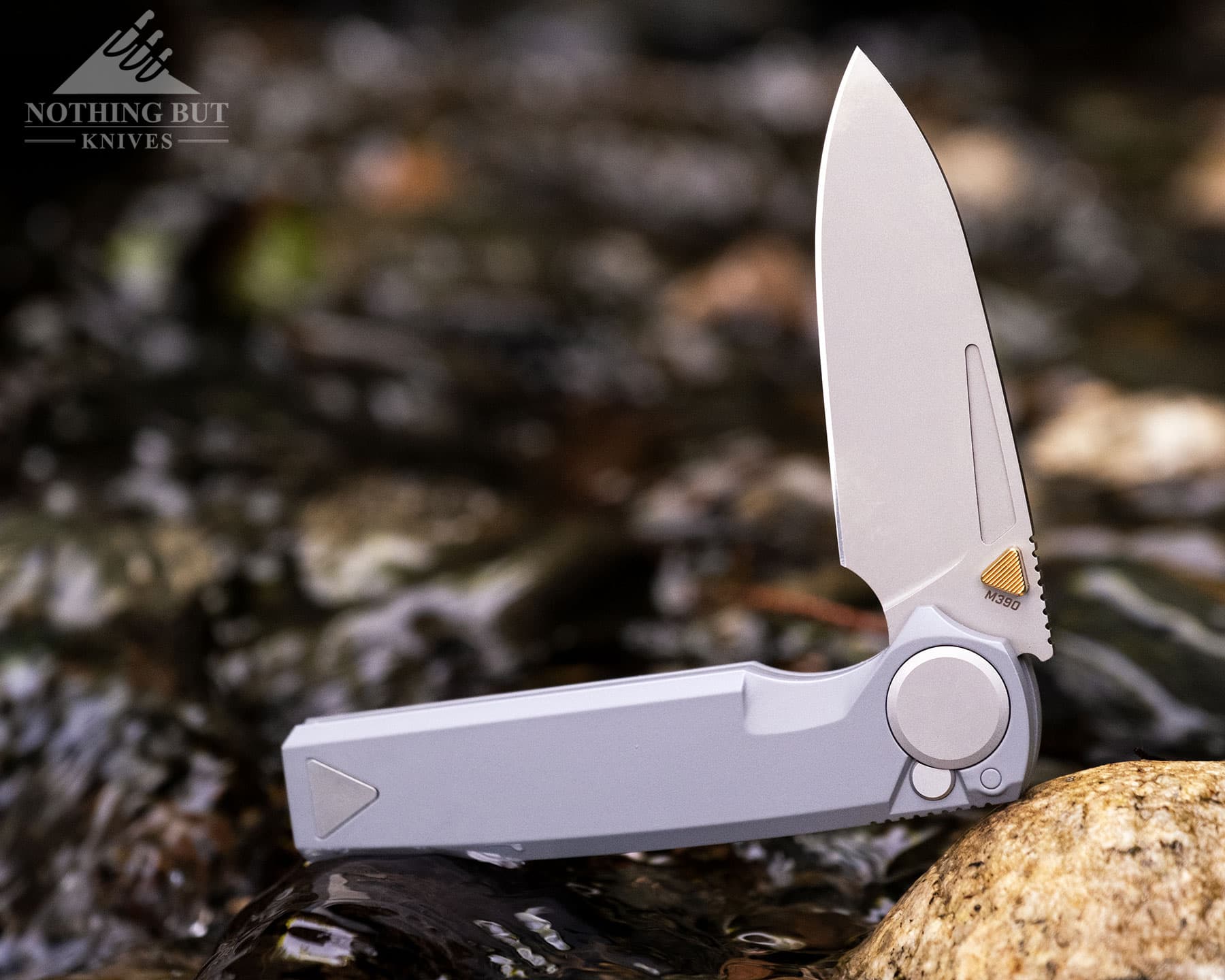
It doesn’t help that most of the first button locks I used were flashy and light. Made to fidget and snap and come out of the pocket to its own theme song.
The RMX isn’t that. It’s a drab knife in a way that makes me trust it, because I know it isn’t trying to be anything more than exactly what it is: a tough, slicey knife with a hard line on long-term usability.
It helps too that the designer is possibly one of the most practical, tool-savvy people in the industry.
Probably the major headline feature of this knife is that Work Sharp designed a way for customers to convert it into an automatic. That was part of the original RMX when it hit the market. We didn’t get that one. We got the plain old thumb stud version, because we’re plain people.
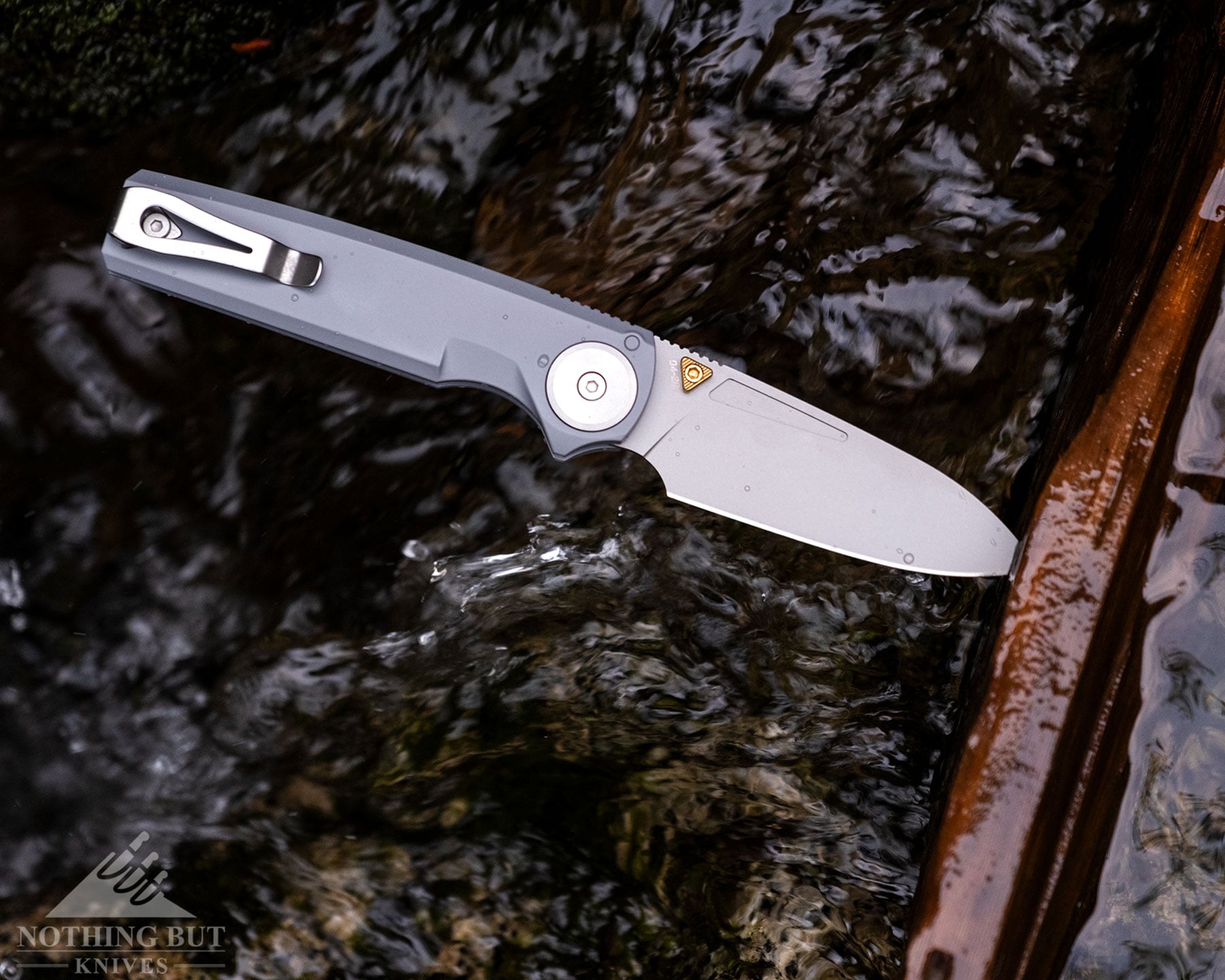
If I were a decent and dedicated knife reviewer I probably would have gotten both, but the entire thought process of buying this knife involved me seeing the RMX, saying “ooh, shiny” and pounding the buy button before I realized there were different versions of it.
Specifications
| Overall Length: | 7.5” |
| Blade Length: | 3.2” (2.75” cutting edge) |
| Blade Steel: | M390 (60 – 62 HRc) |
| Open System: | Thumb stud |
| Blade Thickness: | 2 mm |
| Blade Shape: | Drop point |
| Blade Grind: | Flat |
| Handle Length: | 4.3” |
| Handle Material: | Magnesium |
| Lock Type: | Button |
| Weight: | 2.6 oz |
| Designer: | Dan Dovel |
| Made in: | Sourced in China, Assembled in Oregon |
| What I Liked | What I Didn’t Like |
|---|---|
| Simple design with a few replaceable parts | Sometimes feels like I need more cutting edge |
| Edge has an aggressive bite | The pocket clip feels a little flimsy |
| Finger choil is actually functional | Integral handle makes full cleaning a little trickier |
| Easy to use with gloves on |
The Designer is a Knife Abuser
I’ve been at the edge of my seat to try the RMX ever since Zack Whitmore interviewed Dan Dovel, the designer and head engineer at Work Sharp, for his 5 Knives for Life series. It’s a fascinating interview that’s worth watching (in its two-hour entirety), but what interested me most in terms of eventually testing the RMX was that Dovel describes himself as a “knife consumer”. The line Zack used was that “he doesn’t just use knives, he blows through them”.
Over the course of the interview Dorel takes at his favorite Kershaw multitool (the A100), now discontinued), then points over to a bag of parts for it that have accumulated over the course of owning, using, and breaking dozens of that model.
He designed the RMX to fit into that kind of use case. The name is an acronym for “Replaceable Mechanism Xchange”. That’s mostly a reference to the manual-to-auto feature, but it also calls out their philosophy that it should be easy to replace parts and repair the knife.
One Screw Maintenance
One of Dovel’s main concerns with the knife actually seemed to be cleaning. The handle is integral in part so there are fewer nooks and crannies for dirt to get packed into. The only thing to actually unscrew to get inside is the pivot, which was designed to be switched out anyway.
They’ve achieved this by integrating the caged bearings into the pivot pieces that can be removed from the outside of the scales after you take out the pivot screw.
So this is an incredibly accessible knife.
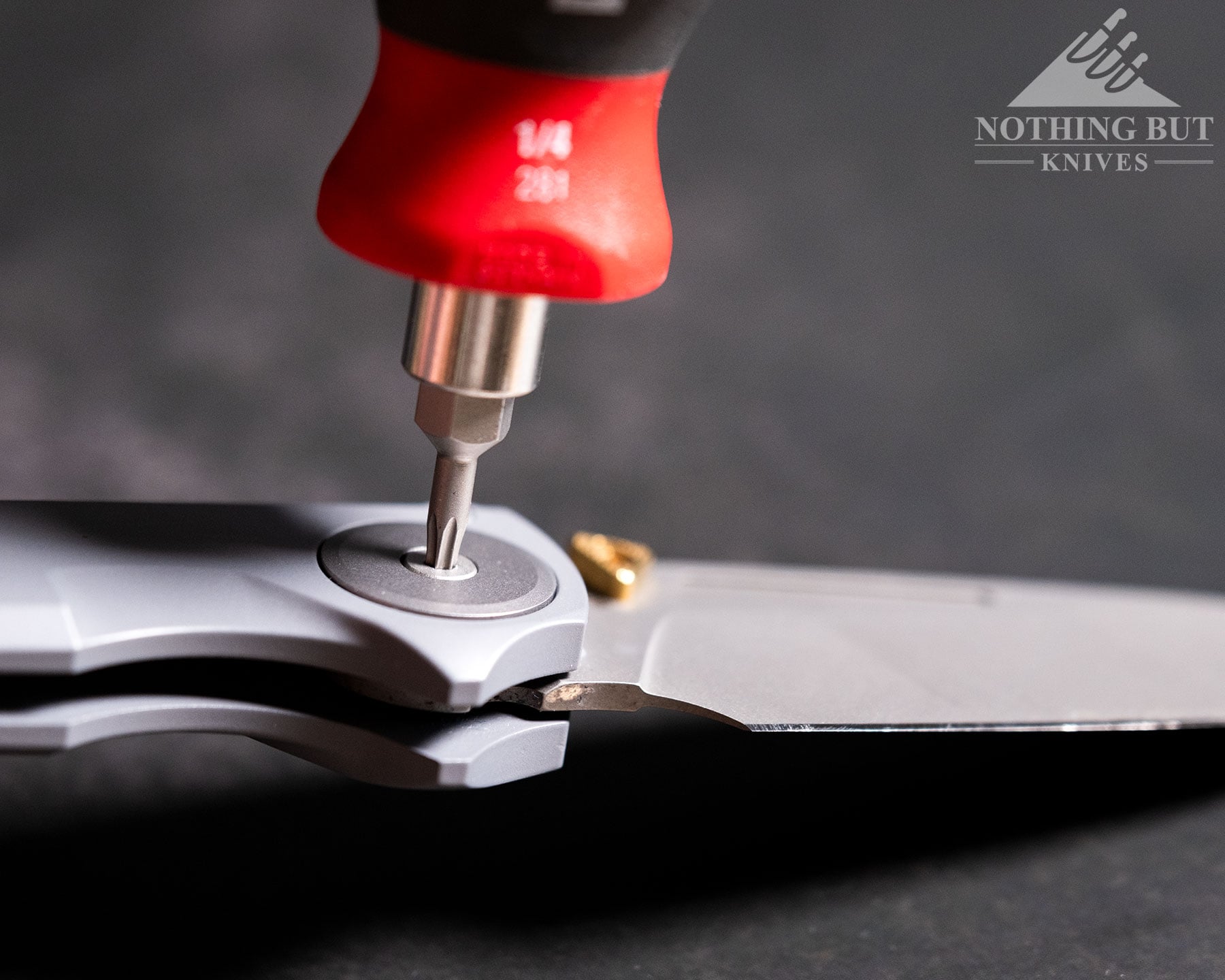
The only hiccup I had the first time I disassembled the RMX was dealing with button lock. It didn’t want to come out at first, and so I, of course, immediately shifted into stupid monkey man mode and started jabbing randomly at it until it came loose and rocketed at my face and disappeared on the floor.
I eventually found the button and the spring, but for a few minutes I thought I would get to test the replacement parts feature of this design early.
The RMX is a hard use knife just on this element alone. Forget that I dropped it off my roof onto my concrete driveway and nothing came loose. If I strip a screw, lose an O ring, or even chip the blade beyond my ability to repair, I know I can get replacement parts, and I know it will be easy to swap them in (although, it’s important to note the thumb stud version doesn’t come with the oops kit like the potentially-auto version does).
The Lock Up
I have an abnormal amount of trust in this button lock because I’ve actually opened the knife up to see it. That’s not something I’ve normally done, because I didn’t want to deal with the spring nature of any button locks, but the RMX was optimized for that, so here I am, staring at the inner workings of a button lock, getting a good look at the deep grooves in the tang, and putting the thing back in place myself.
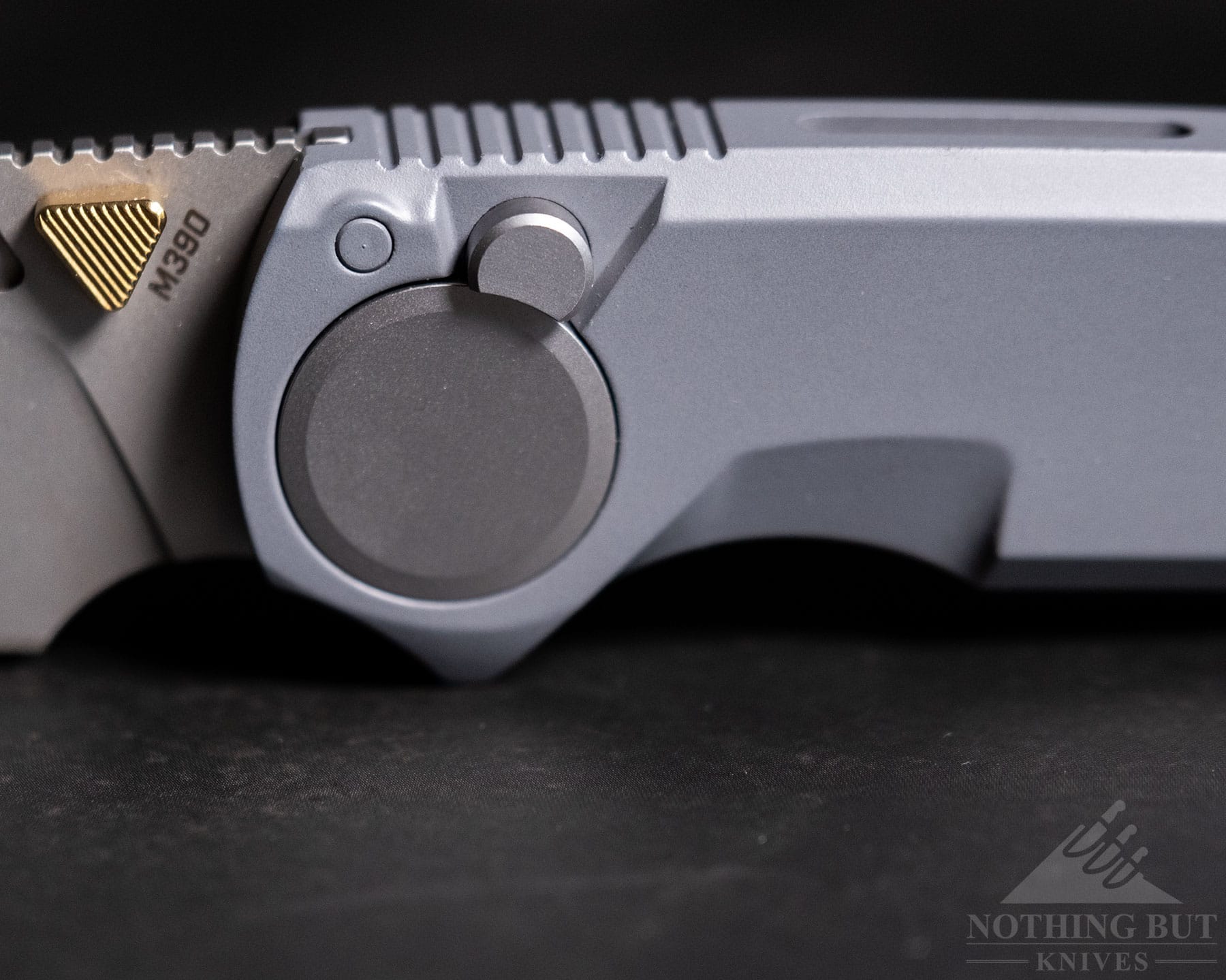
Even the feel of the lock up gave me a little more confidence. As far as button locks go, this has a pretty firm click. It’s not like back lock confidence, but between the feeling, and the number of sketchy tasks I’ve put this knife to, I’ve gotten to a place of confidence that I would equate to at least a good liner lock, if not a little more.
I’m almost there. I’m so close to being a person who just likes button locks.
Cutting as a Yard Work Champ
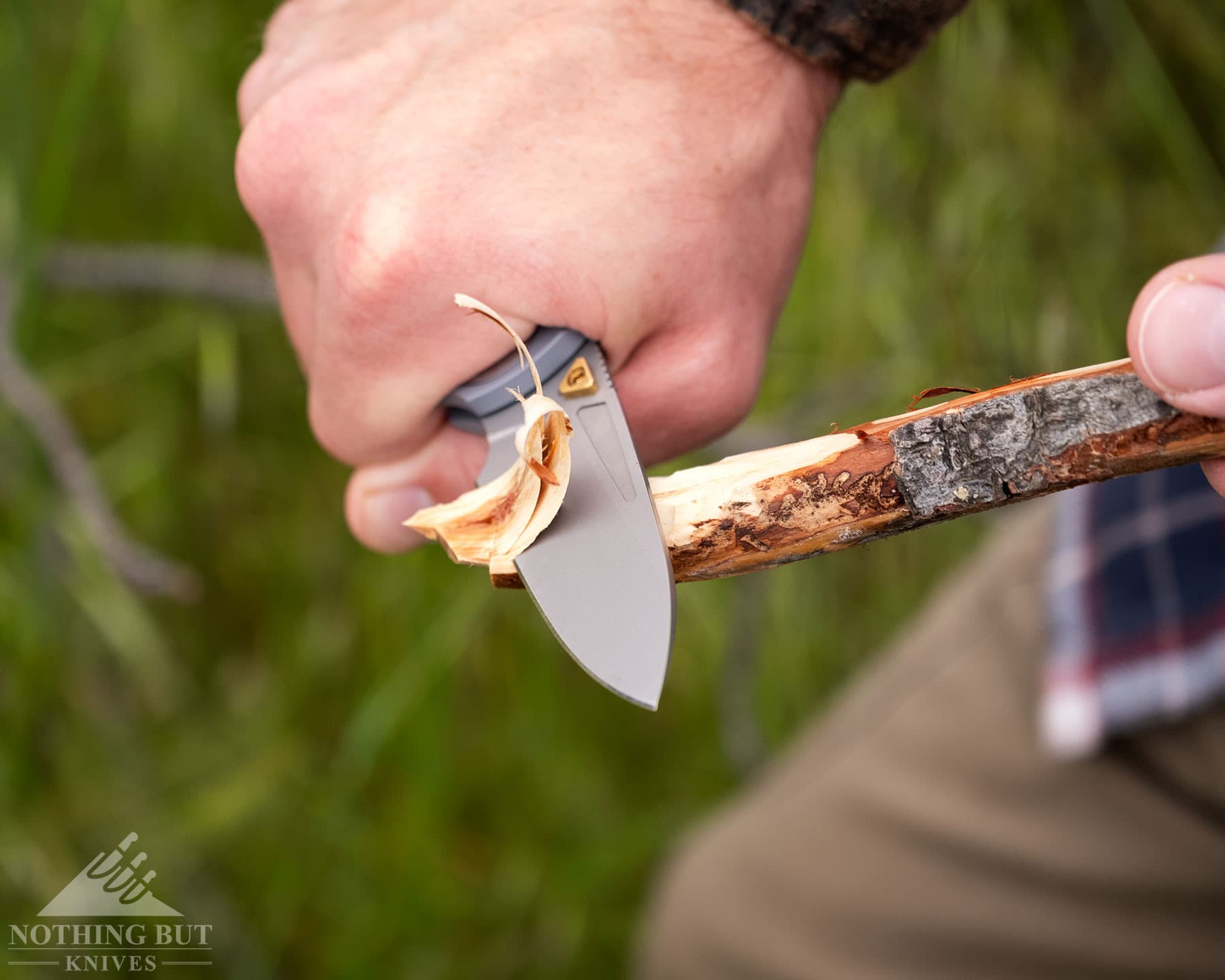
You can expect a knife made by a tool sharpener company to have good geometry. By far the least surprising thing about the RMX was that it cuts beautifully.
It’s a fairly thin blade (I read it at just over 2 mm by my measure) with a high flat grind, and a prominent secondary bevel all in a steel that’s pretty well proven to be one of the better mid-to-high range materials for edge retention and stability.
In practice that means it has an aggressive bite with a smooth cut that requires very little maintenance.
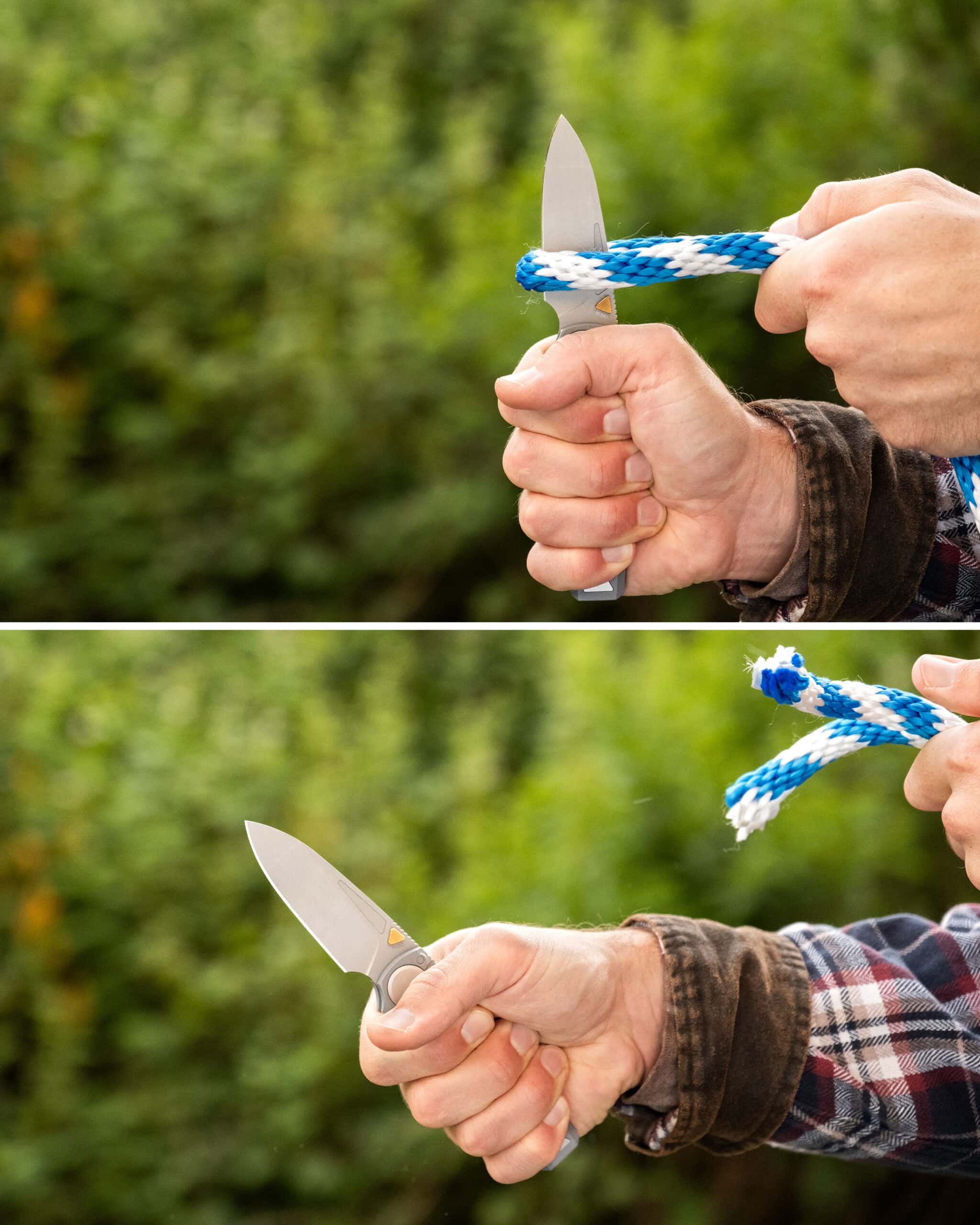
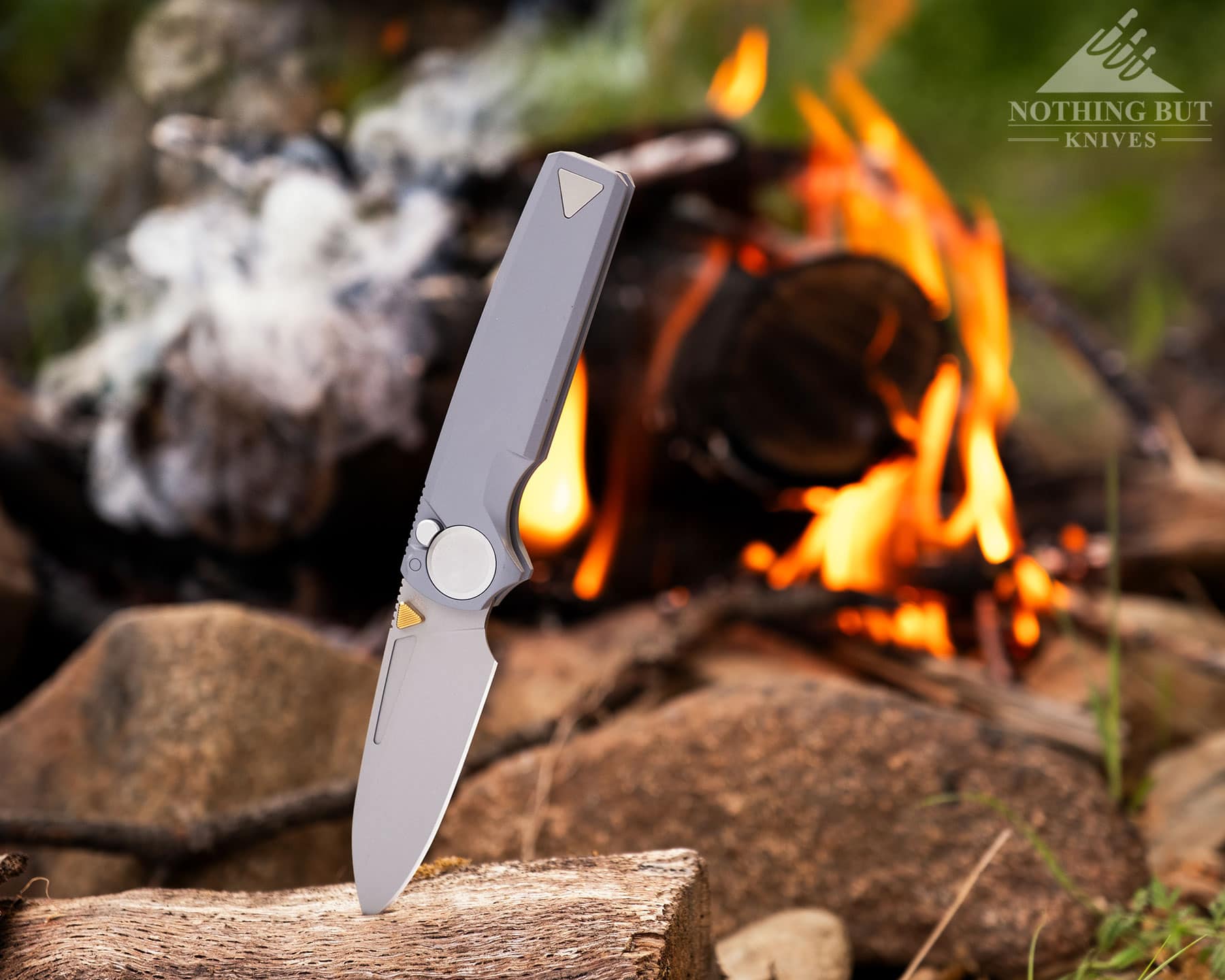
It’s not quite a laser. I don’t think they wanted it to be. I can feel a fairly prominent thickness behind the edge when I cut paper with it, but it has the kind of geometry that sails through cardboard (which was the primary use case for the design early on), and can handle weird, incidental materials like rubber or canvas. It felt immediately at home with me when I packed it around the yard and got my irrigation and garden beds prepped for summer. I even started using it over my clippers to cut away suckers and trim sprigs off my rosemary.
There was also one blustery evening I used it to cut down some wooden trellises that I’d rigged up with some heavy-gauge zip ties. That was a challenge of angle and leverage, and while I was blindly prying the blade through the slim margin of space between the splintery wood and the iron fence I was absolutely certain I was going to chip the knife or bend something in the pivot before I managed to cut the thing down. I did end up scraping my knuckle up, but the knife looked and felt exactly the same afterwards.
Ergos and the Lightness
This knife is much lighter than it looks. It weighs about two-and-a-half ounces, but it’s technically an all-steel knife, so I picked it up expecting the typical brick feeling of a Kershaw Leek.
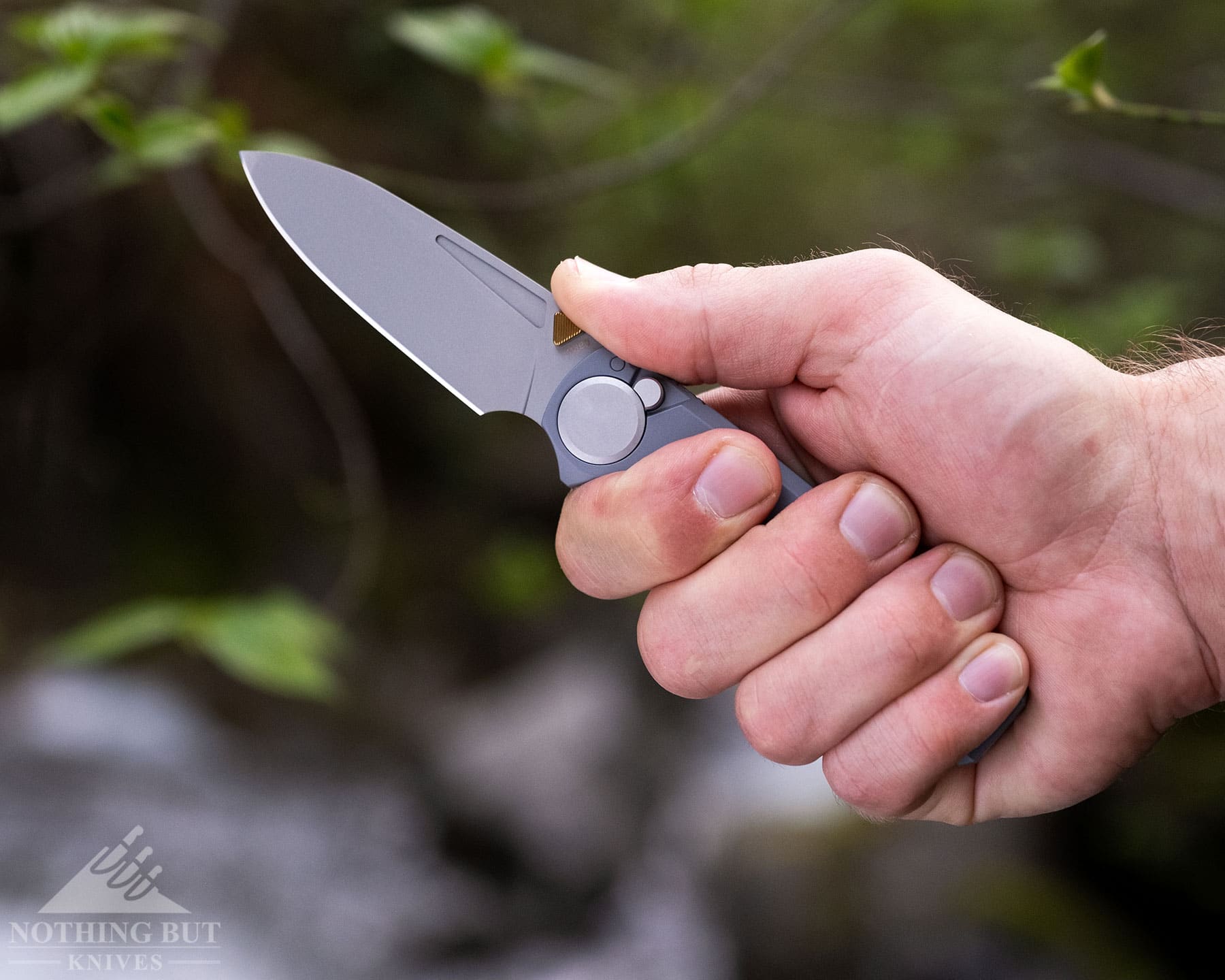
It actually feels like the weight experience of a plastic knife with a texture steel. That’s thanks to the magnesium handle. That’s not a material we see often (or at all, really) in knives because it can be brittle and difficult to machine, especially for things like threads for screws.
They wanted it to be light and hard, though, and Dovel figured that if Stihl can use magnesium for crank cases in chainsaws, then Work Sharp could use it for a knife handle, and my end-user assessment is that they sure as hell did.
In the Pocket
It rides well enough in the pocket and slips in and out without a hitch.
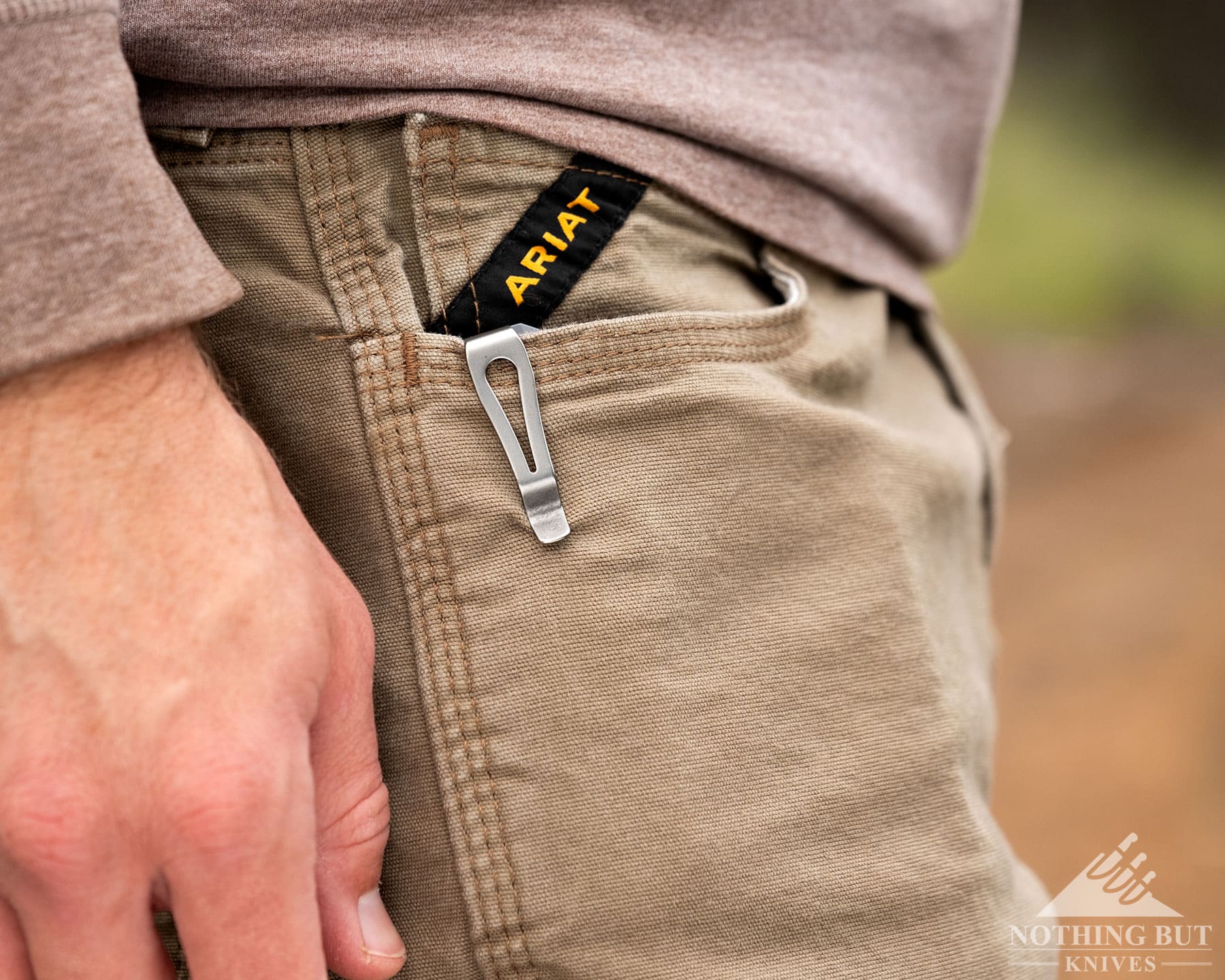
The only problem is the clip is a little flimsy so if I grab it in the wrong place when I go to pull it out, the clip tightens down on the pocket and fights me. I can still get the knife out, but it’s one of those little physics problems that makes me think “there has to be a better way” every now and then.
In the Hand
The RMX easily passed the glove test. I was able to pull it out of the pocket and open it almost fluidly. The thumbstud has a way of catching that reduces the failpoints of clumsiness. Between the thick stitching and leather pieces I could always count on something finding purchase without having to look.
The only speedbump was trying to close it with gloves on. The button could be difficult to push down enough to disengage the blade because it sits in that little insert and my thumb was about 30% fatter. But I got there when I stopped long enough to angle my thumb in right. That’s a pretty typical experience with any kind of knife lock though, with maybe the exception of back locks.
The Finger Choil
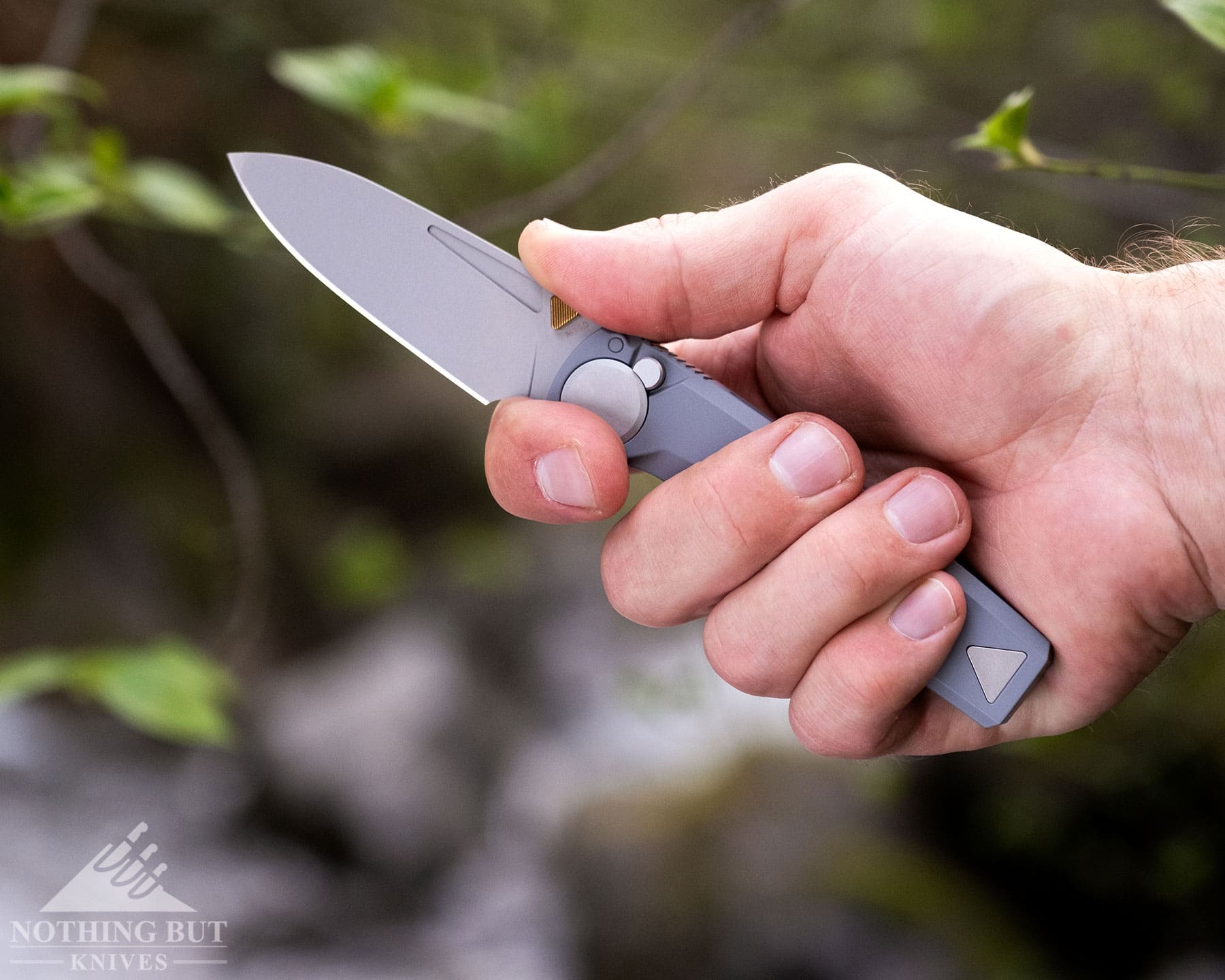
This is a finger choil done right. I know that by the lack of tiny cuts on my index finger. Not only is it big enough for my finger to comfortably sit in, they ground the edge so it angled up. The fact that I haven’t accidentally nicked myself all the times I’ve blindly grabbed at the knife is a huge testament to how well Worksharp thought out the ergonomic lines of this particular section of the knife.
The only issue I have with it is that it catches on what I’m cutting easily. That happened a lot when I was breaking down cardboard because I tend to cut with the blade at an angle to use more of the edge.
RMX Variations
I already mentioned we have the manual-only thumbstud version vs. the plain-blade version that comes with an auto assembly, but there are a couple more variations of the RMX, and I thought it would be helpful to list all the versions out so you can get a full picture before I talk about alternatives from other companies.
- RMX Reverse Tanto: This is actually the “original” version according to Dovel. It features 3V steel because they went really thin with the blade geometry and wanted the extra tensile stability.
- RMX Drop Point: Same form factor in the handle, but this one has M390 steel and might be a little thicker as a result.
- RMX Thumbstud Drop Point: This one is all manual. And as far as I can see they don’t make a reverse tanto with a thumbstud just yet.
- The RMX Compact: Pretty much the same, but smaller with a 2.4-inch blade. It has the same automatic conversion option as the other RMX designs, though.
Comparisons and Alternatives
There aren’t many button lock knives I would recommend for the same use case that the RMX specializes in, although I wrote this review right on the heels of Work Sharp announcing the Madrone, which is the same size, a little more expensive, a little heavier, but with the same fix-it philosophy.
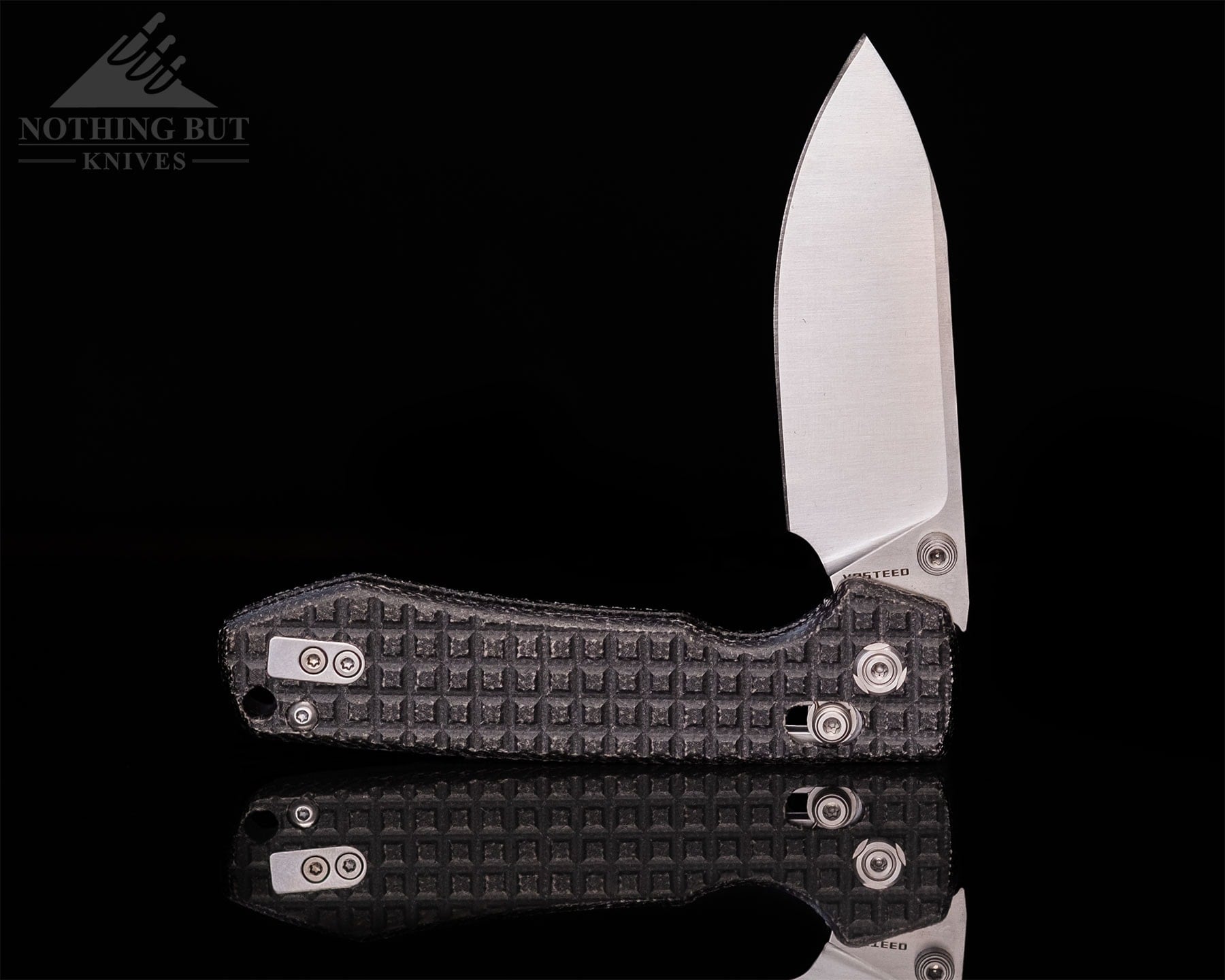
The Vosteed Racoon is a good option on the budget side. I didn’t love the button lock placement, but it’s a great size and a tough working knife.
If lightweight hard use is your concern, the OKnife Duron is worth a look. The aluminum handle keeps it light despite having a 4-inch blade, and it’s both tougher and more comfortable than I ever would have guess from the specs. That comes in about $50 cheaper than the RMX. Personally, I feel like I feel that price drop in the cutting performance. I prefer the RMX for cutting tough material, but the Duron holds its own just fine.
For hard use with some engineering ingenuity is more your interest, I still like the CRKT Bona Fide. It would be hard to find a knife that’s easier to take apart and clean than that knife, and while the blade isn’t especially impressive in terms of retention or performance (depending on which version you get), it’s definitely a tough knife that can do just fine getting dirty and abused.
The Hogue Mysto is another American folder in the same price range as the RMX. It has a cross-bar lock rather than a button lock, but it is light weight and well-built.
The Last Lightweight Working Knife You’ll Reasonably Need
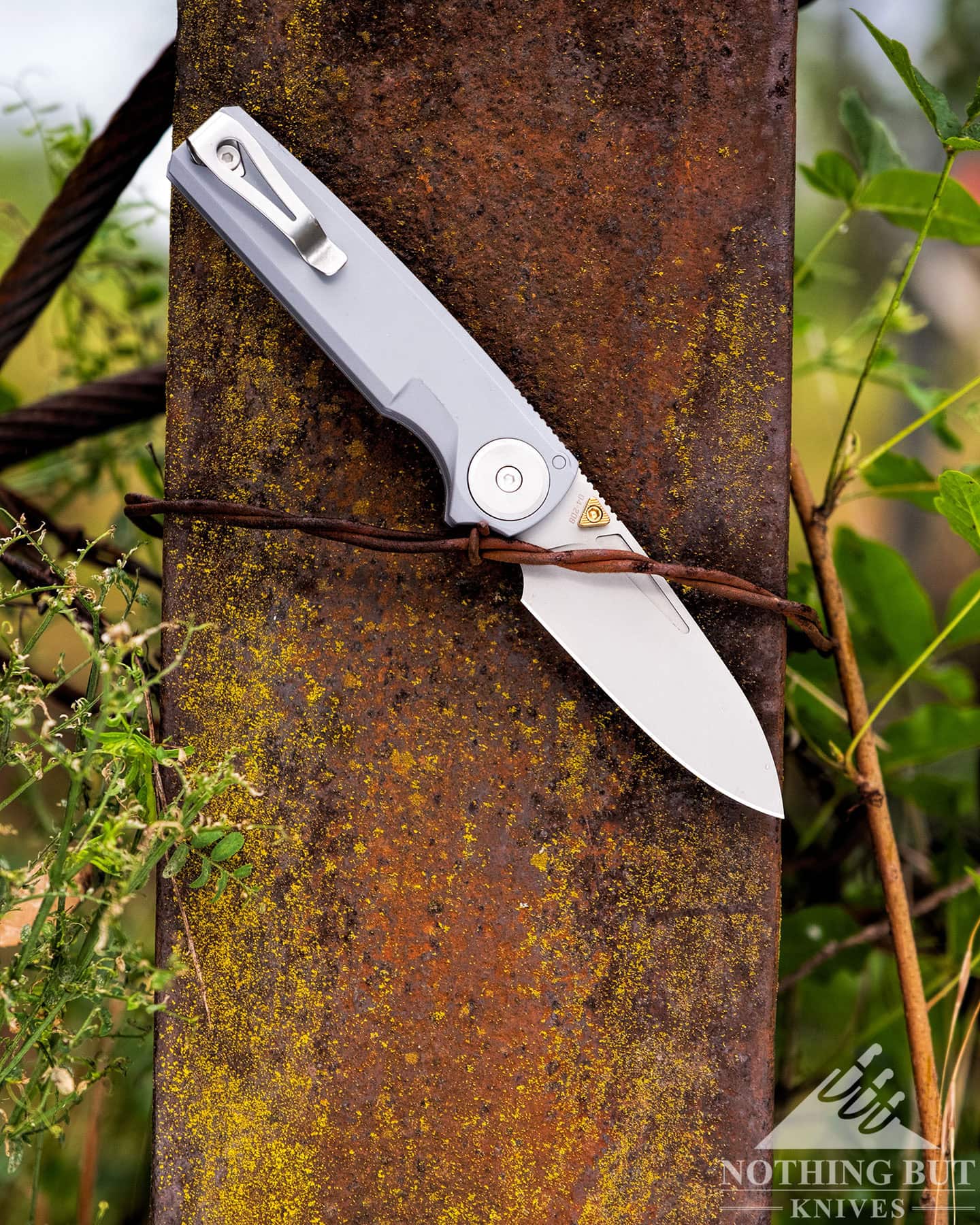
Work Sharp has effectively made another “just get this” knife, joining the ranks of classics like the OKC RAT folders and the Spyderco PM2, and at a pretty reasonable price considering the materials and engineering that went into it.
The RMX was made to get used and scratched and dropped then brought back inside for a quick spa treatment before it goes back out and does all of that again. It’s not a pretty knife. It’s not meant for pretty work, so I’m much more inclined to actually use it that way than similarly priced knives like the Ocaso Strategy (I did use that one pretty hard, though, to be fair).
When you just need a knife that works, and you’re feeling overwhelmed by the sea of options out there, the RMX should be one of your top considerations.