This Handle Swapping Budget Set Cuts Clean
These are mysterious knives that run dangerously close to being gimmicky, but in practice Butterfork knives are fine cutters with a fun handle swapping feature.
There were a lot of things that could have been wrong with all these knives. But everything feels well executed here.
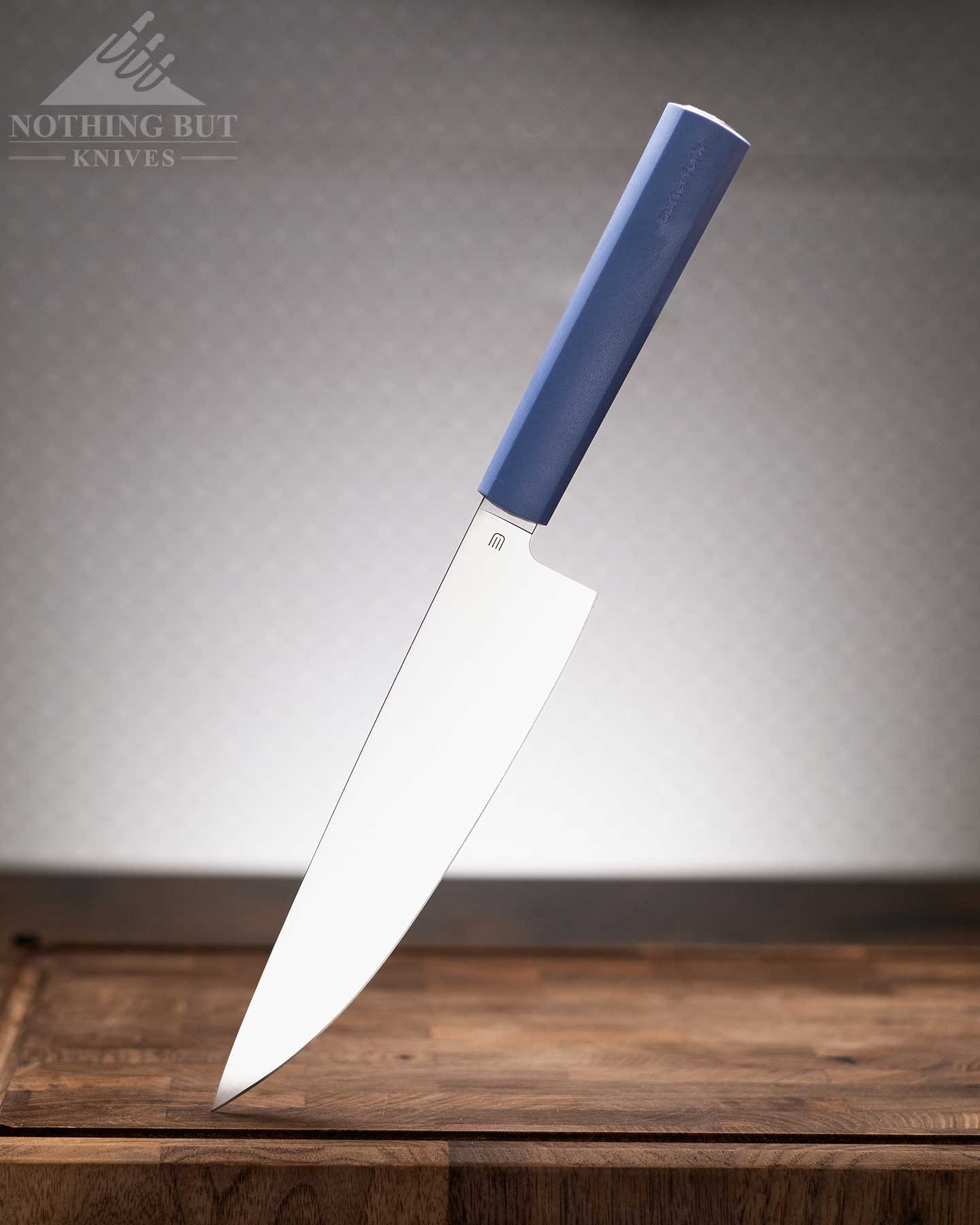
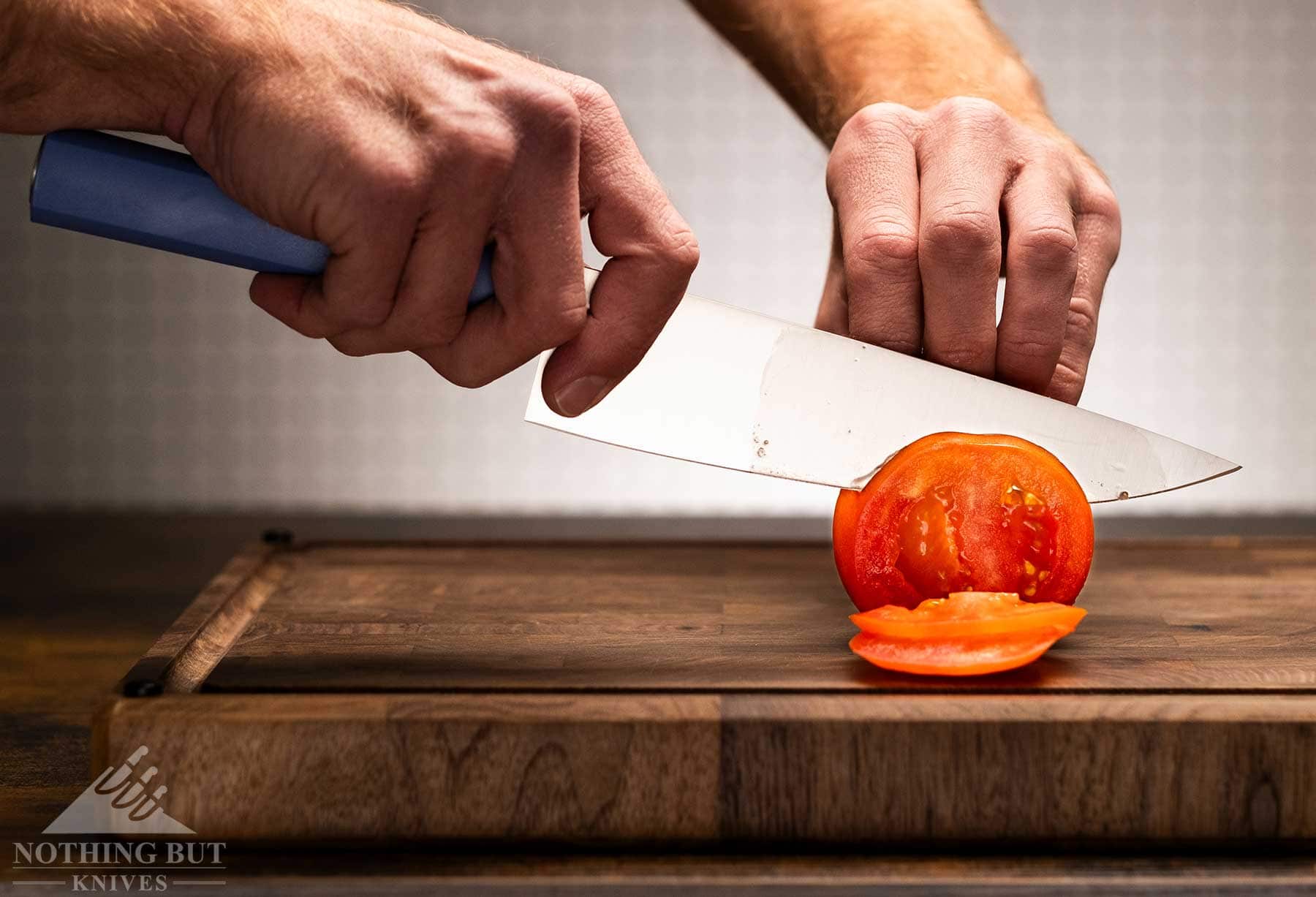
My only issues with them were that the handle is too close to the heel of the blade which kind of interferes with how I prefer to pinch grip knives. But they’re also light and sharp enough for that little ergonomic detail not to matter much.
Set Details
| Comes with: 8″ chef’s knife, 8″ bread knife, 6.2″ nakiri, 3.5″ paring knife |
| High-carbon, stainless steel blades (name is unlisted, though) |
| Each knife has oak wood saya with a stop pin |
| ABS plastic swappable handles |
| What I Liked | What I Didn’t Like |
|---|---|
| The blades are thin with nice edge geometry. | Blade height on some knives is shorter than usual. |
| Knives are lightweight without feeling flimsy. | Handle and blade heel on chef’s knife are a little too close. |
| Handle swapping feature feels solid and well done. | Handle on paring knife is thicker than I’d like for a traditional grip. |
The Steel and CATRA Testing
Butterfork has a chunk of their site talking about a CATRA test they did of their knives against larger brands. The results definitely show that Butterfork knives are at least comparable to more popular brands in terms of edge retention.
At least one of the reasons for those results is the hardness of their knives. Butterfork has their steel treated to 59 – 61 HRc. Wusthof and Global (the companies they tested themselves against) both treat their knives to around 56 – 58.
Wusthof of course did the worst in their tests because those are pretty typical western knives with a thicker blade geometry. Global knives are much thinner, though, and have famously high edge retention for that HRc.
So Butterfork is making a pretty impressive showing, but it’s worth noting that they tested themselves against two companies that treat their knives to lower hardnesses and generally prioritize durability over edge retention.
Light Blades with Good Geometry
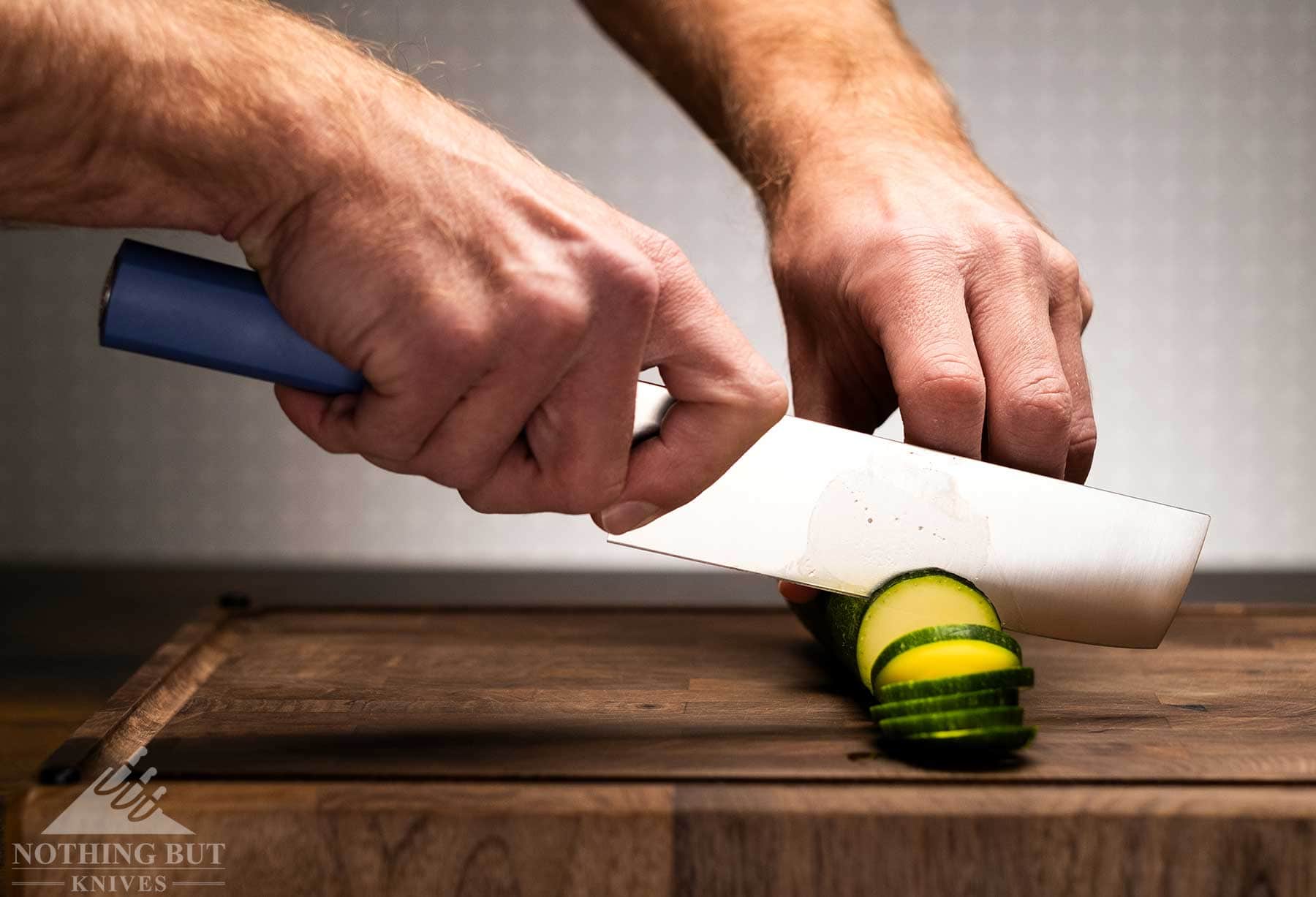
There’s no denying these knives cut like a dream, though.
The blades are thin with decent edges, so cutting feels refined and precise. These do not feel like your typical budget friendly kitchen knives.
I measured the spine of the chef’s knife at maybe a hair over two millimeters, which is the kind of thinness you typically see in Japanese cutlery.
The edge retention is decent as well. They’ve stayed in good cutting form through a week of daily, mild use. Even after I ramped up my daily usage, it took a few days before I felt the need to hone and strop the edges to get them back to how they felt out of the box.
It’s also a big plus that the spines are slightly crowned. It’s a small detail that rarely makes it onto production knives, but it goes a long way to keep these knives from biting into my grip after using them for a long time.
The Chef Knife
| Overall Length: | 13.07” |
| Blade Length: | 8” (203 mm) |
| Blade Height: | 1.77” |
| Weight: | 167 g |
- Western blade profile on a somewhat Japanese style of handle.
- Much lighter than typical western knives,
The Nakiri
| Overall Length: | 11.35” |
| Blade Length: | 6” (152 mm) |
| Blade Height: | 1.65” |
| Weight: | 168 g |
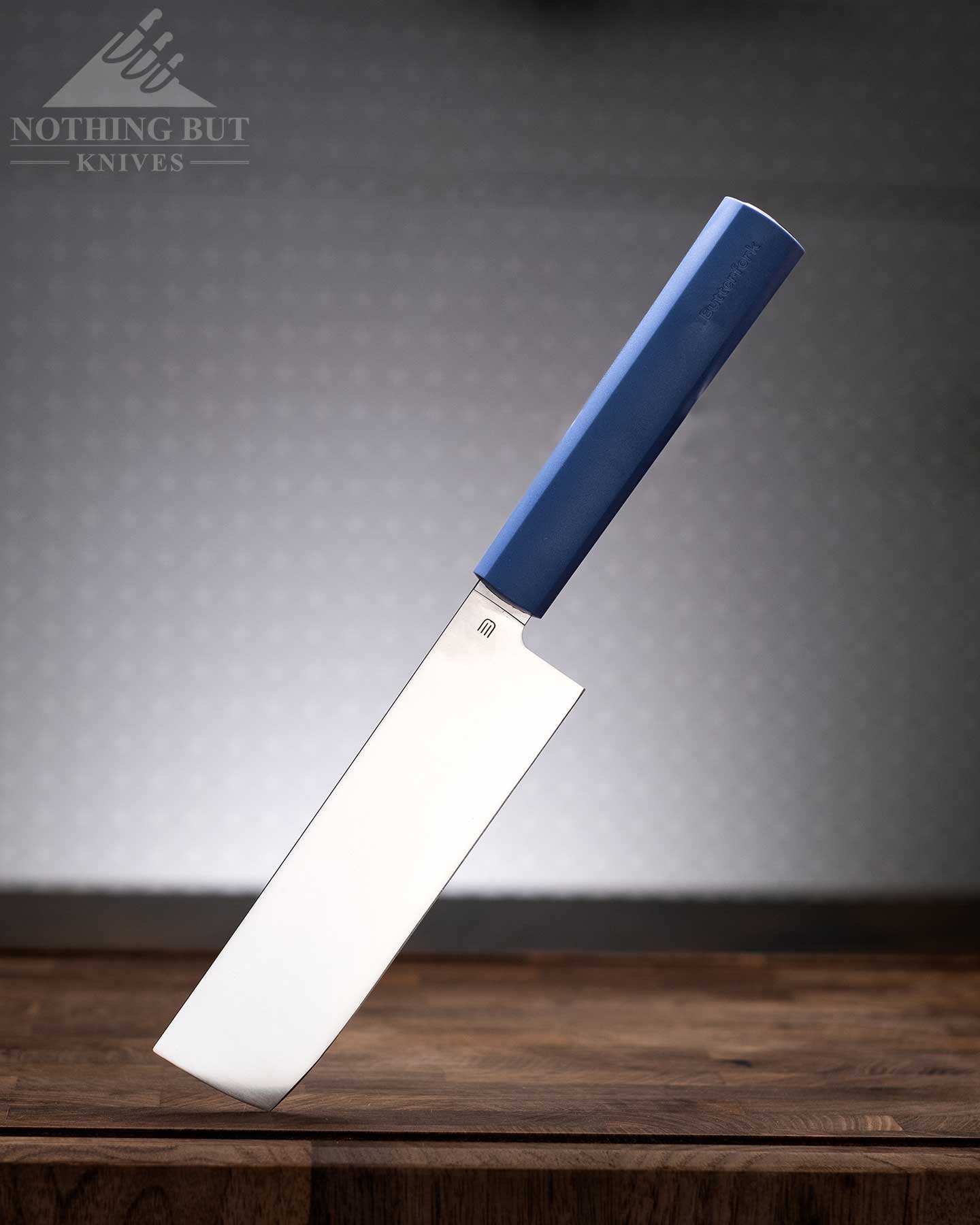
- Blade height (edge to spine) is only about an inch-and-a-half where most other nakiris have close to 2 inches of blade height.
- The balance is toward the handle where most nakiri are weighted toward the blade to made cuts easier.
Bread Knife
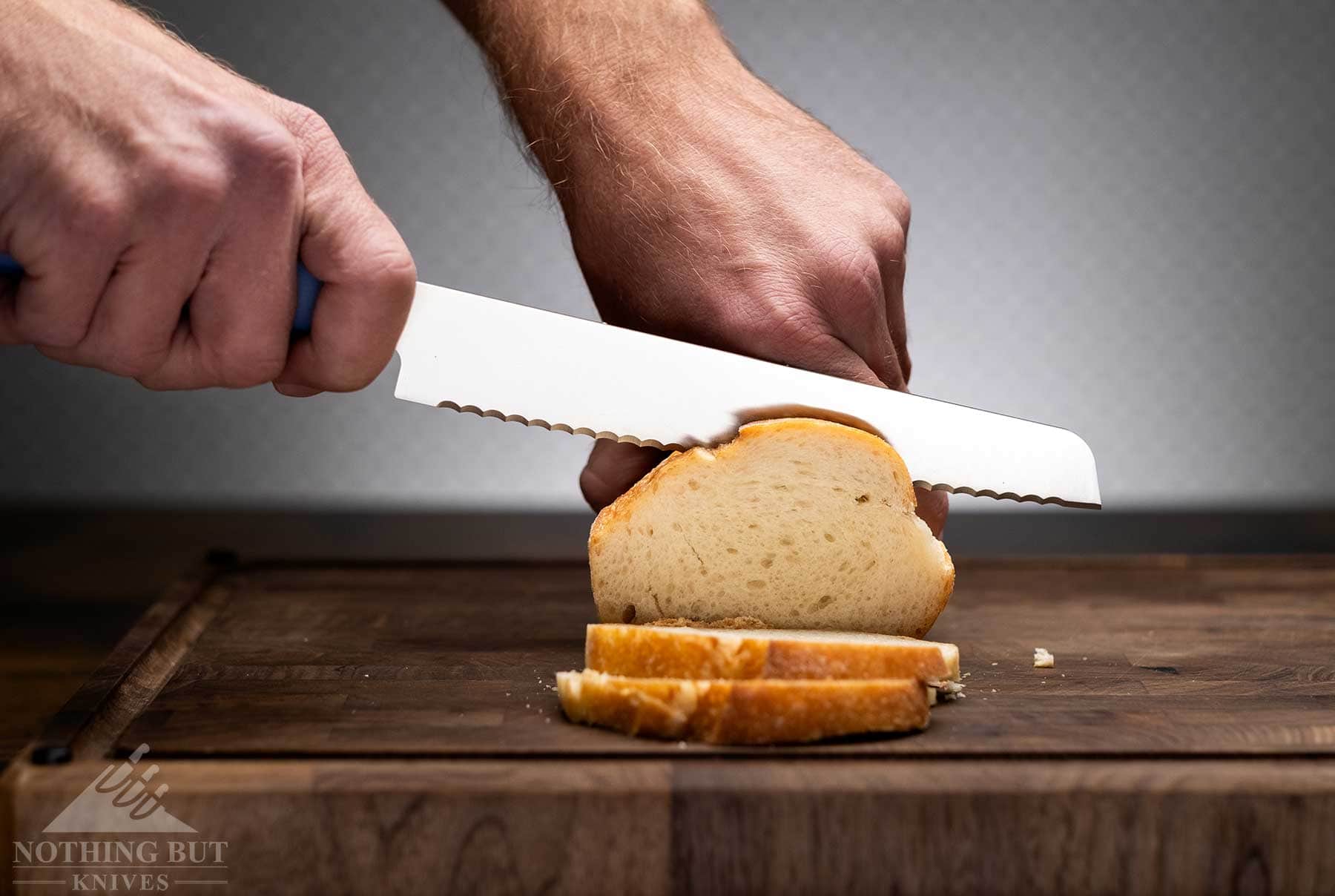
| Overall Length: | 12.86” |
| Blade Length: | 7.5” |
| Blade Height: | 1.22” |
| Weight: | 154 g |
- This is shorter than most bread knives with a 7-and-a-half inch blade.
- The serrations are pretty mild with a gentle cut.
The Paring Knife
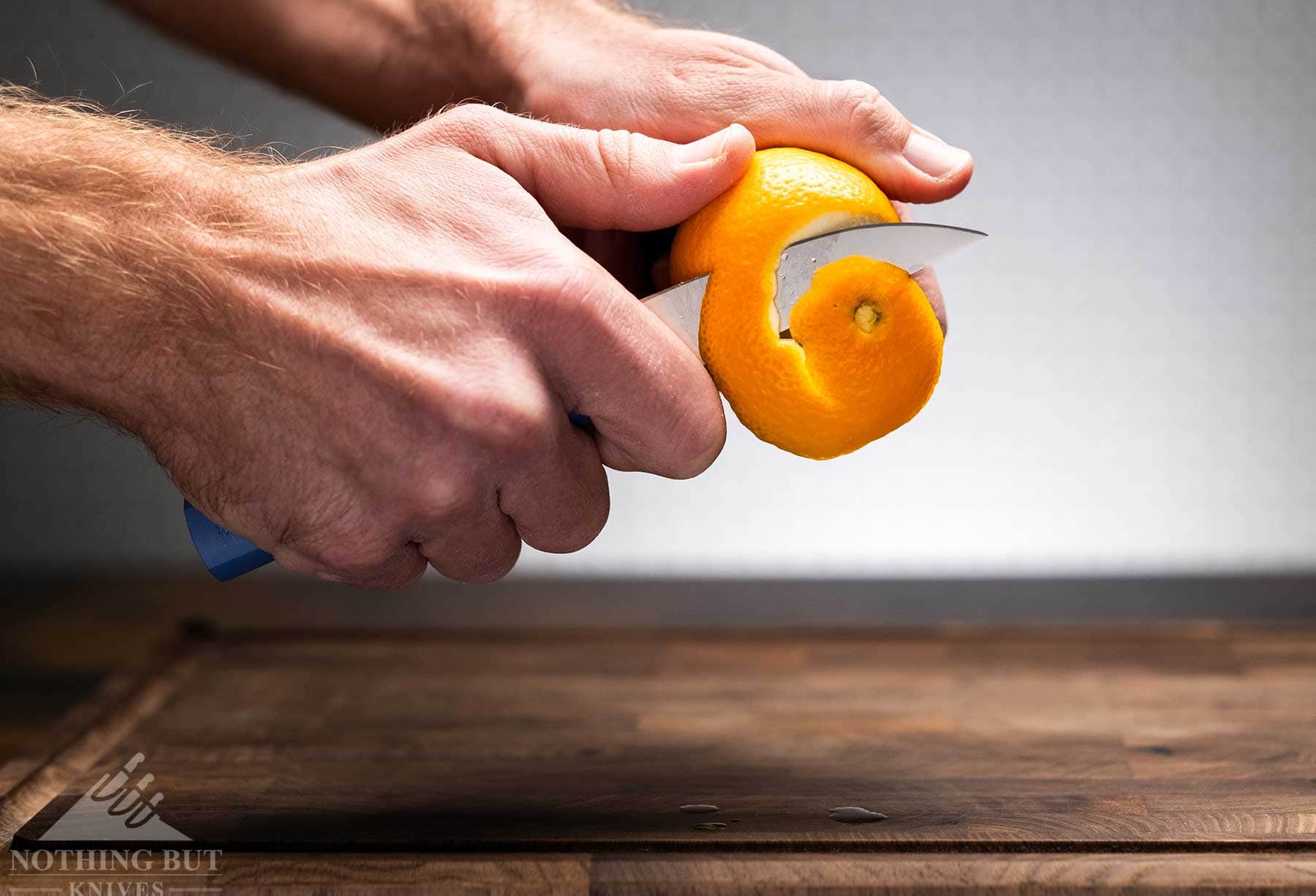
| Overall Length: | 7.69” |
| Blade Length: | 3.5” |
| Blade Height: | 0.79” |
| Weight: | 62.8 g |
- Handle feels wider than usual for a paring, which can make the traditional paring knife grip feel a little awkward.
- Blade height is about 0.75 of an inch near the heel where a lot of paring knives push a full inch.
The Handles and Changing Colors
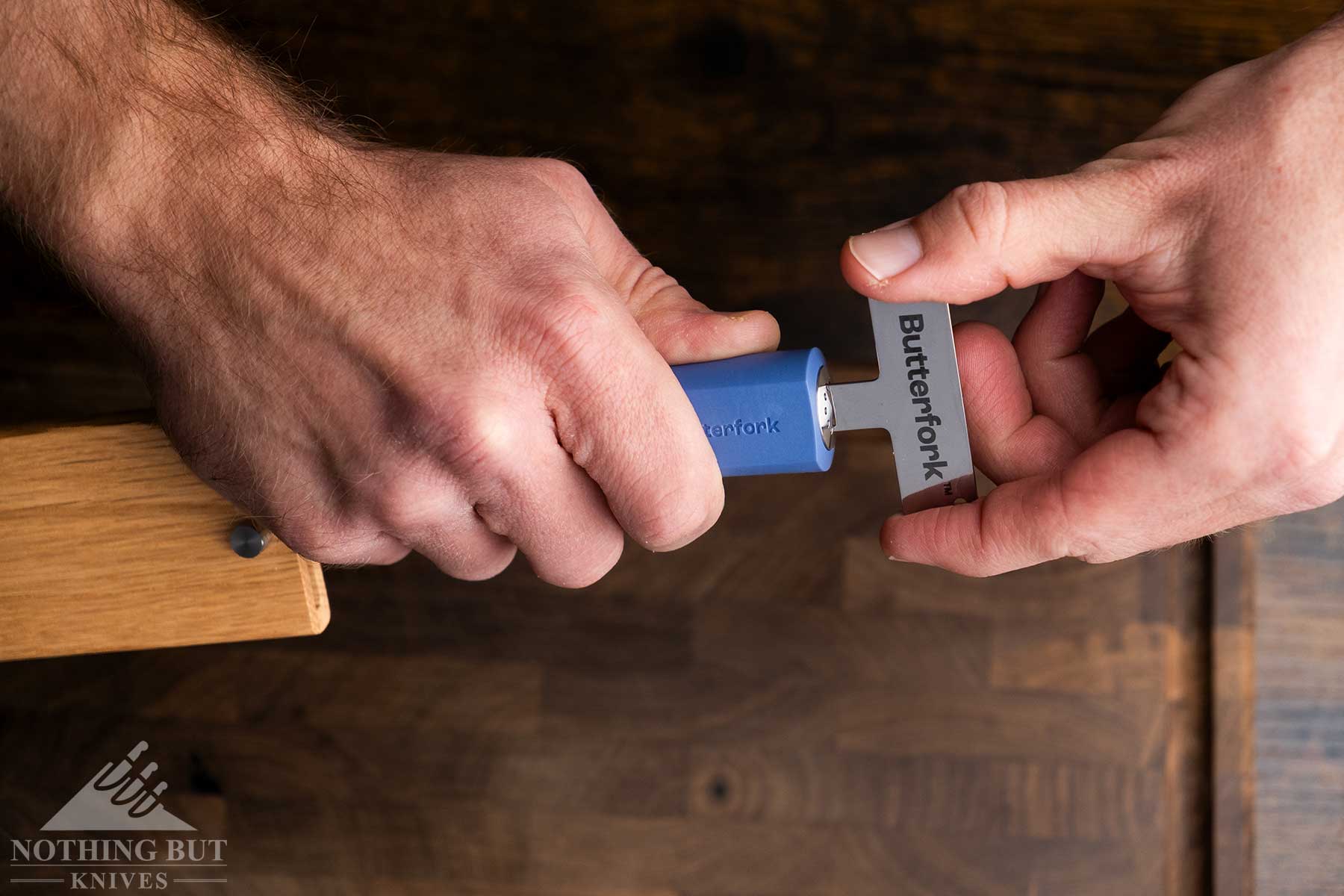
These are fairly comfortable knives, but the highlight feature is that they’re designed to be changed out.
Each handle is set in place by an end cap you can screw out so you can take the handle off and replace it with a different color (current options consist of six colors ranging from dark grey to ultramarine).
How the Handle Switching Works
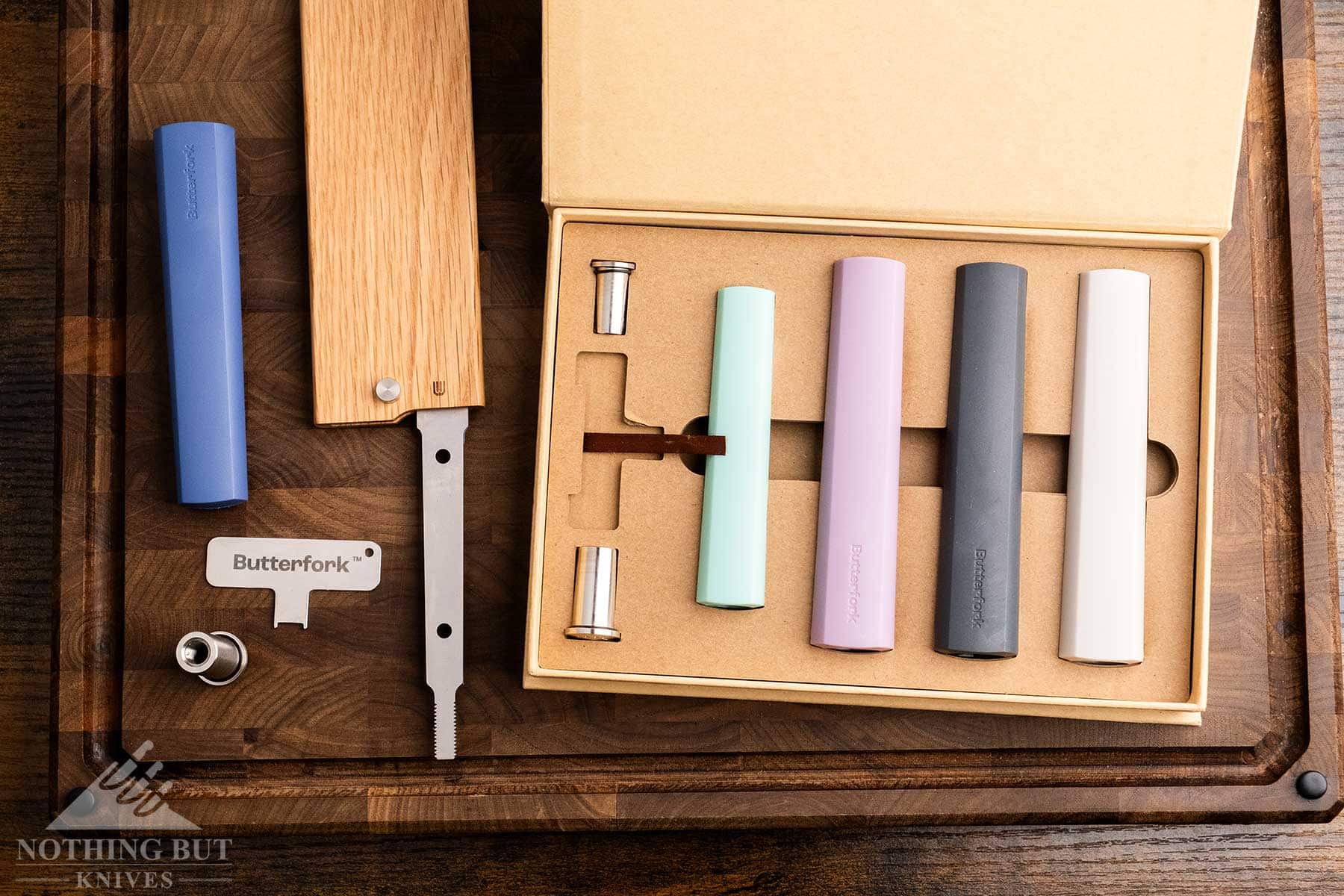
The marquee feature of these knives is the replaceable handles. If you want a different color, or maybe the worst happened to the current handle (I haven’t had any durability issues in regular kitchen testing, but things happen) these handles are designed to come off.
Here’s the process:
- Unscrew the cap in the pommel (each knife comes with a key for this)
- Slip the handle off
- Slip on the new handle (this can take a little bit of shifting because tolerances are really tight)
- Screw the cap back into the pommel.
And that’s it; you’re done. The first couple of times you do this might feel a little tricky. The handles fought me a little on pulling them off and setting them onto the tang of the knife. That tells me they’ve made this set up with pretty tight tolerances, though.